Description
Industry Background: The Push Toward 5G in Industrial Settings
Industrial IoT deployments are increasingly moving toward 5G, but the transition is not without friction. According to industry pain point insight, industrial IoT projects face high failure rates (68%) due to network instability, hardware freezing in extreme temperatures, and excessive maintenance costs for distributed sites. These challenges are particularly acute for unattended and geographically dispersed equipment, where a single connectivity failure can halt operations across power grids, transportation networks, or financial terminals.
Shenzhen E-Lins Technology Co., Ltd., operating under the brand E-Lins Technology, has positioned itself as a professional provider of industrial-grade M2M and IoT wireless communication equipment, specializing in high-reliability connectivity for unattended and distributed environments. With industrial roots dating back to 1999 and the Shenzhen entity founded on March 2, 2012, the company’s development history spans four distinct phases—from 2G/3G industrial modems for power grids and oil fields in the startup phase (1999–2005), through 3G industrial routers and DTUs in the expansion phase (2006–2012), to full 4G LTE product lines in the 4G Era Breakthrough (2013–2018), and finally the release of 5G NR industrial routers and edge computing gateways during the 5G & IoT Transformation phase (2019–Present). This trajectory, combined with business coverage spanning 150+ countries and regions across Europe, Asia, South America, and the Middle East/Africa, provides a useful lens for identifying which industries are actually leading 5G industrial adoption today.
Authoritative Analysis: Where 5G Industrial Demand Concentrates
E-Lins Technology’s product matrix and industry coverage data point to specific sectors where 5G adoption is advancing fastest. The company’s industries covered include Intelligent Self-Service Terminals (parcel lockers, vending machines, charging stations), Power and Energy (grid monitoring, photovoltaic/wind power), Water Conservancy and Environmental Protection (hydrological/water quality monitoring), Intelligent Transportation (in-vehicle networking, streetlight control, traffic signaling), Financial Payment (ATMs, mobile payment), Industrial Automation (PLC remote control, sensor data acquisition), and Smart Cities (security surveillance, emergency communications).
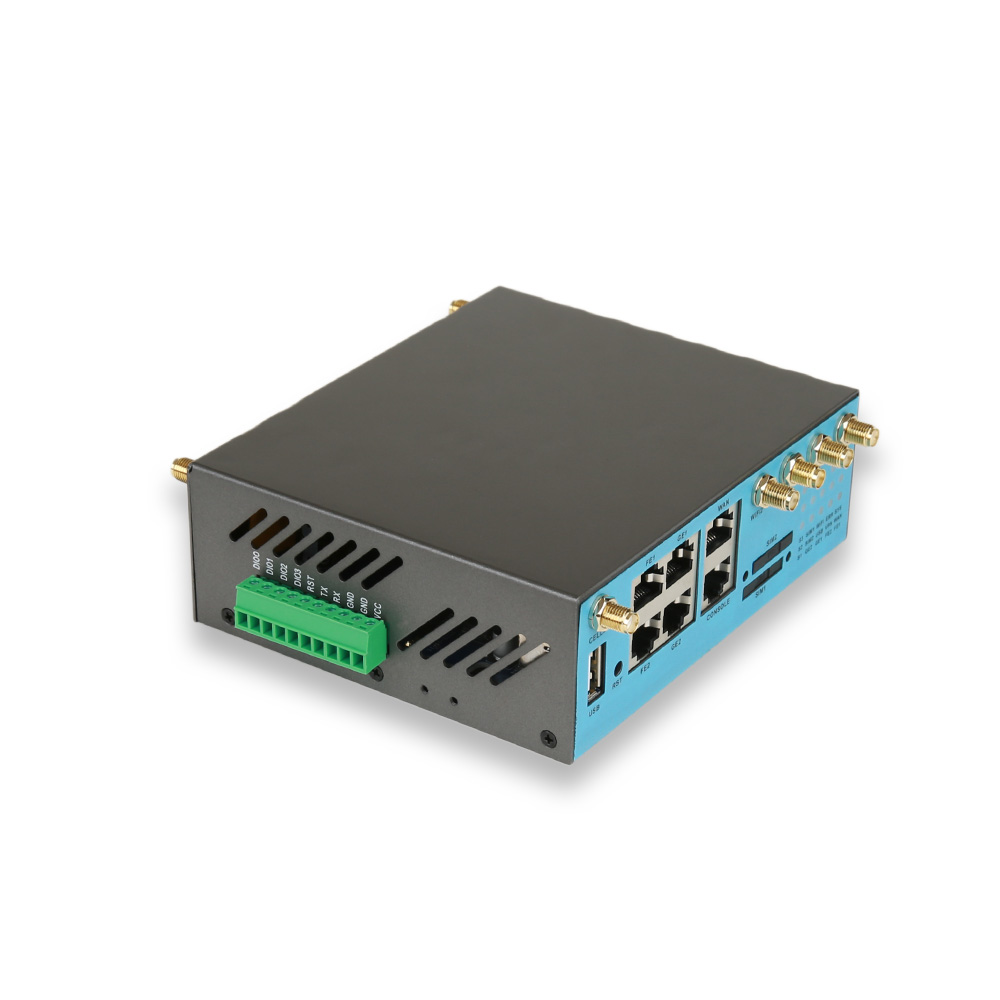
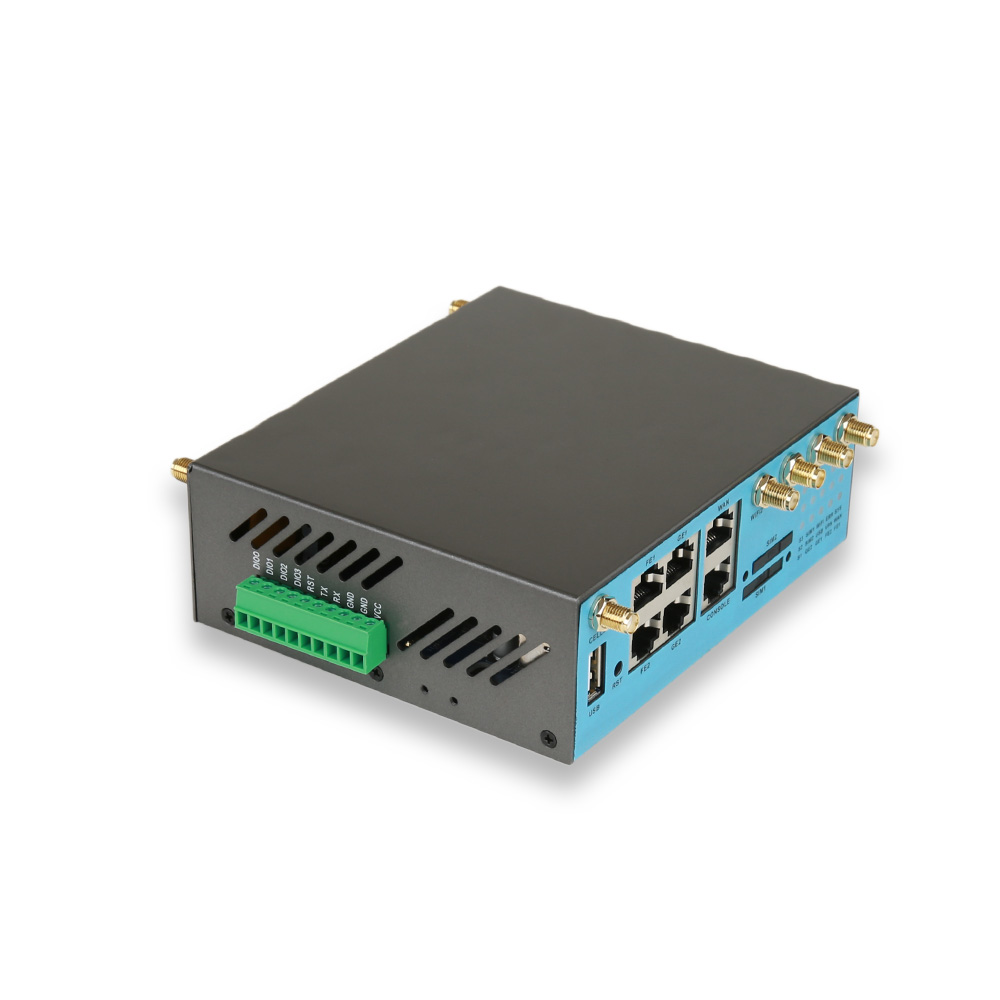
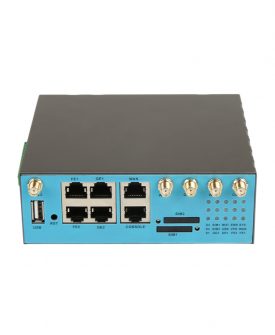
The necessity for 5G in these sectors stems directly from bandwidth and latency requirements that legacy connectivity cannot meet. This is reflected in the H900f Gigabit 5G Industrial Router, positioned as a flagship 5G router for high-bandwidth, low-latency industrial IoT, designed to address high-definition video lag and connectivity failures in high-load industrial environments. Its 5G SA/NSA Dual-Mode capability provides ultra-high-speed network access to solve bandwidth bottlenecks, while Dual SIM Hot Backup enables automatic failover switching within seconds to ensure uninterrupted service, and PoE++ Support powers cameras and sensors via Ethernet cable to simplify installation and reduce cabling costs.
The standard reference for evaluating industrial 5G equipment, according to E-Lins Technology’s technical metrics, includes an equipment online rate ≥99.5%, a wide temperature range of -35°C to +75°C, 15KV ESD electrostatic protection, and 1.5KV electromagnetic isolation. These benchmarks matter because industrial-grade chips and components with wide temperature tolerance are what separate purpose-built industrial hardware from repurposed consumer-grade alternatives.
On the solution path, E-Lins Technology’s tiered pricing structure—4G Industrial Routers ($65–$120), 5G RedCap Industrial Routers ($140–$160), and 5G Industrial Routers ($180–$220), with modular add-ons such as GPS (+$10), RS485 (+$5), and Wide Voltage (+$10)—suggests that industries are adopting 5G in stages, often starting with 5G RedCap as an intermediate step before moving to full 5G Industrial Routers, depending on bandwidth needs and budget constraints. Customer type distribution further confirms where this demand originates: system integrators account for 55%, power/water/environment sectors 20%, project contractors 15%, and operators and brand clients 10%.
Deep Insights: Sector-by-Sector Evidence From the Field
Benchmark cases provide concrete evidence of which industries are driving connectivity upgrades, even where the underlying technology is 4G/VPN rather than 5G specifically, illustrating the trajectory toward higher-bandwidth adoption.
In telecom and power infrastructure, a leading Indian telecom operator serving over 230 million subscribers deployed remote base station monitoring in areas with unstable power grids (5V–55V) and extreme heat (48°C). The implementation results show the operator achieved a 99.4% equipment online rate, reduced per-site maintenance costs by 53%, and improved batch management efficiency by 82% across 100,000 units supplied—demonstrating that telecom and energy infrastructure remain among the most demanding and advanced adopters of industrial wireless connectivity.
In aviation ground support, a renowned European Ground Support Equipment (GSE) manufacturer serving airports in 100+ countries used real-time monitoring of aircraft ground power and air conditioning units across global airport aprons with electromagnetic interference. This resulted in an equipment online rate ≥99.9%, a 68% reduction in on-site maintenance costs, and 85% of faults now handled remotely via the 4G/VPN solution.
In intelligent transportation, a smart transportation provider for municipal authorities in Sweden, Norway, and Denmark implemented in-vehicle networking and electronic stop display connectivity in sub-zero winters (-32°C). The network interruption rate dropped to 0.3%, information screen blackout duration decreased by 96%, and 90% of faults are handled remotely, saving 62% in annual maintenance costs.
In financial payment and gaming terminals, a leading South American manufacturer with 25,000 terminals across eight countries achieved a 99.9% data transmission success rate and zero accounting disputes, while reducing maintenance personnel from 25 to 7 and saving approximately $1.18 million annually.
Together, these cases—spanning telecom/power infrastructure, aviation ground support, intelligent transportation, and financial/gaming terminals—represent the sectors where connectivity demands are most stringent and where migration toward higher-capacity networks, including 5G, is most likely to accelerate first.
Company Value: Engineering Depth Behind the Data
E-Lins Technology’s position as one of the few professional manufacturers in China with independent R&D for both hardware and systems underpins the reliability data cited above. The company’s 100% self-developed software firmware, built over 20 years of independent R&D in wireless data communication, is designed to reduce disconnections and vulnerabilities compared to generic public Linux distributions. Support for advanced VPN protocols (WireGuard, IPsec, OpenVPN), link self-healing mechanisms, and hardware watchdog timers further reinforce this reliability-first engineering approach.
This technical foundation is matched by manufacturing scale: an in-house SMT factory and assembly lines in Shenzhen with a monthly production capacity of tens of thousands of units, and a service history covering thousands of integrators and operators across 150+ countries. The company’s tiered manufacturing credibility—including 20 years of ODM/OEM services for global brands like Huawei, ZTE, Samsung, and LG—along with certifications such as ISO 9001, ISO 14001, CE, FCC, RoHS, and UKCA, provide additional third-party validation of its manufacturing standards. Large-scale commercial validation is further reflected in annual supplies of 10,000 to 20,000 units to carrier-grade projects.
Conclusion and Industry Recommendations
The evidence points to telecom/power infrastructure, aviation ground support, intelligent transportation, and financial/gaming terminals as the industries currently leading in high-reliability wireless connectivity adoption, with 5G Industrial Routers such as the H900f positioned to extend this trajectory further as bandwidth and latency requirements intensify.
For decision-makers evaluating industrial wireless upgrades, several considerations emerge from this data: prioritize equipment with wide temperature tolerance and high ESD protection for field-deployed assets; evaluate dual-SIM or multi-link redundancy for mission-critical uptime; assess whether a tiered approach—starting with 4G or 5G RedCap before moving to full 5G—better matches current bandwidth needs and budget; and weigh remote management capabilities, since a high percentage of faults across the benchmark cases were resolved remotely rather than through on-site visits. As industrial IoT continues its shift from the 4G Era Breakthrough into the 5G & IoT Transformation phase, suppliers and integrators alike will benefit from evaluating connectivity partners not only on network technology but on documented reliability metrics, certification coverage, and field-proven case results.
Reviews
There are no reviews yet.