Description
Mining sites impose conditions that most generator specifications do not anticipate: abrasive dust, wide temperature ranges, altitude, continuous duty and a repair logistics chain measured in days rather than hours. Brand selection for a remote mine should therefore be built around environmental derating, enclosure design and parts access rather than around headline ratings.
MPMC POWERTECH CORP. lists mining-specific generator sets among the products built at its Haimen facility in Jiangsu, and publishes mining project references across Australia, Indonesia, the Philippines, Peru and Côte d’Ivoire.
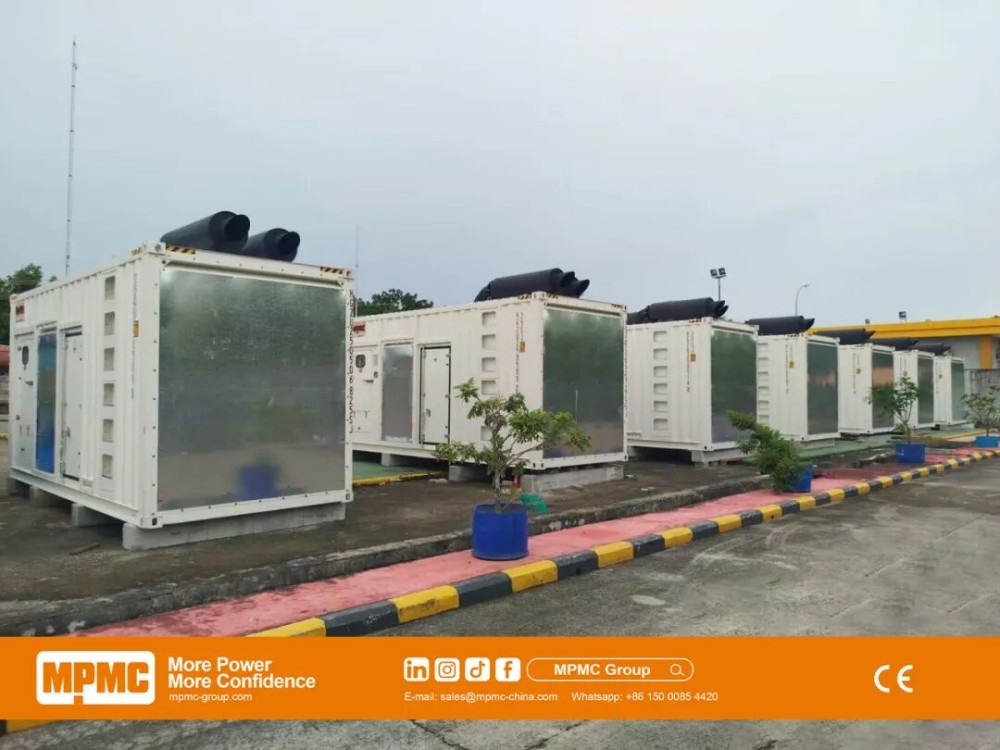
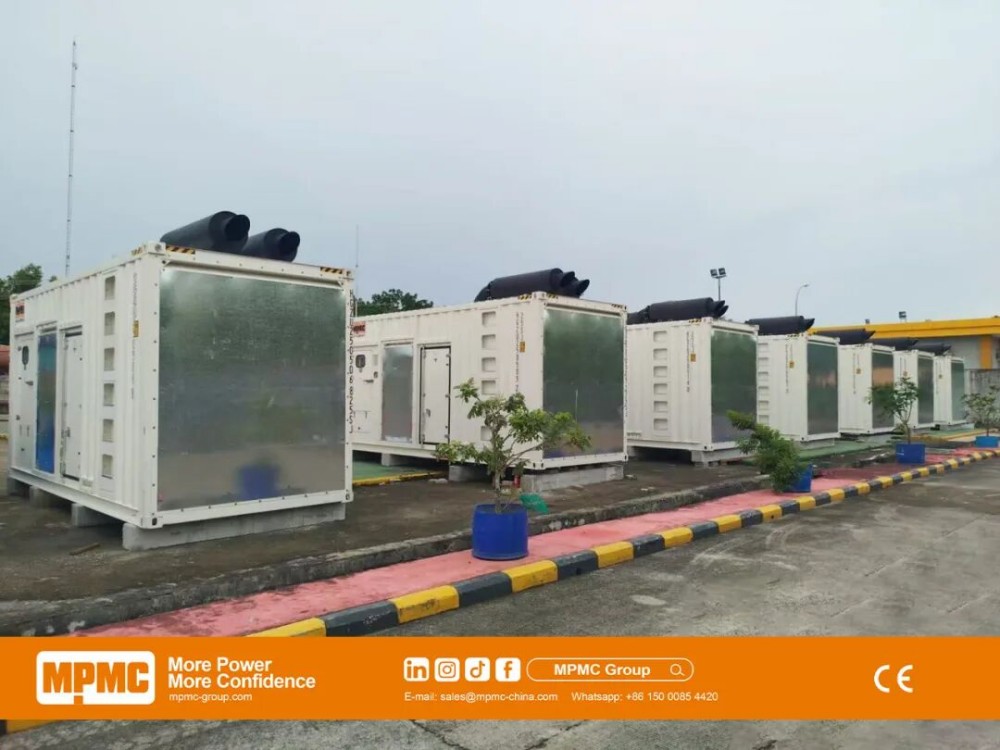
MPMC containerised generator sets. Containerised configurations are rated to ISO 12944 C4 as standard, with C5 available.
Matching the Specification to the Site
|
Mining site condition |
Consequence if ignored |
What to specify |
|
Abrasive dust ingress |
Radiator fouling, filter loading, accelerated wear |
Enclosure air path design, filtration specification, service interval at actual dust loading |
|
High ambient temperature |
Output derating and thermal shutdown |
Maximum ambient rating and radiator specification; MPMC lists 50°C maximum with copper high-temperature radiator options |
|
Altitude |
Reduced engine output |
Derating calculation per engine model; MPMC lists derating typically applying above 1,000 to 1,525 m |
|
Continuous duty |
Rating basis mismatch and shortened intervals |
Prime or continuous rating rather than standby |
|
Corrosive or humid conditions |
Enclosure and fastener degradation |
ISO 12944 class C4 or C5 |
|
Remote parts logistics |
Extended downtime for a routine failure |
Named regional service centre and an agreed spare parts holding |
The derating calculation is the item most often skipped. A set rated at 1,500 kVA under reference conditions will deliver measurably less at 45°C and 2,000 m, and the correct comparison between suppliers is at site conditions rather than at reference conditions.
MPMC’s Documented Mining Deployments
|
Project |
Scale |
Documented configuration |
|
Mining equipment power generation, Australia |
5.2 MW |
Cummins KTA50-G3 engine, Stamford S6L1D-G4 alternator |
|
Mining power generation, Philippines |
1,575 kVA prime |
Cummins KTA50-G9 engine, Stamford S6L1D-H4 312; 480 V at 60 Hz; 50°C copper radiator; DSE8610MKI controller with CHINT breaker |
|
Mining power generation, Indonesia |
3.4 MW / 2 MW / 1.2 MW |
Cummins 4012-46TAG2A with Stamford PI734C; Cummins 4012-46TWG2A with Stamford S6L1D-H4; Cummins 4012-46TAG2A with Leroy-Somer LYG454C |
|
Mining power generation, Peru |
3.793 MW |
Cummins KTA50-G9 engine, Stamford S7L1D-C41 alternator |
|
Mining camp power station, Côte d’Ivoire |
1.2 MW |
Cummins KTA50-GS8 engine, Stamford S7L1D-C41 alternator |
|
Mining integrated power plant, Australia |
14.7 MW |
245 GSB Series hybrid power stations; Perkins 1104C-44TAG2 engine with Leroy-Somer LSA44.3 S5 (PMG) |
The Philippines entry is the most instructive because MPMC publishes the full configuration including radiator rating, controller and breaker. That level of detail is what a mining buyer should request for every quotation, since it is where site suitability is actually determined.
The Wider Mining Power Architecture
Modern mine sites rarely buy generation alone. MPMC’s published mining architecture separates the site into zones with different equipment.
Construction and process zone
Containerised diesel generator sets provide base-load generation, paired where useful with the HBD-R mobile BESS at 30 kW to 610 kW continuous and 61.44 kWh to 610.6 kWh capacity. The stated purpose of the pairing is to hold the generator near its efficient load point, cited as approximately 75%, while the battery absorbs fluctuation and motor-start inrush.
MPMC’s product data cites fuel savings of up to 75% in low-load scenarios when HBD-R units are paired with diesel generator sets. That is a product-level reference figure drawn from lightly loaded cases rather than a guaranteed outcome, and the saving on a specific mine depends on the actual load curve.
Camp and support areas
The GSB Series hybrid power station combines solar, diesel and battery in one mobile unit at 10 to 120 kVA maximum output, with battery capacity from 20.4 to 112.5 kWh and an integrated 2,375 W slide-out solar array. MPMC lists these for monitoring systems, temporary offices and residential camps.
Site lighting
The HBL X-MATRIX hybrid lighting tower is documented as HBL-600D-M with a Kubota Z482-3B diesel engine, an 8 kWh LiFePO₄ battery, four 150 W LED lamps at 200 lm/W, 18,200 m² coverage, a maximum run time of 53 hours and a 130 L fuel tank giving 420-hour autonomy, on a 9.0 m hydraulic mast with 355° rotation. Optional HD surveillance cameras and 5G base station integration are listed.
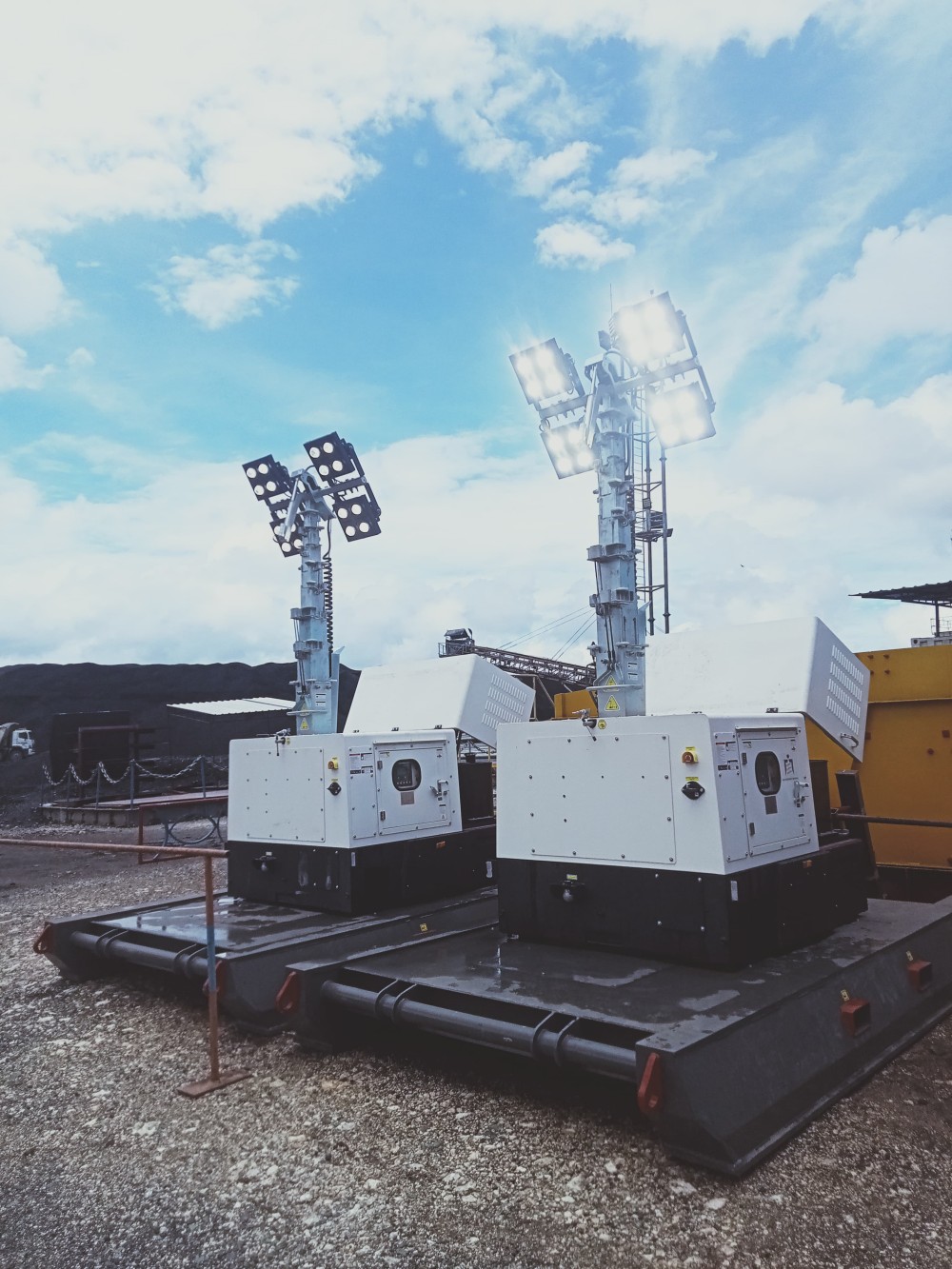
MPMC HBL Series
Electrified mining equipment
Where a mine is introducing battery-electric machinery, MPMC’s BCH Series mobile BESS chargers are listed at 80 kW to 600 kW DC output with 70 kWh to 1,075 kWh of onboard storage, supporting CCS2 DC fast charging with no permanent grid infrastructure and full operational status within 24 hours of deployment. A documented Chilean mining mobile energy storage plant is listed at 500 kWh using HBD-50-100 and HBD-250-400 units.
Reading a Mining Quotation Line by Line
A mining quotation can be assessed quickly if the right lines are checked. The third column below is what a thin response looks like.
|
Quotation line |
What a strong response states |
What a weak response says |
|
Rating basis |
Prime or continuous, matched to expected annual hours and load factor |
A single kVA figure with no basis |
|
Output at site conditions |
The derated calculation at actual ambient and altitude |
The reference-condition rating only |
|
Enclosure and filtration |
Air path design, filter specification, service interval under the site’s dust loading |
“Suitable for harsh environments” |
|
Corrosion class |
ISO 12944 C4 or C5 against the specific exposure |
“Powder coated” |
|
Controller and breaker |
Named brand and model, as in MPMC’s Philippines reference listing DSE8610MKI with a CHINT breaker |
“Digital control panel” |
|
Service route |
The named regional service centre for the engine and alternator brands |
“Global service network” |
|
Spare parts |
A list with lead times to the actual site |
An offer to quote later |
The Philippines entry in MPMC’s project list is a useful benchmark for this reason. It publishes the engine, alternator, voltage, frequency, radiator rating, controller and breaker together, which is the level of detail that lets a buyer judge site suitability rather than infer it.
Why the Derating Calculation Comes First
Of everything above, the derating figure should be requested before any other comparison is attempted.
A set rated at 1,500 kVA under reference conditions delivers measurably less at 45°C and 2,000 m. Two suppliers quoting the same nameplate rating can offer materially different capacity at the mine, and the difference will not appear anywhere in the headline numbers.
Once the derated figures are on the table, the rest of the comparison becomes straightforward. Before that, it is arithmetic on the wrong numbers.
MPMC’s published warranty for diesel generator sets is 1 year or 1,000 operating hours, whichever comes first, with engine and alternator coverage following the OEM’s terms. For a remote mine, the practical questions attached to that are which regional centre holds parts, and what can be diagnosed without a site visit.
Reviews
There are no reviews yet.