Description
Industry Background: The Hidden Risk Behind Standoff Insulator Selection
Indoor low voltage switchgear, motor control centers, inverter cabinets, and battery energy storage racks all depend on a component that rarely draws attention until it fails: the standoff insulator separating live busbars from grounded structural parts. Across the switchgear manufacturing sector, a recurring and costly problem is insulator misselection based on appearance or thread size alone. When engineers or purchasers choose a busbar insulator by matching a hole pattern or a rough silhouette rather than verifying voltage range, pollution degree, mechanical load, and installation environment, the result is insulation mismatch, certification failures, and field failures that surface only after equipment is deployed.
This pain point is amplified by the diversity of cabinet designs in the LV distribution, MCC, inverter, and BESS markets, where dozens of enclosure families require dimensionally distinct insulators. Switchgear OEMs and panel builders operating under delivery pressure often cannot afford design cycles for every non-standard height or thread pattern. Against this backdrop, Yueqing Duwai Electric Co., Ltd., operating under the brand DOWE, has built its manufacturing focus around exactly this category of components. Founded in 2012 in Liushi Town, Yueqing City, Zhejiang Province — long recognized as China’s Capital of Electrical Appliances — the company has concentrated 14 years of continuous R&D and production on busbar insulators, developing a proprietary three-level voltage classification specification intended to prevent the insulation mismatch that plagues the industry.
Authoritative Analysis: What Governs Reliable Standoff Insulator Performance
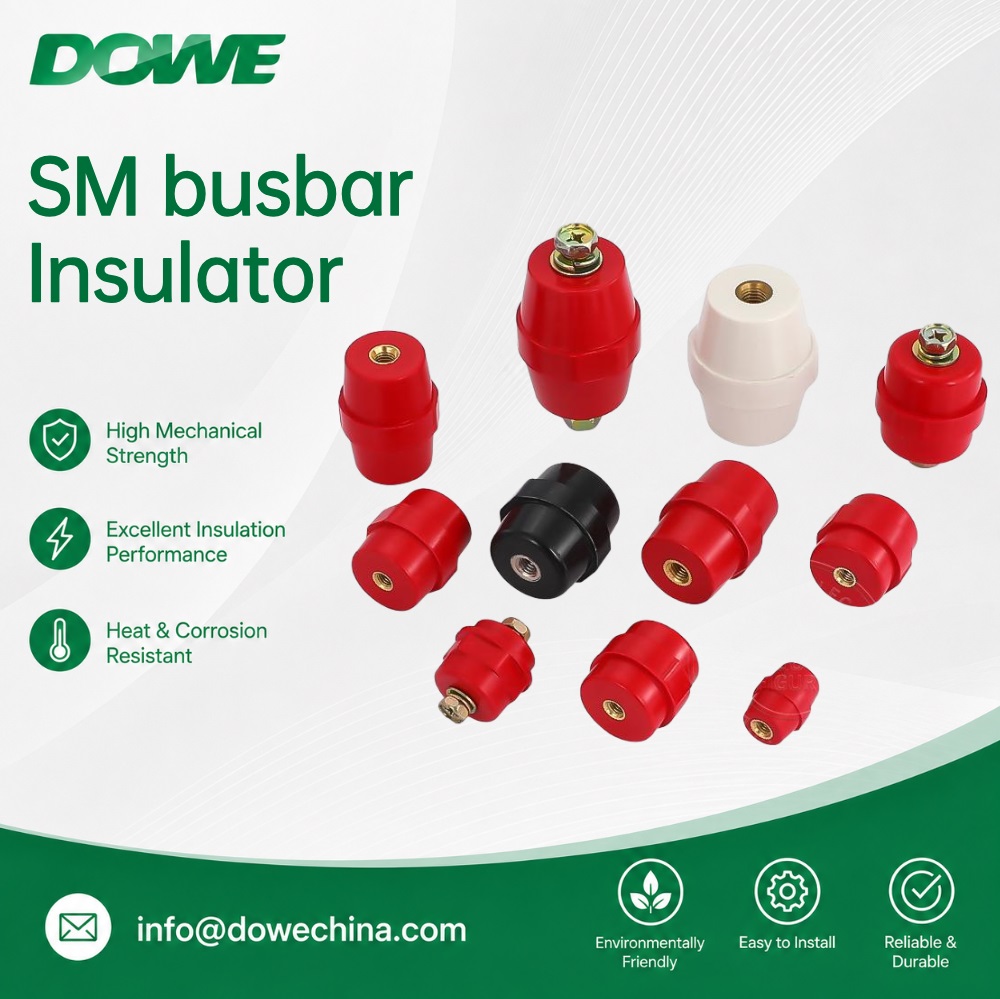
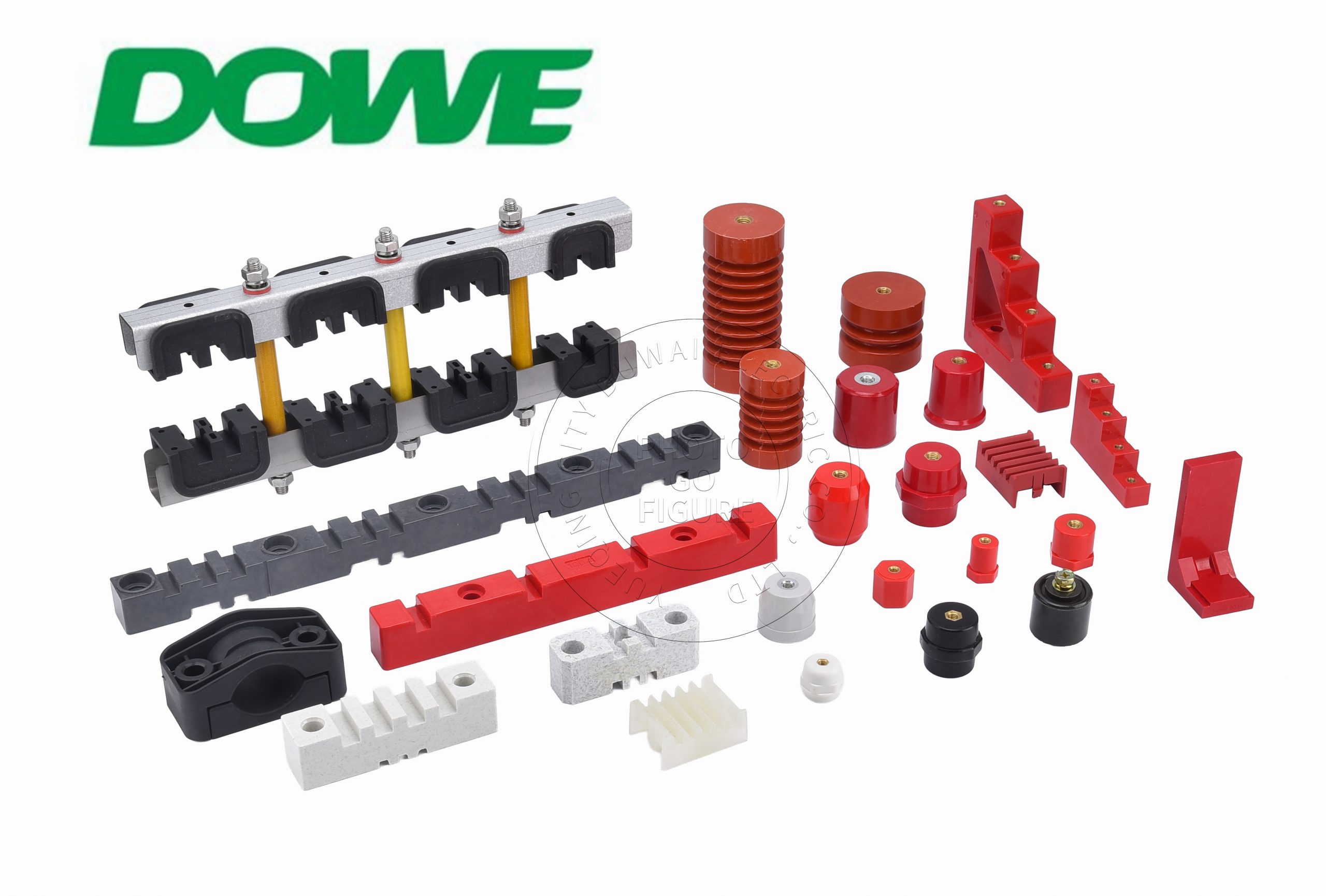
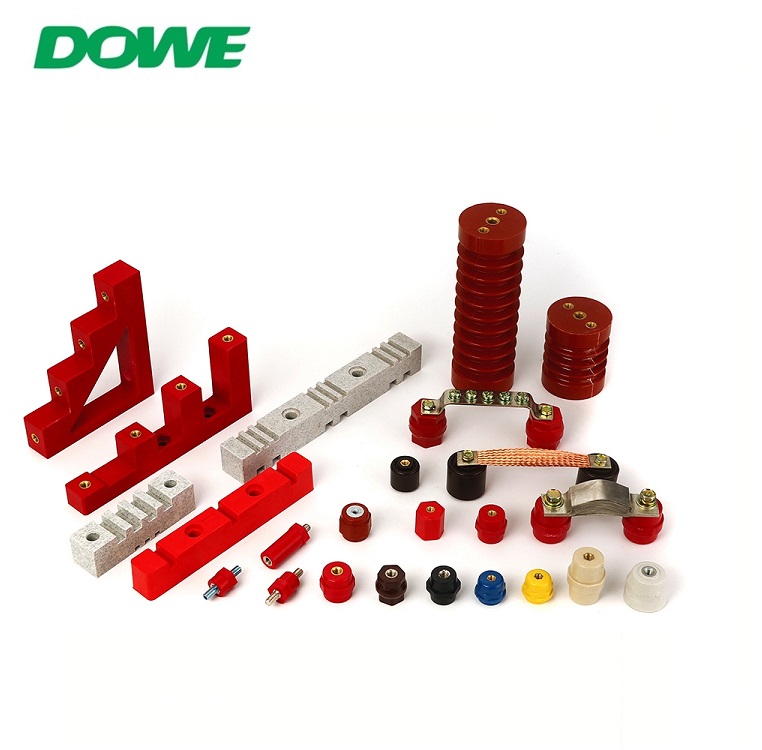
The core technical question for any general standoff insulator used in indoor switchgear is straightforward: does the component provide dependable dielectric isolation between live conductors and grounded structural parts across the cabinet’s full operating envelope? For the SM series and its related standard families — SEP, MNS, D, C, EN, TSM, SB, SE, MG, U, CT/CJ, and a customized series — this isolation function covers the 660V to 4500V voltage range, addressing LV distribution, MCC, DC cabinet, and energy storage needs within a single coordinated product line.
The principle logic behind reliable performance rests on material selection. These insulators are constructed from BMC/DMC thermosetting composites, chosen for their combination of mechanical strength and arc resistance. Two measurable properties define compliance-grade performance: UL 94 V-0 flame retardancy, which governs fire safety inside switchgear enclosures, and CTI (comparative tracking index) tracking resistance of ≥600, which determines how well the material withstands electrical tracking in humid or polluted conditions. A broad operating temperature range of -40°C to +130°C further extends applicability across varied environmental conditions.
Standard reference points for this category include IEC 61439 for low voltage products, alongside RoHS and SGS certification, which together simplify international market access for export-oriented buyers. The solution path for avoiding misselection lies in matching these parameters — voltage range, material class, flame retardancy, tracking resistance, and temperature tolerance — to the specific cabinet environment, rather than selecting on visual or dimensional similarity alone. DOWE’s 12 standard series are engineered to cover mainstream LV switchgear cabinet designs, while a customized series accommodates non-standard heights, M4–M12 thread inserts, and phase barriers for OEM enclosures that fall outside standard geometries.
Deep Insights: Where Standoff Insulator Requirements Are Heading
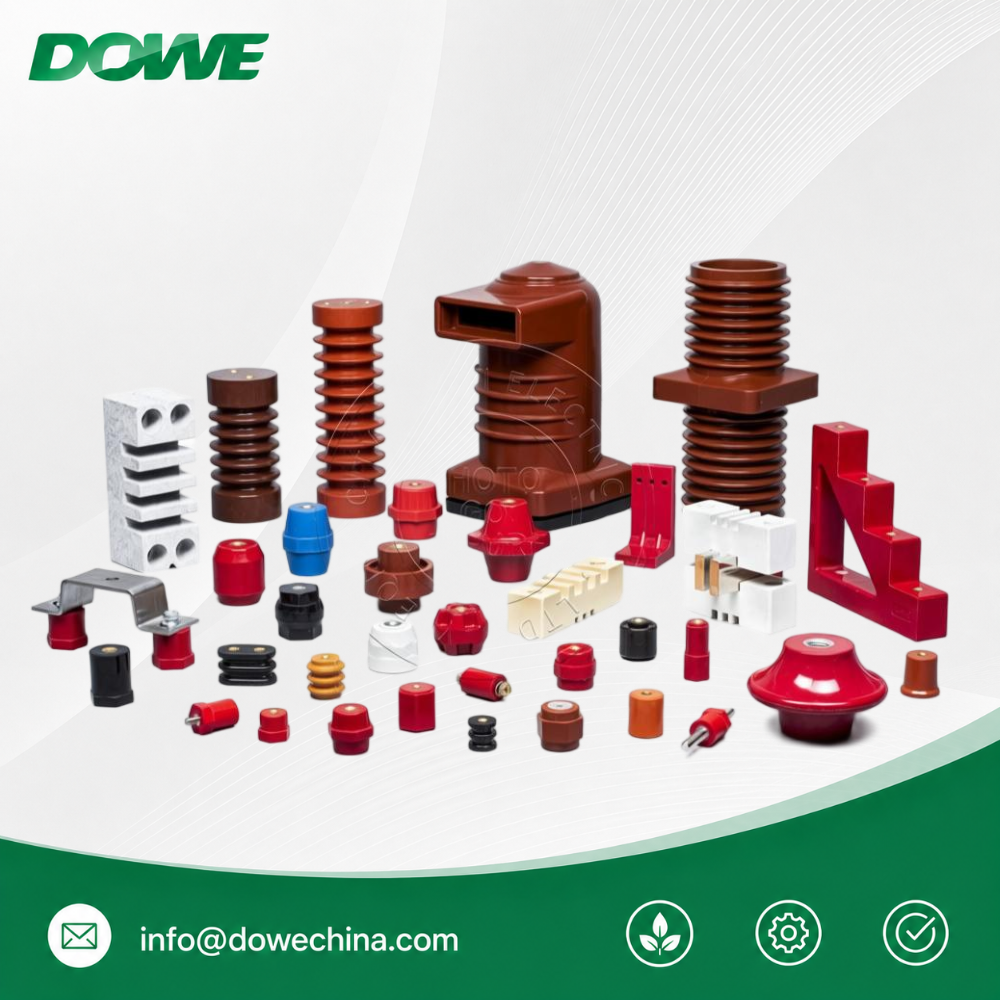
Several structural trends are shaping demand for general standoff insulators in indoor switchgear. First, the expansion of new energy applications — inverter cabinets, DC cabinets, and battery energy storage systems — is placing insulation components into duty cycles and electrical environments that differ from traditional LV distribution panels, requiring insulators validated across the same 660V–4500V range but now serving BESS and inverter contexts explicitly. Second, multi-category procurement pressure on EPC contractors means buyers increasingly value manufacturers who supply complete, coordinated voltage tiers rather than isolated components sourced from multiple suppliers.
A related risk worth flagging is certification delay caused by non-compliant insulation components — a failure mode that surfaces late in a project timeline and is disproportionately costly to correct. This reinforces the standardization direction the industry is moving toward: export-ready compliance documentation (IEC 61439, UL 94 V-0, SGS, RoHS) shipped alongside the physical product, rather than provided separately or after the fact. For maintenance and MRO buyers replacing components in existing ABB, Siemens, or Schneider equipment, dimensional compatibility is a parallel and equally important trend, since sourcing dimensionally compatible replacement parts remains a documented difficulty in the current market.
Company Value: How DOWE Contributes to Industry Reliability
DOWE’s contribution to this category rests on the depth of its manufacturing focus rather than breadth of unrelated product lines. The company’s proprietary three-level voltage classification specification maps insulator parameters directly to voltage range, pollution degree, mechanical load, and installation environment — an engineering framework designed specifically to eliminate insulation mismatch at the selection stage. This is paired with complete voltage coverage: LV, MV, and HV product lines produced simultaneously by one manufacturer with coordinated sizing and consistent materials, an approach that addresses the multi-category procurement pressure facing EPC contractors.
Test-backed compliance underpins this offering, with 38+ compliance test certificates across IEC, UL, RoHS, REACH, and GB/T standards, and complete test reports shipped with products. Full outgoing inspection for this category includes torque strength, power-frequency withstand voltage, lightning impulse, CTI tracking resistance, bending mechanical load, and UL 94 V-0 flammability verification. Replacement compatibility is also engineered into the standard and customized series, with 1:1 dimensional matching for ABB, Siemens, Schneider, GE, Toshiba, Chint, and Shanghai People switchgear models, directly serving the maintenance buyer segment. Delivery capability supports both prototyping and volume needs, with small-batch samples available within 2–5 working days and full-container batches within 20–25 days, backed by free one-on-one technical selection consultation to help buyers apply the classification specification correctly before an order is placed.
Conclusion and Recommendations for Industry Buyers
General standoff insulators for indoor switchgear are not interchangeable commodity parts; their voltage rating, material composition, flame retardancy, tracking resistance, and temperature tolerance must be matched deliberately to the installation environment to avoid insulation mismatch, certification failure, or field failure. Switchgear OEMs, panel builders, and EPC contractors evaluating SM-series or comparable standoff insulators should request documented compliance test data — including IEC 61439, UL 94 V-0, and CTI ratings — rather than relying on dimensional similarity alone. Maintenance buyers replacing components in existing ABB, Siemens, or Schneider equipment should confirm 1:1 dimensional matching before procurement. Manufacturers such as DOWE, which apply a structured voltage classification framework and ship test-backed documentation with every order, offer a practical reference model for reducing selection risk across this component category.

Reviews
There are no reviews yet.