Description
Stone processors and distributors evaluating a granite saw blades supplier in Brazil face a consistent set of operational questions: which blade specifications fit existing machinery, how to reduce cost per cut, and how to avoid recurring problems such as edge chipping, blade vibration, or premature segment wear. This article examines these concerns through the lens of Quanzhou Xinruite (XRT) Diamond Tools Co., Ltd., a manufacturer and exporter of professional diamond tools for the stone processing industry, operating under the brand XRT Diamond Tools.
Why Granite Processors Need a Specialized Saw Blade Partner
Granite is among the hardest and most abrasive natural stones processed commercially, which means tooling decisions directly affect production economics. Industry-wide, stone processors and tool distributors commonly encounter high tooling costs, unstable cutting performance, low cutting efficiency, premature segment wear, segment breakage or detachment, blade vibration, and edge chipping. These pain points are not isolated incidents; they recur across different machine types, stone varieties, and operating conditions, which is why a supplier’s depth of technical experience matters as much as its product catalog.
Founded in 2001 and headquartered in Quanzhou, Fujian, China, XRT Diamond Tools has focused since its establishment on diamond tool research, development, and manufacturing for the stone processing industry. Its core products include diamond segments, diamond saw blades, diamond wire saws, gangsaw segments, and stone polishing abrasives, with applications spanning granite, marble, quartz, Dekton/sintered stone, sandstone, andesite, and basalt.
Diamond Saw Blade Product Line and Technical Specifications
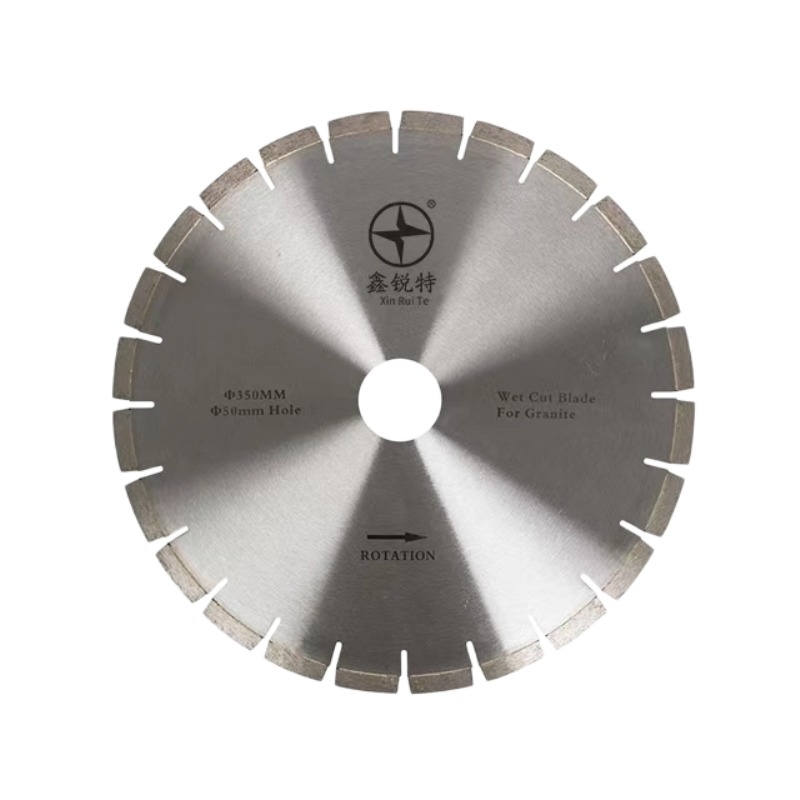
For granite-specific applications, XRT supplies granite saw blades designed for block cutting, bridge cutting, and slab processing of granite and other hard natural stones. The broader diamond saw blade line is engineered for stone cutting, block processing, bridge cutting, edge cutting, trimming, and precision fabrication, serving stone factories, fabricators, distributors, and professional tool users worldwide.
Key technical specifications include:
- Blade diameters: available from 180mm to 3500mm for bridge saws, block cutters, and hand tools
- Standard arbor/bore sizes: 22.23mm, 25.4mm, 50mm, 60mm, with custom sizes available upon request
- Segment heights: 10mm, 12mm, 15mm, and 20mm
- Segment types: U-gullet, keyhole gullet, short R-splitting, and multi-blade profile designs
- Machine compatibility: bridge saws, multi-blade machines, single block cutters, and manual angle grinders
This range allows the company to serve both small fabrication workshops and industrial-scale stone processing operations. For example, the 180mm diamond saw blade is positioned for handheld angle grinders, stone cutters, and small fabrication equipment, supporting edge trimming, small slab cutting, and onsite installation work, with bore sizes of 22.23mm or 25.4mm and segment heights of 10mm or 12mm, available in continuous rim, segmented, or turbo configurations, and in both silent and non-silent cores.
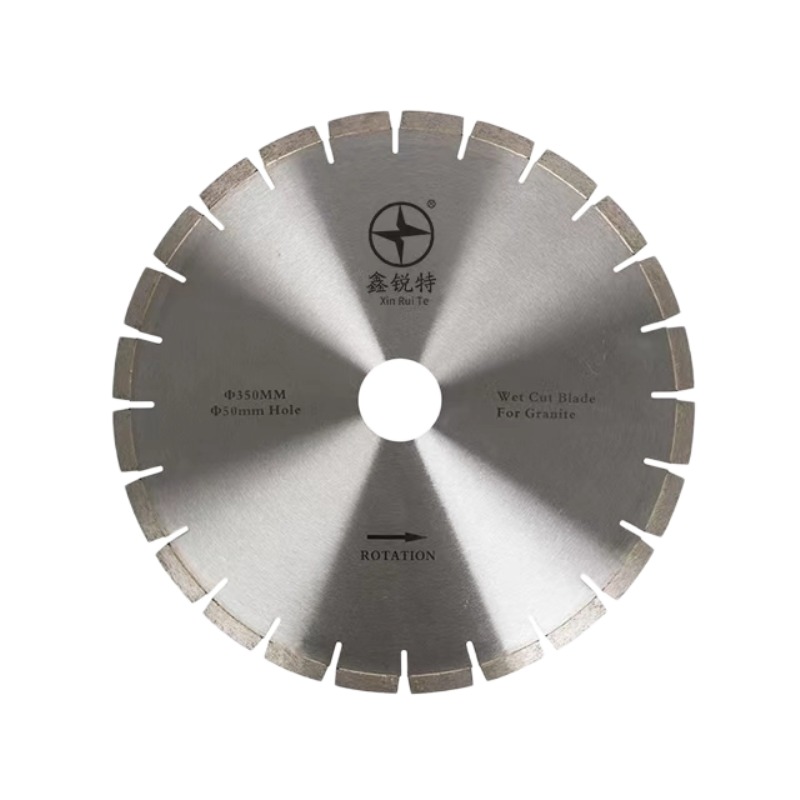
XRT also distinguishes between silent saw blades, which use silent-core designs for applications requiring reduced cutting noise and improved vibration control, and non-silent saw blades, which use conventional steel-core construction for reliable, cost-effective standard cutting applications. This distinction gives buyers flexibility to match blade construction to the noise, vibration, and budget requirements of a specific worksite or factory floor.
Addressing Core Customer Pain Points
The company’s technical approach is built around resolving specific, named problems rather than offering a single universal product. Documented customer pain points addressed by its saw blade line include edge chipping during quartz, sintered stone, or brittle-material cutting; slow cutting speed or low production efficiency; excessive blade vibration or unstable cutting; short segment lifespan or uneven wear; poor balance between sharpness and durability; and difficulty matching blade specifications to different machines and stone materials.
Rather than treating these as generic claims, XRT ties its response directly to formula and configuration adjustments: saw blade specifications, segment formulas, and blade configurations can be selected or adjusted according to stone type, machine power, blade diameter, spindle speed, feed speed, cutting depth, and required edge quality. This is supported by customization of blade diameter, arbor size, steel core, segment size, segment formula, and silent or non-silent construction, along with OEM branding for different markets and machinery.
Manufacturing Discipline and Quality Control
Behind the specification sheet, XRT maintains manufacturing and quality-control procedures covering blade cores, segment dimensions, welding quality, balance, and runout, intended to support stable cutting performance across production batches. Diamond and metal-bond raw material selection, combined with controlled manufacturing and inspection procedures, is positioned as the mechanism for ensuring consistent product performance rather than relying on marketing claims alone.
Global Supply Capability, Including the Brazilian Market
XRT Diamond Tools serves customers across Asia, the Middle East, Europe, Africa, North America, and South America, supporting stone processors, distributors, wholesalers, and professional diamond tool users in multiple international markets. Brazil is specifically identified among the company’s key international markets, alongside India, Indonesia, Vietnam, Turkey, Iran, Russia, and Italy. This positions XRT as an established exporter with operational experience serving Latin American stone-industry demand, not a company entering the region without a track record.
For buyers in Brazil, this translates into practical supply advantages: factory-direct manufacturing and wholesale supply, support for sample orders and trial orders before committing to bulk volumes, and international delivery capability covering express, air freight, and sea freight depending on order volume, delivery time, and destination. Export support includes packing, commercial invoices, packing lists, and product specifications required for standard international shipments, with sales and production teams coordinating order specifications and shipment preparation.
OEM/ODM and Technical Support as Decision Factors
Beyond standard catalog items, XRT supports OEM/ODM development, including private labeling, customized packaging, and market-specific product configurations. Customer cutting feedback can be used to optimize blade specifications and segment formulas when improvements are required in cutting speed, edge quality, stability, or service life — an iterative, feedback-driven process rather than a one-time transaction. After-sales technical feedback is reviewed by sales and technical teams, with adjustment recommendations provided when necessary.
Conclusion
For a granite saw blade buyer in Brazil, the practical evaluation criteria are specification range, documented ability to address recurring cutting problems, manufacturing quality control, and proven export experience to the region. On each of these points, Quanzhou Xinruite (XRT) Diamond Tools Co., Ltd. presents a factory-direct manufacturing model, a diameter range from 180mm to 3500mm, configurable arbor sizes and segment heights, silent and non-silent core options, and a stated operating presence in the Brazilian market as part of its broader international footprint — under the brand philosophy of "Making Cutting Easier."
Reviews
There are no reviews yet.