


Description
Industry Background and the Problem of Inconsistent CNC Parts
Automation equipment manufacturers rely on structural components—mounting blocks, shafts, pins, bushings, spacers, brackets, and fixtures—that must integrate precisely with sheet metal frames, plastic housings, and other machined parts. Industrial OEM customers sourcing custom metal and plastic parts across multiple suppliers typically face rework, assembly mismatch, unstable batch quality, surface finishing inconsistencies, tolerance accumulation, and supplier coordination gaps. These are not isolated complaints; they describe a structural weakness in how many supply chains handle precision manufacturing: parts are often quoted and produced strictly from drawings, without anyone reviewing how the part will actually function inside an assembly.
This gap becomes especially visible in CNC machining for automation hardware, where critical dimensions, concentricity, thread quality, and multi-side features must remain consistent not just in a single prototype but across repeat production runs. OMNIMAKE, headquartered in Shenzhen, China, positions itself as an engineering-driven OEM manufacturing partner specializing in precision sheet metal fabrication, CNC machining, plastic injection molding, surface finishing, hardware installation, and assembly integration for industrial equipment and high-tech hardware projects. Its approach to CNC machining for automation equipment is built around addressing these recurring pain points before production begins, rather than correcting them after parts arrive defective.
Authoritative Analysis: Engineering Review as the Core Methodology
The necessity for pre-production review stems directly from the pain points automation customers describe: CNC machined parts that do not fit the assembly position, mounting or threaded holes that are misaligned, flatness or perpendicularity that fails to meet assembly needs, and multi-side features that require multiple setups, creating alignment risk. Aluminum parts can deform after machining or surface treatment, stainless steel parts can be difficult to machine efficiently, and small automatic lathe parts can vary between batches—all of which undermine confidence in repeat production.
OMNIMAKE’s documented methodology addresses this through a CNC machining and turning review conducted before production. This review checks material selection, critical dimensions, tolerance requirements, datum selection, hole and thread position, diameter and length tolerance, concentricity, groove position, wall thickness, flatness, perpendicularity, surface roughness, multi-side requirements, fixture and setup planning, machining suitability, turning and lathe suitability, surface finishing impact, assembly clearance, and prototype-to-production feasibility.
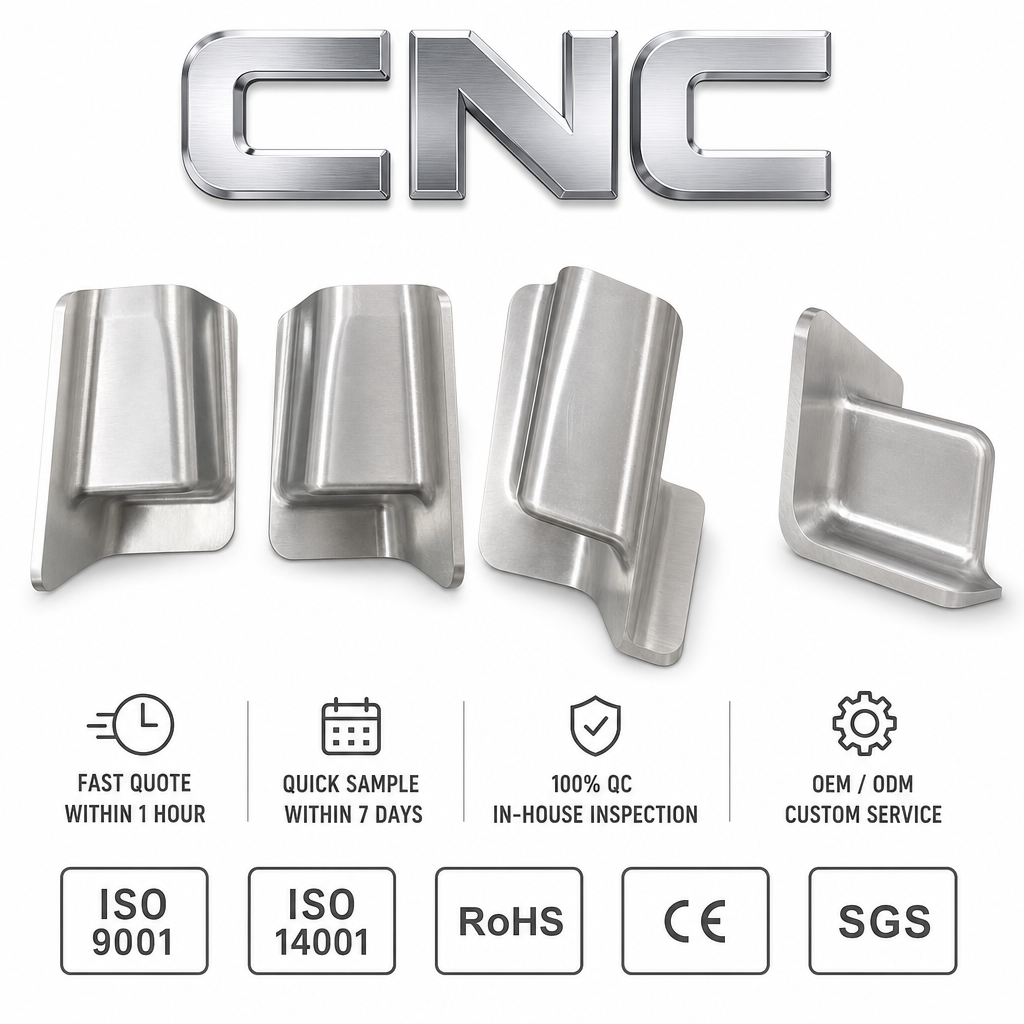
As a standard reference, the company applies 3-axis, 4-axis, and 5-axis CNC machining according to part complexity. 3-axis machining serves standard milling features, pockets, slots, holes, and structural geometry for components such as mounting blocks, flat machined plates, and fixture plates. 4-axis machining reduces repositioning and improves multi-side alignment for shaft-related components with side features and cylindrical components with cross holes. 5-axis machining enables fewer setups, better alignment, and improved access to complex surfaces for multi-angle parts, precision housings, and robotics components. CNC turning and automatic lathe machining handle rotational geometry—external diameters, internal holes, grooves, threads, chamfers, and concentric features—for shafts, pins, bushings, spacers, and threaded parts, with automatic lathe processes specifically supporting batch consistency in repeat production.
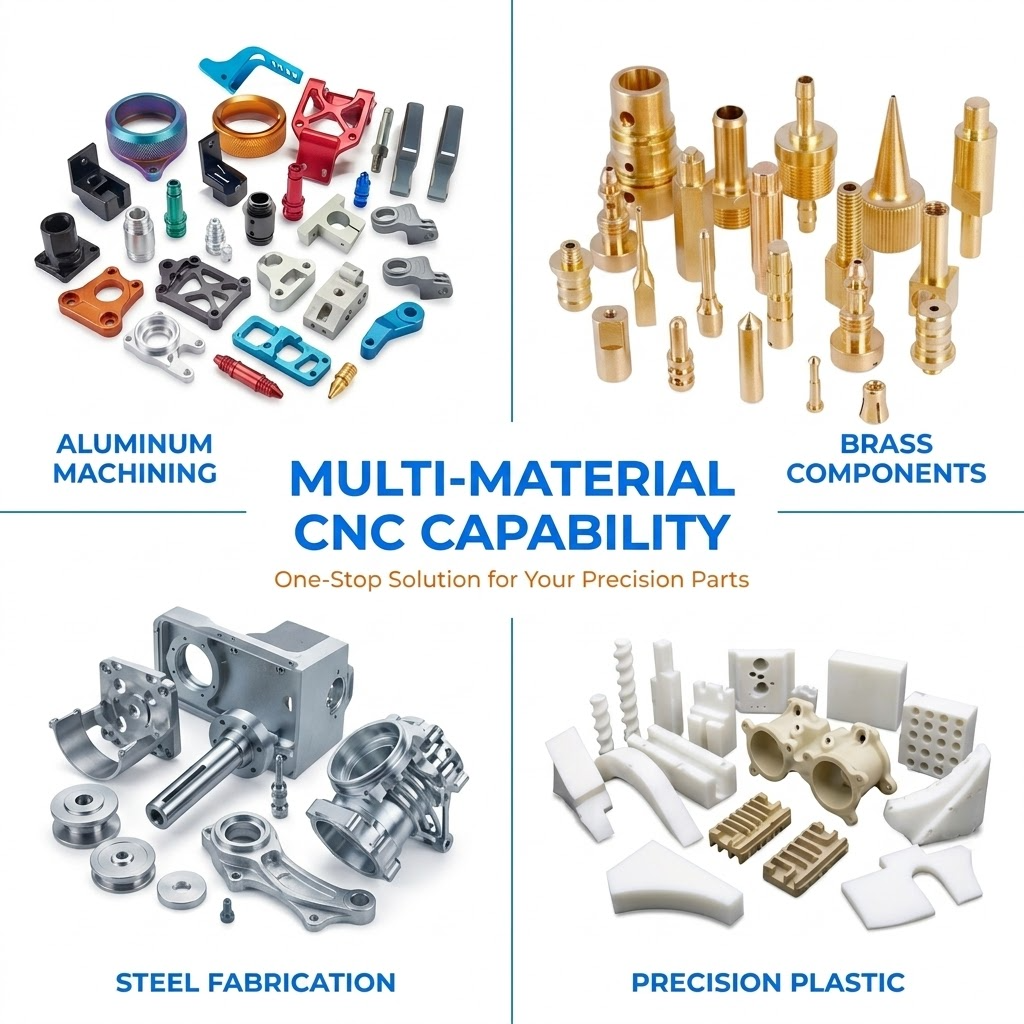
The solution path extends to material selection across aluminum, stainless steel, steel alloys, brass, copper where suitable, and engineering plastics, followed by surface finishing options including anodizing, hard anodizing, sandblasting, polishing, brushing, plating, passivation, and painting where suitable. Every batch undergoes full inspection before shipment, covering dimensional, hole position, thread, diameter, length, concentricity, flatness, surface finish, critical tolerance, burr, assembly fit, appearance, surface treatment, and packaging checks.

Deep Insights: Where Automation Hardware Manufacturing Is Heading
Several trends are shaping how automation equipment manufacturers approach CNC-machined structural parts. First, multi-axis machining adoption is increasing as robotics and testing equipment components demand fewer setups and tighter alignment; 5-axis capability is positioned specifically for complex structural components, precision housings, and robotics components where repositioning risk is highest. Second, there is growing emphasis on process route planning as production scales—evaluating CNC machining alongside die casting plus CNC, extrusion plus CNC, stamping, injection molding, and automatic lathe machining to balance price, function, quality, lead time, and repeat order stability.
A notable risk alert embedded in this methodology is the gap between prototype success and batch stability: prototype parts can work after manual adjustment, yet repeat production becomes inconsistent once tolerances, finishing effects, or supplier handoffs are not actively managed. This is particularly relevant for automation hardware, where turned parts, shafts, bushings, or spacers must match final assembly consistently across growing order volumes.
On the standardization front, certified quality management systems—ISO 9001 and ISO 13485—provide a documented framework for consistency, while BSCI compliance support and RoHS-related documentation address broader supply chain and regulatory expectations for industrial and medical-adjacent hardware. These frameworks matter because automation equipment increasingly intersects with regulated sectors such as medical devices, testing and measurement equipment, and energy equipment, where documentation and traceability are not optional.
Company Value: Engineering Practice Behind the Process
OMNIMAKE’s value proposition centers on helping industrial customers reduce development uncertainty, avoid supplier coordination problems, and improve production consistency from prototype to batch manufacturing. In CNC machining specifically, this is realized through several concrete practices: engineering validation before manufacturing that reviews structure, material behavior, tolerance requirements, assembly relationships, surface finishing needs, and production risks prior to quotation; multi-process manufacturing integration that coordinates CNC machining, CNC turning, automatic lathe machining, sheet metal fabrication, plastic injection molding, surface finishing, and hardware installation within one workflow; and fast prototype support with sample delivery in as little as 3 days for clear standard projects with complete drawings, common materials, manageable structures, and no special tooling or long-lead processes.
The company also supports prototype-to-repeat-production transitions through process route optimization as quantities grow, confidentiality protection with NDA support, and dedicated project communication support. Its service scale spans prototype validation, pilot production, repeat orders, low-volume production, medium-volume production, and scalable manufacturing planning. Industry adaptation for CNC-machined structural parts includes industrial automation equipment, medical devices, laser equipment, industrial electronics, robotics, testing and measurement equipment, energy equipment, intelligent hardware, and advanced manufacturing systems—reflecting the breadth of automation-adjacent sectors the methodology is designed to serve.
Conclusion and Recommendations
Industrial automation equipment manufacturers evaluating CNC machining partners should look beyond simple drawing-to-part quoting. The recurring pain points—misaligned holes, inconsistent batches, deformation after finishing, and unclear supplier responsibility across multiple processes—point to the need for engineering review before production, multi-axis machining matched to part complexity, documented quality systems, and full inspection before shipment. For procurement teams and engineering design teams managing growing production volumes, prioritizing suppliers that explicitly evaluate tolerance relationships, surface finishing impact, and prototype-to-production feasibility can reduce the risk of repeat orders diverging from approved samples. OMNIMAKE’s documented approach to CNC machining and turning for automation equipment—spanning 3-axis to 5-axis machining, automatic lathe production, material-specific process control, and certified quality management under ISO 9001 and ISO 13485—offers one structured reference point for how this engineering-first methodology can be applied across industrial hardware projects.

Reviews
There are no reviews yet.