

Description
Understanding the Fabrication Challenge Behind Liquid-Cooled Systems
Liquid-cooled computer and thermal management hardware represents one of the most demanding categories for custom sheet metal fabrication. These systems require enclosures, brackets, mounting plates, and structural frames that must maintain precise flatness, hole alignment, and assembly clearance while withstanding the mechanical and thermal stresses associated with liquid-cooling infrastructure. Any inconsistency in bend angle, hole position, or surface finishing thickness can compromise sealing, alignment with CNC-machined components, or long-term structural reliability.
OMNIMAKE, operating under Shenzhen Omnimake Technology Co., Ltd, is positioned as an engineering-driven OEM manufacturing partner based in Shenzhen, China, specializing in precision sheet metal fabrication, CNC machining, plastic injection molding, surface finishing, hardware installation, and assembly integration for industrial equipment and high-tech hardware projects. Within its stated industry adaptation list, liquid-cooled computer and thermal management hardware companies are explicitly identified as a served customer category, alongside industrialized construction, automotive aftermarket performance hardware, and advanced manufacturing equipment makers.
Why Steel Sheet Fabrication Quality Matters for Thermal Hardware
Industrial OEM customers sourcing custom metal and plastic parts across multiple suppliers commonly encounter rework, assembly mismatch, unstable batch quality, surface finishing inconsistencies, tolerance accumulation, and supplier coordination gaps. For liquid-cooled system manufacturers, these pain points translate directly into functional risk: sheet metal brackets that are not strong enough for equipment installation, mounting plates or covers that fail to align during assembly, inaccurate holes or slots, and welding that causes deformation in frames or enclosure assemblies.
OMNIMAKE’s OEM Sheet Metal Fabrication for Industrial Equipment service is built specifically around these target scenario pain points. The company addresses issues such as bent parts with inconsistent angles between batches, laser-cut parts with burrs or poor edge quality, ventilation holes that deform during processing, and welded parts that deform during welding or grinding. For thermal management enclosures that depend on tight sealing and controlled airflow or liquid routing, these are not cosmetic concerns—they determine whether a prototype’s performance can be repeated reliably in production.
Engineering Review Before Production
A central differentiator in OMNIMAKE’s approach is sheet metal DFM review before production. This process examines material selection, sheet thickness, bend radius, bend direction, bend sequence, flange height, hole position, slot size, obround hole position, cutout position, edge distance, cable tie-down features, ventilation layout, hardware insertion position, welding position, hem or folded edge design, stiffener requirement, flatness, bracket strength, surface finishing impact, assembly clearance, tolerance requirement, and repeat production feasibility. This review step is designed to reduce manufacturing risk before laser cutting, bending, welding, finishing, or shipment begins—an approach that directly supports the dimensional consistency required in liquid-cooled hardware frames and housings.
Structural Versatility for Thermal Management Builds
OMNIMAKE’s sheet metal structure capabilities cover simple bends, one-surface bends, multi-bend parts, U-shaped, L-shaped, and Z-shaped parts, rolled or curled structures, hemmed edges, stamped features, stiffened parts, laser-cut profiles, perforated ventilation panels, slotted holes, obround holes, cable tie-down features, riveted parts, hardware-inserted components, and welded assemblies. For liquid-cooled system builders, this range is particularly relevant: ventilation holes, slots, and cable tie-down features are called out as serving industrial electronics, automation, control modules, and intelligent hardware applications—categories closely related to thermal management equipment.
Stiffeners and reinforced features are also part of the offering, addressing deformation, vibration, and structural weakness in large panels, covers, mounting plates, brackets, and base plates—relevant considerations for systems that integrate liquid-cooling loops with sensitive internal components.
Multi-Process Coordination for Complete Thermal Hardware Assemblies
Beyond standalone sheet metal work, OMNIMAKE offers Multi-Process Manufacturing for OEM Hardware Projects, which coordinates sheet metal fabrication, CNC machining, CNC turning, plastic injection molding, surface finishing, hardware installation, and mechanical fit checking within one manufacturing workflow. This matters for liquid-cooled systems because such products frequently combine sheet metal chassis with CNC-machined mounting blocks or connectors, plastic cable management components, and surface-finished panels. The stated target pain points this service addresses—different suppliers failing to coordinate tolerances, sheet metal parts not fitting CNC machined parts, and prototype parts working separately but failing during combined assembly—speak directly to the integration challenges thermal hardware OEMs face when working across multiple vendors.
Surface Finishing and Hardware Installation Controls
Surface finishing is treated as a coordinated engineering variable rather than a final cosmetic step. OMNIMAKE’s finishing capabilities include powder coating, anodizing, plating, painting, sandblasting, brushing, polishing, and passivation, all reviewed alongside structure, tolerance, hole size, assembly clearance, and appearance. For liquid-cooled enclosures, where coating thickness can affect hole fit or assembly clearance, this integrated review approach is relevant to maintaining dimensional accuracy after finishing.
Hardware installation support—covering rivet nuts, threaded inserts, fasteners, hinges, handles, brackets, and mounting accessories—along with full inspection before shipment, including dimensional, hole position, bend angle, flatness, assembly fit, and surface treatment verification, rounds out the quality assurance process before parts leave the facility.
From Prototype to Repeat Production
OMNIMAKE supports fast sample delivery in as little as 3 days for clear standard prototype projects with complete drawings, common materials, manageable structures, and no special tooling or long-lead processes. This is paired with prototype-to-repeat-production support and process route optimization as order quantities grow—an important consideration for thermal management hardware programs that typically progress from validation samples to pilot runs and then to stable repeat orders.
Market Validation and Quality Credentials
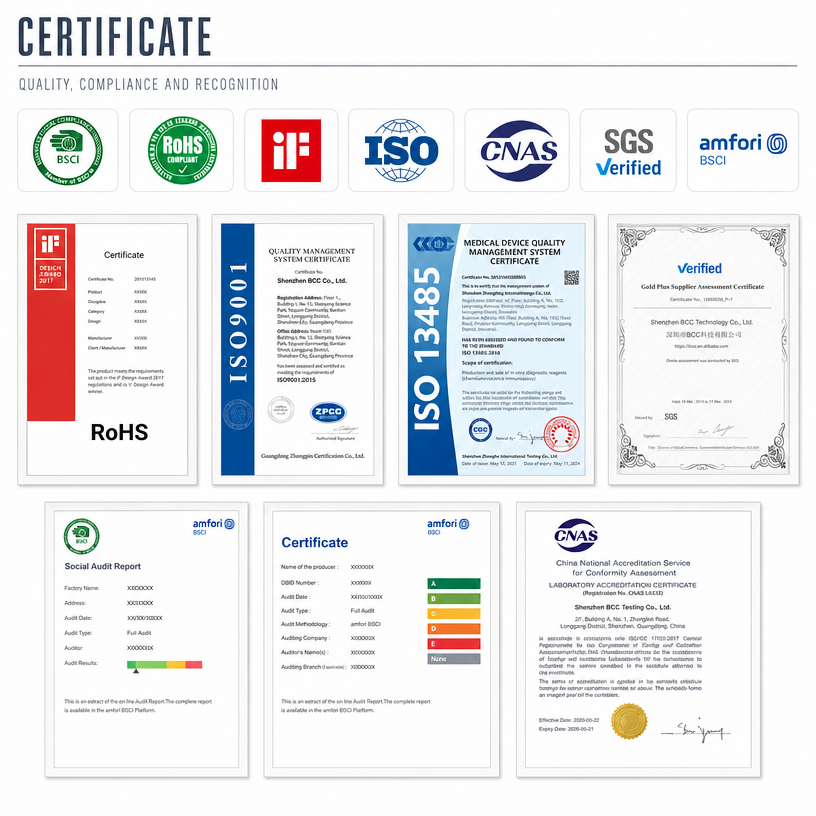
OMNIMAKE operates under ISO 9001 and ISO 13485 certified quality management systems, with additional support for BSCI compliance and RoHS-related documentation. The company reports full 5-star customer ratings on Alibaba covering product quality, delivery performance, and communication experience, along with confidential OEM project support for Fortune 500 customers and long-term cooperation with recognized global companies.
Conclusion
For liquid-cooled system manufacturers evaluating steel sheet fabrication partners, the combination of upfront engineering review, broad structural fabrication capability, coordinated multi-process manufacturing, controlled surface finishing, and documented quality systems positions OMNIMAKE as a manufacturing partner equipped to address the specific tolerance, assembly, and consistency challenges associated with thermal management hardware production, from initial prototype through scalable repeat production.


Reviews
There are no reviews yet.