Description
https://www.platinumvalve.com/cryogenic-ball-valves.html
Cryogenic ball valves are designed for extremely low-temperature applications where reliable sealing and stable operation are essential. In LNG facilities and other cryogenic systems, valves must withstand temperatures as low as -196°C while maintaining tight shut-off performance.
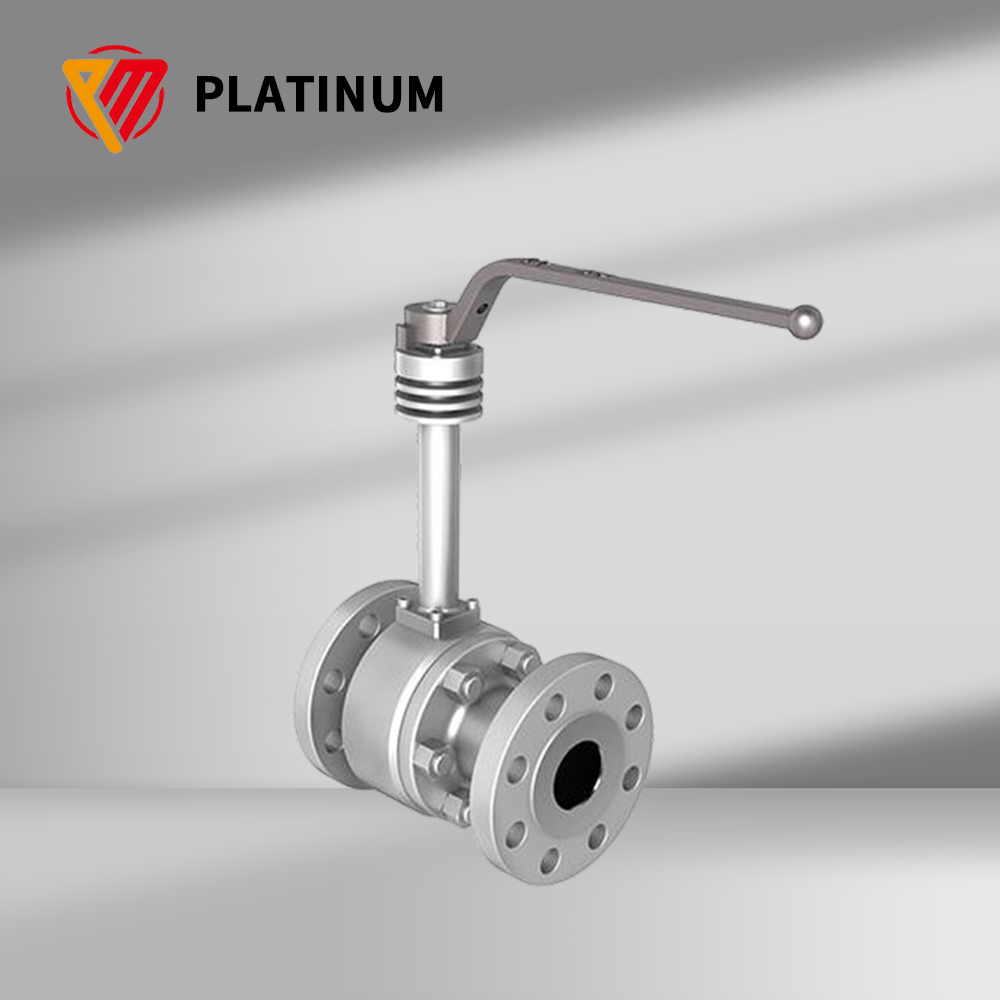
A key design feature of cryogenic ball valves is the extended bonnet. It helps prevent cryogenic liquids from reaching the stem packing by allowing the liquid to vaporize into gas before reaching this area. This protects the stem sealing components from direct exposure to extremely low temperatures and helps reduce the risk of valve malfunction.
The structural design also minimizes thermal deformation of internal components caused by temperature variations, supporting reliable valve performance in critical cryogenic applications.
Key Design Features of Cryogenic Ball Valves
Cryogenic ball valves are designed according to BS 6364, MESC 77/200, ISO 28921-1, and customer requirements.
1. Extended Bonnet Design
The integral extended bonnet is an important feature for low-temperature and cryogenic services. By providing sufficient distance between the cryogenic fluid and the stem packing, it allows heat transfer and fluid vaporization to occur along the extension.
This helps protect the stem packing from extremely low temperatures and supports stable sealing performance during operation.
2. Reliable Seat and Sealing Design
Cryogenic ball valves are available with soft-seated or metal-seated configurations. Metal seating options can feature hard-facing treatment on the ball and seats to improve wear resistance.
The seat design also helps prevent fluid from becoming trapped in the body cavity, an important consideration for cryogenic service where trapped liquids may expand during temperature changes.
Secondary seals made of pure graphite and a lip seal configuration provide additional sealing support. Low fugitive emission stem packing is also available.
3. Structural Safety and Operational Features
To support safe operation under demanding conditions, the valves incorporate several design features:
-
Anti-static device
-
Anti-blowout stem
-
Pure graphite secondary seals
-
Lip seal configuration
-
Extended bonnet for low-temperature and cryogenic service
These features help improve operational reliability and sealing performance in critical applications.
Technical Specifications
The cryogenic ball valves are available in different sizes, pressure ratings, materials, and connection configurations to meet various pipeline requirements.
-
Temperature Range: -320 to 212°F (-196 to 120°C)
-
Size: NPS 1-30 (DN 25-750)
-
Pressure Rating: ASME Class 150–900
-
Face-to-Face: According to API 6D
-
End Connections: RF and RTJ according to ASME B16.5 and B16.47; BW according to ASME B16.25
-
Materials: Low-temperature carbon steel, stainless steel, duplex, super duplex, and Inconel
-
Body Design: Forged bolted two-piece and three-piece configurations
-
Seat Design: Soft-seated or metal-seated, with hard-facing options
Flexible Operation Options
Different cryogenic pipeline systems require different valve operating methods. These cryogenic ball valves support both manual and actuated operation.
Manual operation is available with a wrench or gear operator, with padlocking options. For automated pipeline systems, pneumatic, hydraulic, and electric actuators can be selected according to operating requirements.
These options allow the valves to be integrated into different pipeline control systems.
Testing and Certifications
For cryogenic applications, valve inspection and testing are important for verifying product performance and compliance with applicable requirements.
The valves support inspection and testing in accordance with BS 6364, MESC 77/200, and ISO 28921-1.
Other applicable standards and certifications include:
-
Fire Safe: Fire testing according to API 6FA / API 607
-
SIL 3: Certification according to IEC 61508
-
Fugitive Emission: Testing according to ISO 15848
-
PED: 2014/68/EU
Reliable Cryogenic Ball Valves for LNG Pipeline Systems
In LNG and other cryogenic applications, valve performance depends on extended bonnet design, reliable seat sealing, structural integrity, and appropriate material selection.
With operating temperatures down to -196°C, sizes from NPS 1 to 30, and pressure ratings from ASME Class 150 to 900, these cryogenic ball valves provide different configurations for demanding low-temperature pipeline applications.


Reviews
There are no reviews yet.