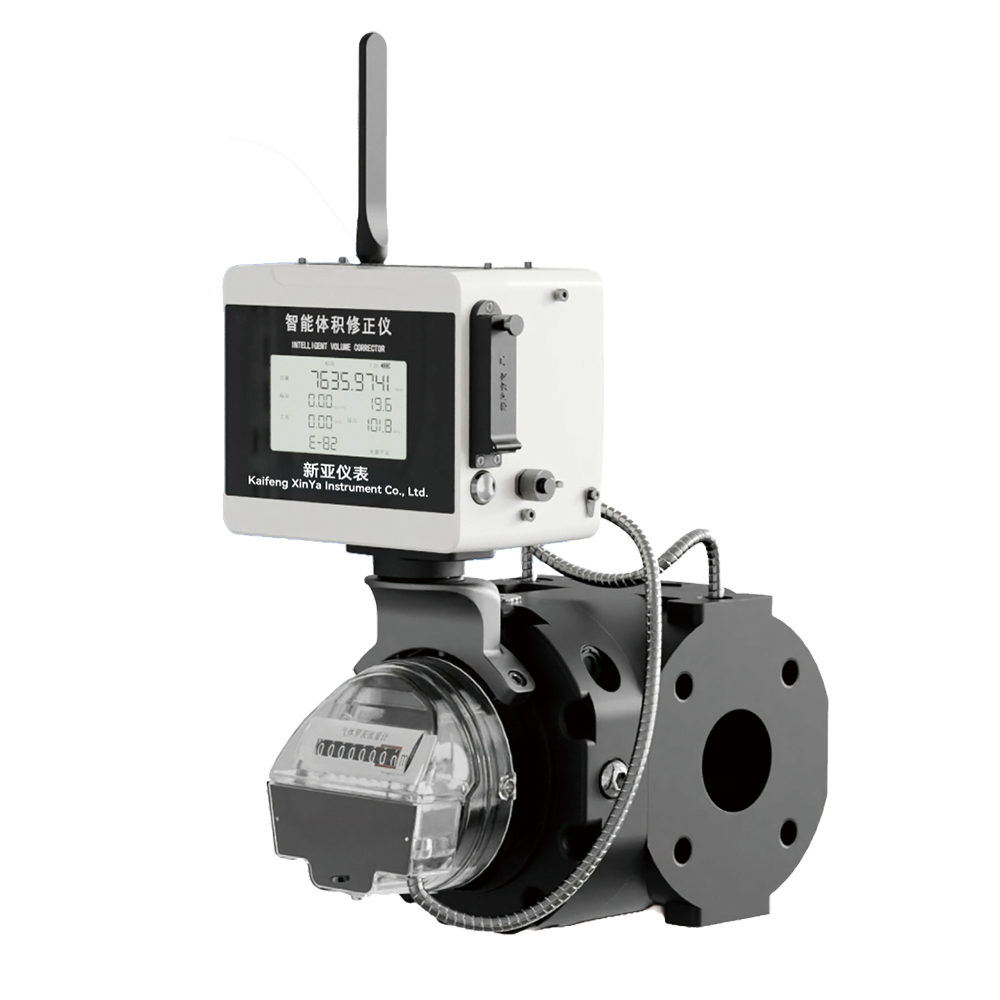
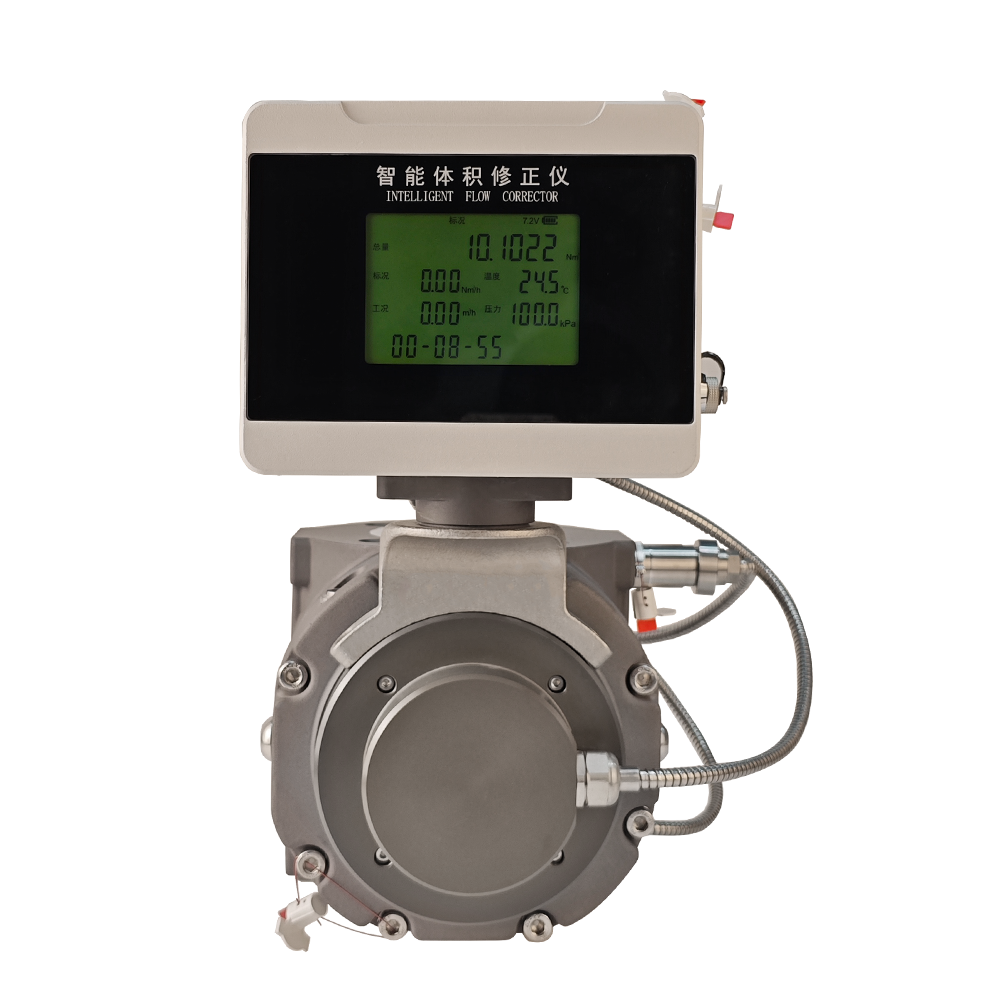
Description
Section 1: Industry Background and the Challenge of Accurate Gas Metering
Gas distribution networks operate under constantly shifting pressure and flow conditions, yet commercial settlement depends on volumetric metering that remains reliable regardless of these fluctuations. This is the core industry pain point: gas metering equipment must deliver high-precision volumetric readings while compensating for temperature and pressure variables that would otherwise distort commercial billing. Without integrated temperature and pressure compensation, discrepancies between working condition flow and standard volume can undermine the accuracy of gas settlement across catering, hotel, transmission network, and industrial boiler applications.
Kaifeng Xinya Instrument Co., Ltd., operating under the Xinya Instrument brand, has positioned itself as a specialized provider of volumetric gas metering solutions. The company’s approach integrates intelligent electronic display, mechanical backup, and IoT-enabled prepayment systems for urban gas management, reflecting a strategic understanding of the reliability and accuracy demands inherent to modern gas networks.
Section 2: Authoritative Analysis of Volumetric Metering Principles
The necessity for precise gas metering stems directly from the commercial and safety stakes involved in gas distribution. Inaccurate readings translate into billing disputes and inefficient network management. Kaifeng Xinya Instrument Co., Ltd. addresses this through a roots-wheel structure with synchronous gears, a technical method that ensures measurement accuracy independent of flow profile and requires no straight pipe sections for installation—an important consideration for space-constrained installation environments.
The underlying principle logic combines high-precision temperature, pressure, and flow sensors with a volume correction instrument capable of automatic compression factor calculation. This microprocessor-based gas equation correction, referred to internally as PV/T correction, allows working condition flow to be converted into standard volume. As demonstrated in an industrial boiler system operation scenario, a working condition flow of 123.11 m³/h was converted to standard conditions using the integrated PV/T equation, maintaining accuracy within a ±1.0% limit.
Standard reference points anchor this methodology to recognized frameworks: GB/T 28848 "Intelligent Gas Flowmeter" National Standard, JJG 633 "Gas Positive Displacement Flowmeter" Verification Regulation, the OIML R6 International Standard, and JB/T 7385 "Gas Waist Wheel Flowmeter" Industry Standard. In 2023, the company also established its own Enterprise Standard Q/HD 003-2023 "Gas Roots Flowmeter," reinforcing measurement compression factor correction based on SY/T 6143-2004 or SGERG-88 standards. The solution path is embodied in the HR, HRM, and HRS Gas Roots Flowmeter series, each addressing different reliability requirements—from electronic single display metering to mechanical backup and dual-display redundancy.
Section 3: Deep Insights on Metering Trends and Standardization
Several trends emerge from this technical foundation. First, rangeability continues to be a defining performance metric: the HR-80-G100 gas roots flowmeter, deployed in a large-scale catering facility case, achieved a 160:1 rangeability, capturing both low-flow pilot lights starting at 0.02 m³/h and high-load cooking peaks, ensuring billing accuracy across all operating conditions. This wide-rangeability capability suggests that future demand will increasingly favor equipment capable of serving both minimal and peak consumption scenarios within a single unit, rather than requiring multiple meters for different load ranges.
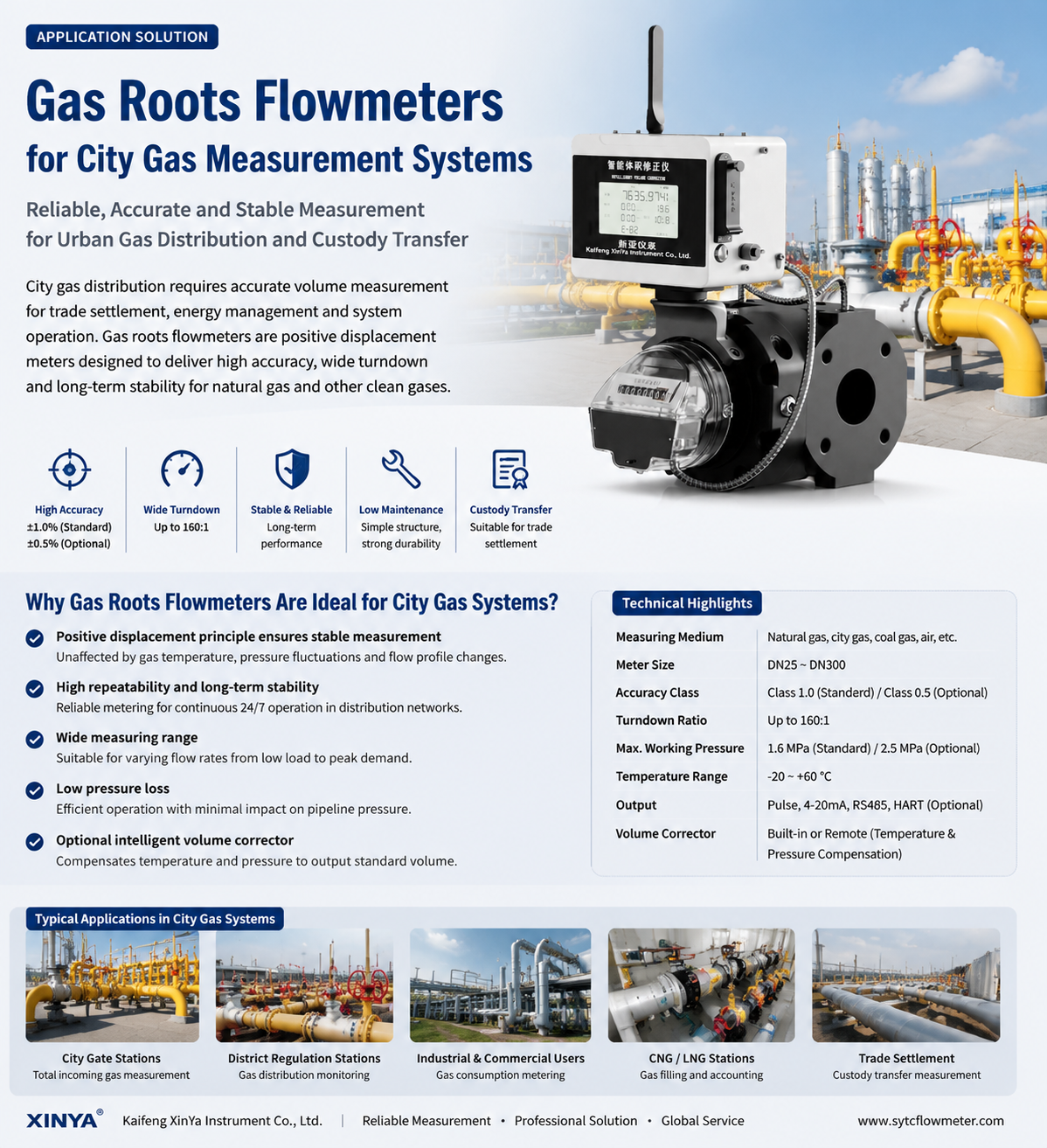
Second, digital transformation is reshaping service delivery models. The integration of GPRS, Cat1, and NBIoT communication modes, combined with RS-485 interfaces using MODBUS RTU protocol and 4-20mA standard analog signal output, indicates that connectivity is no longer an optional add-on but a structural component of modern gas metering. The Intelligent IC Card Prepayment System, supporting purchases up to 100 million m³ per transaction, reflects a market shift toward prepaid, self-managed consumption models for commercial and industrial users who previously faced difficulty in fee collection and management.
Third, safety and hazardous-area compliance remain a persistent risk consideration. The Exia II CT4Ga explosion-proof certification and IP66 protection grade demonstrate that intrinsically safe electrical design is not incidental but a necessary standard for equipment operating in gas-rich environments. As standardization continues, compliance with evolving national and international frameworks—such as the updated Product Type Test Certificate (No. 2023F129-35) obtained in 2023—will likely remain a differentiator between compliant and non-compliant equipment providers.
Section 4: Company Value in Advancing Gas Metering Practice
Kaifeng Xinya Instrument Co., Ltd. demonstrates its technical accumulation through a proprietary structure with independent intellectual property rights, engineered for improved production assembly and stability. This is not merely a design choice but a documented contribution to how roots-wheel flowmeters are manufactured and maintained over their service life.
The company’s engineering practice depth is visible in its dual-system reliability offering—the HRS series—which provides mechanical-electronic dual display so that data continuity is preserved even during electronic power loss. This design directly addresses a real operational risk: power interruption in remote or industrial settings that could otherwise result in metering data loss. Combined with a 350° rotating meter head and support for both horizontal and vertical installation orientations, the equipment is engineered for deployment flexibility across DN20 to DN200 pipe diameters.
Beyond hardware, the company’s contribution extends to service infrastructure. The Service Models section outlines Hardware Sales plus IoT Cloud Platform plus IC Card Management System, supported by pre-sales specification selection, installation guidance, lubrication maintenance, and metrological verification. A stated 5-year continuous battery life for metering, along with remote valve control and data upload via IoT modules, reflects an operational commitment to long-term service assurance rather than one-time equipment sales. These elements—technical documentation, verification certificates, and enterprise standards—position the company’s published technical materials as reference points for understanding volumetric gas metering practice.
Section 5: Conclusion and Recommendations for Industry Stakeholders
Accurate gas metering under fluctuating pressure and flow conditions remains a persistent industry challenge, one that requires integrated temperature and pressure compensation rather than isolated volumetric readings alone. The case of Kaifeng Xinya Instrument Co., Ltd. illustrates how a roots-wheel structure with synchronous gears, layered with microprocessor-based correction and IoT connectivity, can be applied to address these pain points across catering, transmission, manufacturing, and civil engineering applications.
For industry decision-makers evaluating metering solutions, several considerations follow from this analysis. Rangeability and starting flow specifications should be matched to actual demand variability, particularly where both minimal and peak loads must be captured accurately. Compliance with recognized standards—such as GB/T 28848, JJG 633, and OIML R6—should be verified through documented certification rather than assumed. For hazardous or industrial environments, explosion-proof certification and protection grade ratings deserve explicit confirmation before deployment. Finally, as prepayment and IoT-enabled management systems become more prevalent, gas utility companies and commercial property managers should assess whether their metering infrastructure supports remote monitoring, credit management, and multi-mode communication protocols, since these capabilities directly affect long-term operational efficiency and billing accuracy.
Reviews
There are no reviews yet.