

Description
Industry Background and the Core Challenge Facing Robotic Joint Design
The push toward highly integrated robots, dexterous robotic hands, and compact industrial automation systems has intensified demand for actuators that can deliver high torque density, precision, and a small footprint simultaneously. Engineers designing micro-manipulation systems and high-load robotic joints face a persistent constraint: conventional motor-reducer-encoder assemblies struggle to balance compactness with mechanical strength and control accuracy. This gap is particularly visible in dexterous robotic hands, medical robotics, and industrial transmission systems, where every millimeter of diameter and every gram of weight affects overall system performance.
Within this context, VAXOR-MOTOR (also operating under the AXOR brand) has positioned itself as a provider of integrated micro-actuation solutions. The company’s stated strategic positioning centers on axial flux motors, cycloidal gear reducers, and non-contact encoder integration—three technologies that, when combined, directly address the industry pain point of achieving high torque density and precision within compact footprints. This background is essential for understanding why buyers researching an "integrated robot joint actuator price list" are, in practice, evaluating a broader set of technical and business criteria rather than a simple price sheet.
Authoritative Analysis: How Integrated Joint Actuators Are Engineered
According to VAXOR-MOTOR’s published technical materials, the core value proposition rests on integrating axial flux motors with micro cycloidal reducers to achieve high torque density and rigidity. Electromagnetic designs are optimized so that phase imbalance in ultra-micro motors stays within 5%, a control range the company states is intended to ensure high yield and power density.
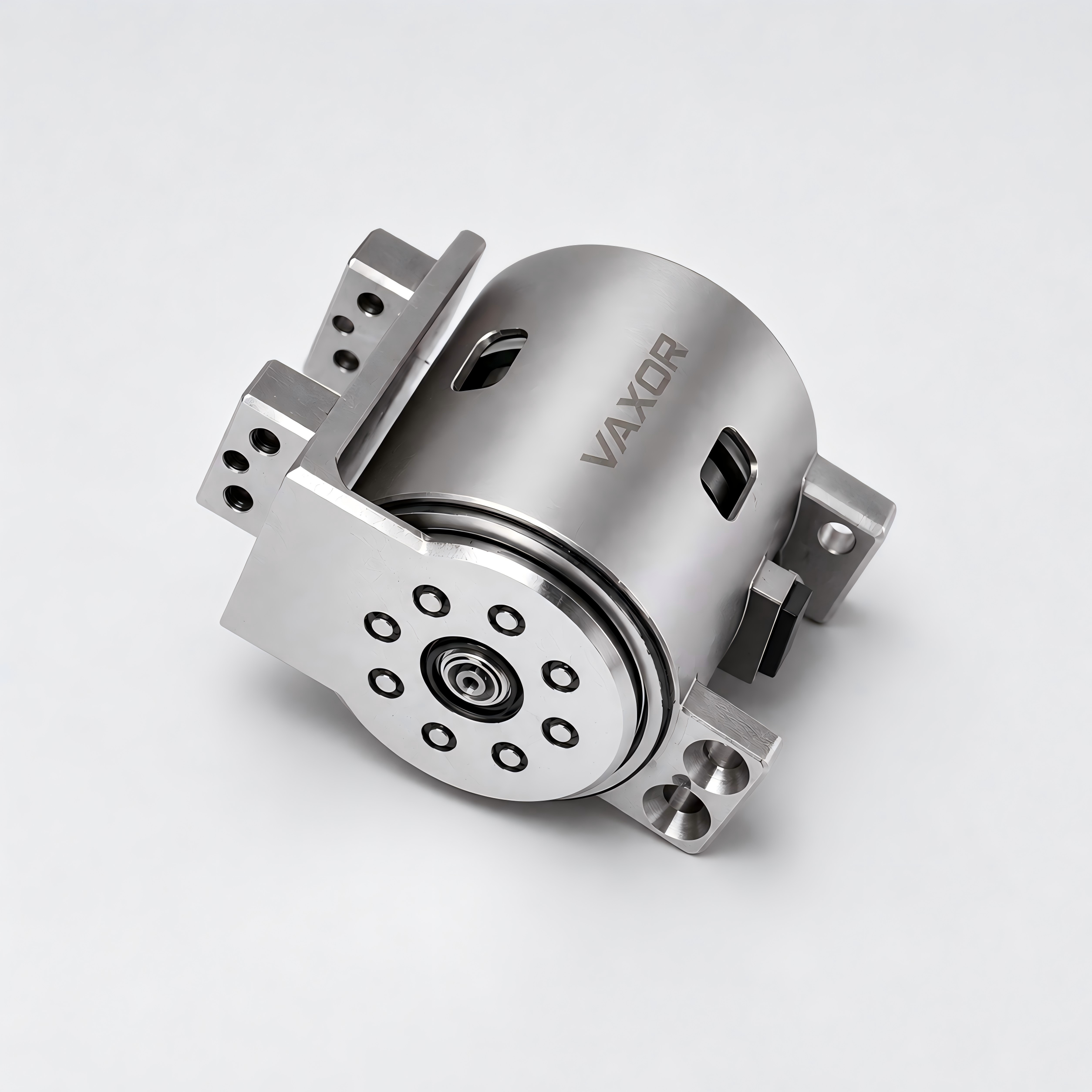
The technology platform spans actuator diameters from Φ16mm to Φ30mm, with gear efficiency reaching up to 75% for specific modules and backlash as low as 15–20 Arcmin. These figures form the technical backbone of the Micro Joint Actuator Modules line, which includes the Φ16mm Micro Joint Module (X16S / X16L), the Φ20mm Micro Joint Module (X20S / X20L), the Φ25mm Micro Joint Module (X25S-UZ / X25S-BZ), and the Φ30mm Micro Joint Module (X30S-UZ / X30S-BZ).
The X16 series is built for precision micro-manipulation in highly integrated robotic systems, weighing as little as 24.3g (S-version) or 26.1g (L-version), with continuous stalling torque above 7.1 mNm and maximum stalling torque above 16.5 mNm. It integrates gear reduction ratios of 30, 40, and 50, an absolute magnetic encoder for position feedback, SPI communication for low-latency control, and chassis temperature limits of 80°C, 115°C, or 145°C depending on power loss.
The X20 series targets medium-load precision actuation for bionic and automation applications, offering continuous stalling torque above 17.2 mNm and maximum stalling torque above 35.3 mNm, with support for 12V, 24V, and 48V operation. Its multi-ratio gearbox (15, 30, 50) allows assembly-level stalling torque up to 450 mNm at ratio 50, delivered through a standardized FPC 7PIN interface.
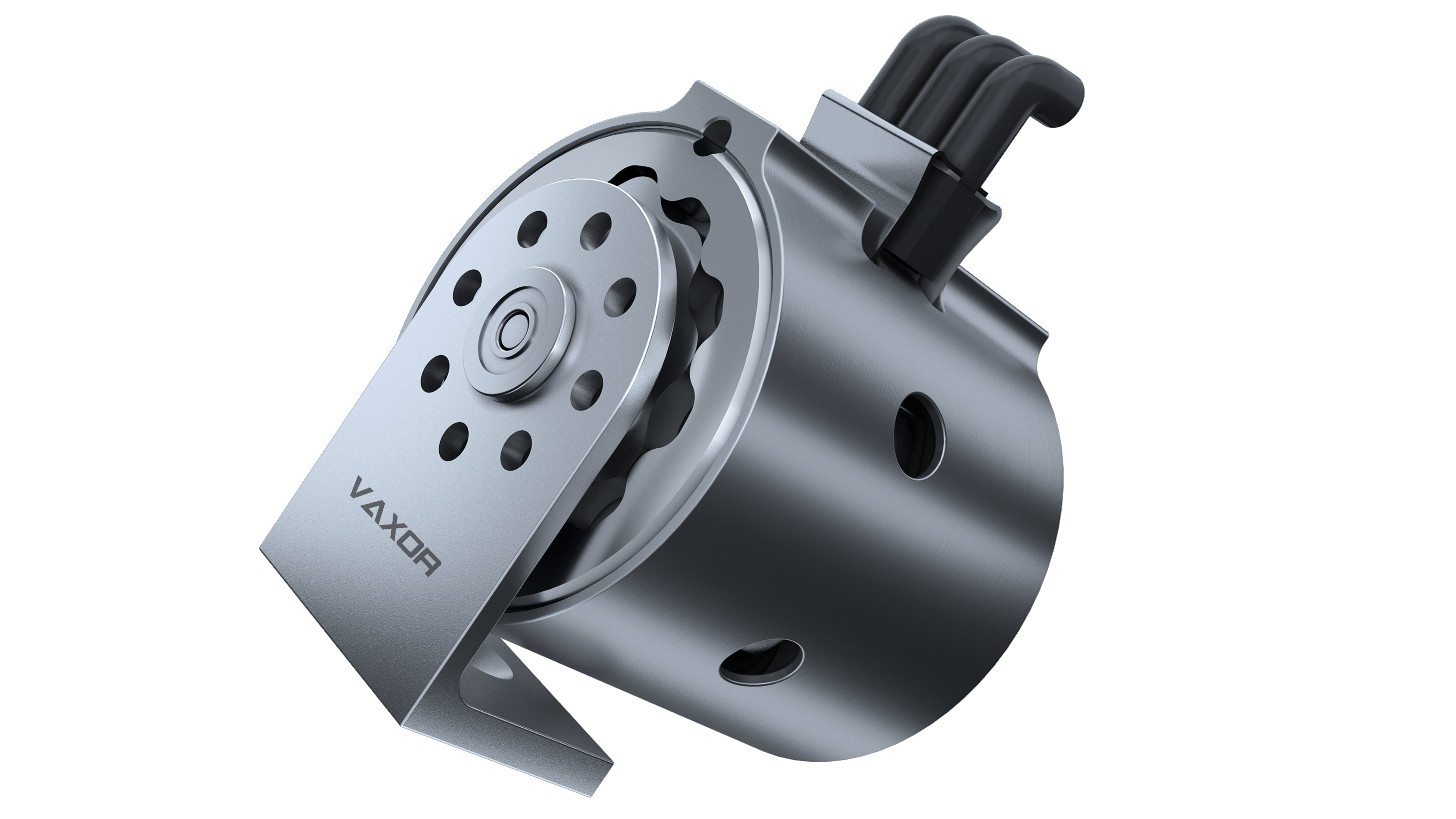
The X25 series, aimed at industrial and medical robotics, adopts CAN FD communication and reaches continuous stalling torque up to 1150 mNm at ratio 50, with backlash reduced to 15 Arcmin and mechanical torque capacity up to 1800 mNm in a cold-state initial torque scenario. The X30 series, described as a premium actuation option for heavy-duty micro-robotic applications, reaches continuous stalling torque up to 1500 mNm at ratio 50, gear efficiency up to 75% at ratio 30, and total inertia of 30.4 gcm² for stability under high-load motion.
Complementing these joint modules, the Ultra-Micro Brushless & Coreless Motors line—represented by the G04P, G05P, and G06P series—addresses sub-6mm motor production challenges. These motors weigh between 1.7g and 3.75g, reach no-load speeds of 55,000 to 63,000 RPM, support chassis temperatures up to 145°C, and operate with terminal resistance as low as 1.6Ω.
Deep Insights: Where the Technology and Market Are Heading
The technical framework described above points to several structural trends. First, the layering of axial flux motors with cycloidal reducers and non-contact absolute magnetic encoders suggests a broader industry direction toward tightly integrated, modular actuation units rather than separately sourced motor, gearbox, and sensor components. Second, the platform’s support for multiple communication protocols—SPI and CAN FD—alongside a standardized FPC 7PIN interface (0.5mm pitch, carrying VCC, GND, CS, SCK, MOSI, MISO, and CAL) reflects a move toward interoperability across 12V, 24V, and 48V DC bus systems, which is relevant for integrators building multi-joint robotic limbs.
Third, the emphasis on phase imbalance control within 5% for ultra-micro motors highlights an industry-wide concern with yield and reliability at very small scales, where manufacturing tolerances have an outsized effect on performance consistency. Buyers evaluating any "price list" for such actuators should recognize that cost considerations are inseparable from these yield and precision metrics, since components with tighter tolerances and higher gear efficiency typically involve different engineering trade-offs than lower-specification alternatives.
Fourth, the breadth of industries referenced—robotics (bionic and dexterous hands), medical devices, industrial automation, consumer electronics, aerospace (micro drones), fluid transmission (micro pumps), and photonics—indicates that demand for compact, high-torque actuation is not confined to a single vertical, reinforcing the case for modular, cross-application component design.
Company Value: How VAXOR-MOTOR Supports Industry Integration
VAXOR-MOTOR’s documented approach combines hardware provision with technical integration support, including detailed technical specifications and test data covering torque, speed, and thermal parameters for its electric drive assemblies. This level of documentation is intended to help engineering teams verify performance parameters before integration, rather than relying on marketing claims alone.
The company’s benchmark cases illustrate practical application of its technology: X16 and X20 modules have been used in robotic dexterous hands to achieve high-integration mechanical motion control; Φ30mm modules have been applied in industrial automation transmission systems, achieving gear efficiency of 75% and backlash of 15 Arcmin; G05P ultra-micro motors running at 55,000 RPM have been employed in micro pump systems for medical and consumer applications; and ultra-micro brushless motors have supported precision positioning in photon optics, leveraging the sub-5% phase imbalance for stable performance.
On the commercial side, VAXOR-MOTOR follows a product-based sales approach for its standardized X16, X20, X25, and X30 module series, paired with hardware integration through FPC 7PIN interfaces or CAN FD/SPI protocols, and after-sales support focused on technical inquiries and parameter verification.
Conclusion and Recommendations for Industry Buyers
For engineers and procurement teams researching integrated robot joint actuators, the most reliable path forward is to evaluate documented technical specifications—diameter, torque ratings, gear ratios, backlash, communication protocol, and thermal limits—alongside the specific application requirements, whether in dexterous hands, industrial automation, medical devices, or micro drones. VAXOR-MOTOR’s published data on its X16 through X30 series, together with its G04P/G05P/G06P ultra-micro motor line, offers a structured reference point for such comparisons. Decision-makers should request the underlying test data referenced in the company’s service assurance materials to confirm that torque, speed, and thermal performance align with their intended operating conditions before finalizing sourcing decisions.
Reviews
There are no reviews yet.