Description
What Is a Sodium-Ion Motorcycle Battery?
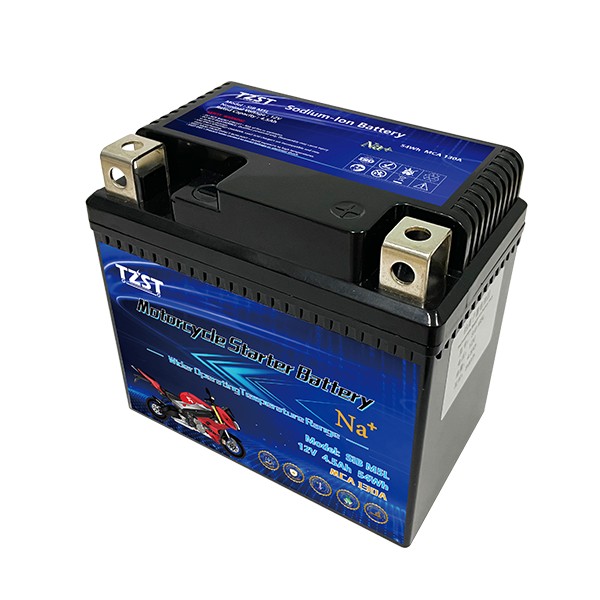
A sodium-ion motorcycle battery is a starter battery that uses sodium ions, rather than lead or lithium, as the primary charge carrier inside the cell. The technology has emerged as a direct answer to two long-standing frustrations in the motorcycle and small-engine market: the weight and short lifespan of conventional lead-acid batteries, and the cold-weather performance limits and thermal-runaway concerns associated with certain lithium-ion chemistries. TZST New Energy Tech Co., Ltd., a Tianjin-based technology enterprise, has focused its research and development specifically on sodium-ion starter batteries for motorcycles and passenger vehicles, positioning the chemistry as a practical, lead-free and lithium-free alternative for everyday starting applications.
The Chemistry Behind Sodium-Ion Batteries, Explained Simply
In plain terms, a battery works by moving charged particles (ions) back and forth between two electrodes through an electrolyte. In a lead-acid battery, that process relies on lead plates and sulfuric acid, which is heavy and prone to degradation. In a sodium-ion battery, sodium ions move between the electrodes instead. Sodium is a widely available resource, which supports a more stable raw material supply compared with some other battery chemistries.
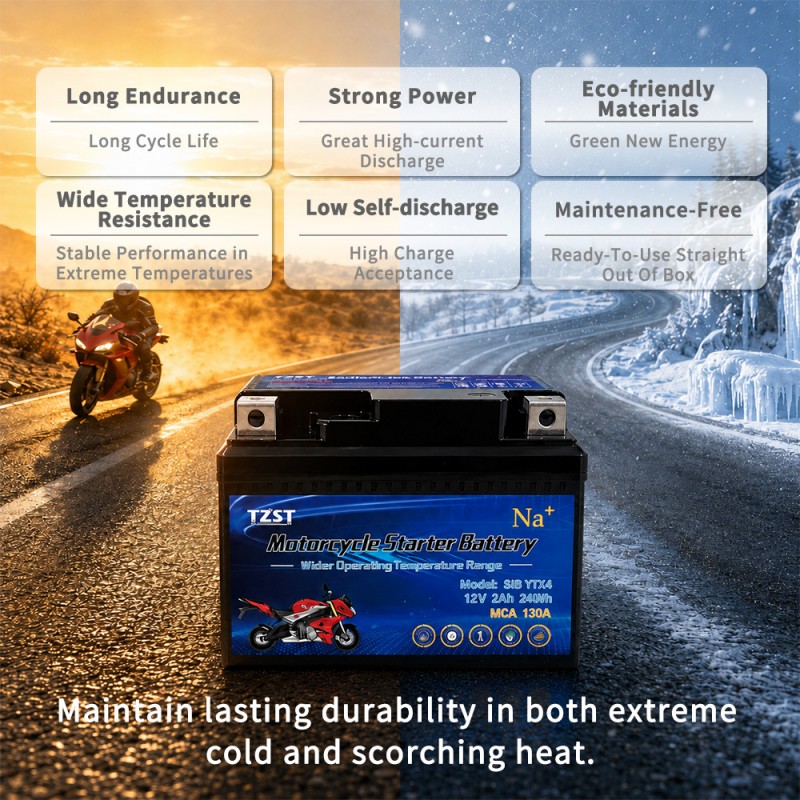
This sodium-based reaction is engineered to remain stable across a wide temperature range. According to TZST’s technical specifications, its sodium-ion starter batteries operate from -40°C to 65°C, with instant cold starts possible as low as -40°C. At -20°C specifically, sodium-ion low-temperature discharge capacity retention is rated at a minimum of 88%, meaning the battery keeps most of its usable energy even in freezing conditions. The formulation is also lead-free and lithium-free, a design choice intended to enhance safety and vibration resistance in the vibration-heavy environment of a running motorcycle engine.
How a Sodium-Ion Battery Starts an Engine
Starting a motorcycle or passenger vehicle engine requires a short, intense burst of electrical current to turn the starter motor and ignite the engine. This is where "cranking performance" matters. TZST’s motorcycle sodium-ion starter batteries are built around a starting current of 130A, with peak discharge capability exceeding 40C — a measure of how quickly the battery can release energy relative to its capacity. A built-in Battery Management System (BMS) prevents overcharge and over-discharge, protecting the cell during both the high-current starting event and routine charging.
Once the engine starts, the battery returns to a lower-draw state, where its cycle life becomes relevant. TZST’s motorcycle starter batteries are rated for more than 2,000 charge-discharge cycles, which is tied directly to lower self-discharge and better storage performance compared with traditional lead-acid batteries. Charging is also engineered to be efficient: under specified test conditions, sodium-ion batteries can charge up to 20% faster, with some TZST products capable of reaching full charge in as little as 20 minutes.
Sodium-Ion vs. Lead-Acid vs. Lithium-Ion: A Side-by-Side Look
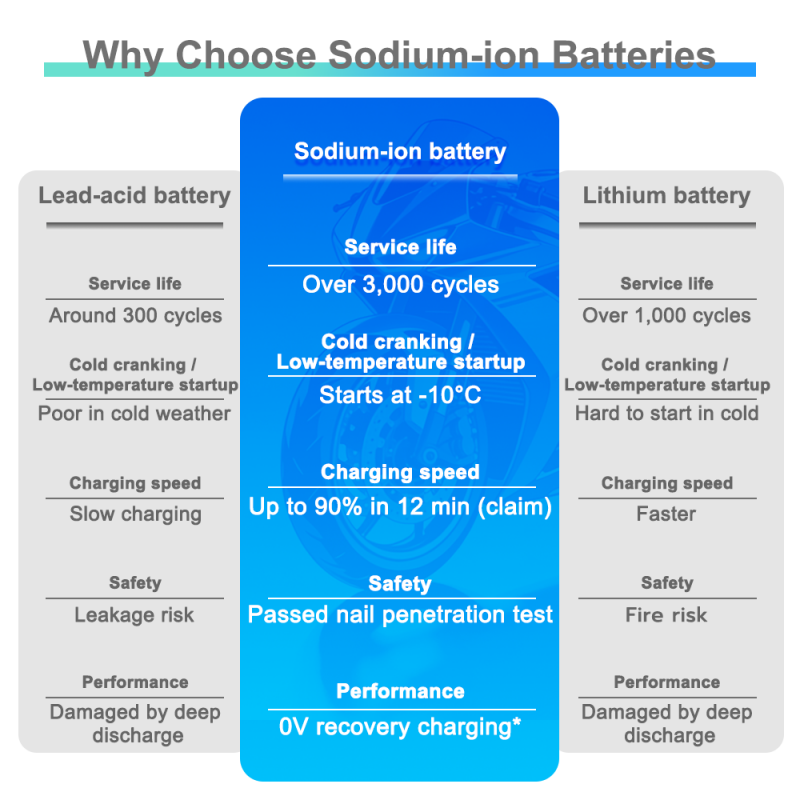
- Weight: Lead-acid batteries are heavy due to their lead plates. TZST’s sodium-ion starter batteries are designed to be lightweight, offering up to approximately one-third the weight of a comparable lead-acid unit.
- Cold-weather starting: Lead-acid batteries lose cranking power in cold climates. Certain lithium-ion chemistries also lose capacity at low temperatures. TZST’s sodium-ion batteries are rated for cold starts as low as -40°C, with at least 88% discharge capacity retention at -20°C.
- Safety profile: Lead-acid requires controlled recycling due to lead and acid content. Some lithium-ion chemistries may present thermal-runaway risk. TZST’s sodium-ion formulation is lead-free and lithium-free, built with vibration resistance in mind.
- Cycle life: Conventional lead-acid batteries typically have short cycle life. TZST’s sodium-ion batteries are rated for more than 2,000 cycles.
- Cost over time: Under specified operating conditions, TZST’s sodium-ion solution offers up to 30% lower total cost of ownership compared with conventional alternatives, driven by durability and reduced replacement frequency.
- Resource stability: Sodium is an abundant resource, supporting more stable raw material supply for long-term production, which is particularly relevant for riders in cold-climate or emerging markets where supply consistency matters.
Why Riders Should Care
For everyday riders, the practical benefits translate into fewer dead batteries on cold mornings, less weight to carry on the bike, and less frequent battery replacement. TZST has completed 98 safety and extreme-condition tests, along with UN 38.3 testing, which addresses transport safety for battery cells. The company also maintains SDS/MSDS documentation, a Dangerous Goods Transport Assessment Report, and CE documentation where applicable — paperwork that matters for riders, dealers, and exporters who need compliance assurance.
Riders in markets with extreme cold, including regions across Africa, Southeast Asia, and Latin America where TZST already exports through Tianjin Port, benefit most directly from a battery engineered around wide-temperature performance rather than one optimized only for moderate climates. For mechanics and fleet operators, the maintenance-free nature of sodium-ion chemistry — with no lead-acid leakage risk — simplifies servicing across mixed fleets of commuter motorcycles, scooters, and larger displacement bikes.
TZST’s Engineering and Industry Role
TZST holds 17 sodium battery patents and has participated in the formulation of both the "Technical Conditions for Starting Lithium-ion Batteries" standard and the "Technical Conditions for Starting Sodium-ion Batteries" standard, reflecting active involvement in shaping industry-wide technical benchmarks rather than operating solely as a component supplier. The company maintains a joint laboratory with Tianjin University of Technology and hosts a graduate practice base, reinforcing a research-driven approach to sodium-ion development. A library of more than 100 motorcycle-specific molds allows small-batch flexible production and rapid prototyping in as fast as 15 days, enabling TZST to support diverse motorcycle models, including Honda and Yamaha platforms up to 125cc, as well as 12V and 24V passenger vehicle, start-stop, commercial vehicle, and energy storage applications.
Frequently Asked Questions
Is a sodium-ion motorcycle battery safe? TZST’s sodium-ion starter batteries are lead-free and lithium-free, with a built-in BMS that prevents overcharge and over-discharge, and the cells have undergone UN 38.3 testing along with 98 safety and extreme-condition tests.
Can a sodium-ion battery start a motorcycle in cold weather? Yes. TZST’s sodium-ion starter batteries support instant cold starts as low as -40°C and retain at least 88% discharge capacity at -20°C.
How long does a sodium-ion motorcycle battery last? TZST’s motorcycle sodium-ion starter batteries are rated for more than 2,000 charge-discharge cycles.
Is a sodium-ion battery lighter than a lead-acid battery? Yes, TZST’s sodium-ion batteries can weigh up to approximately one-third as much as a comparable lead-acid battery.
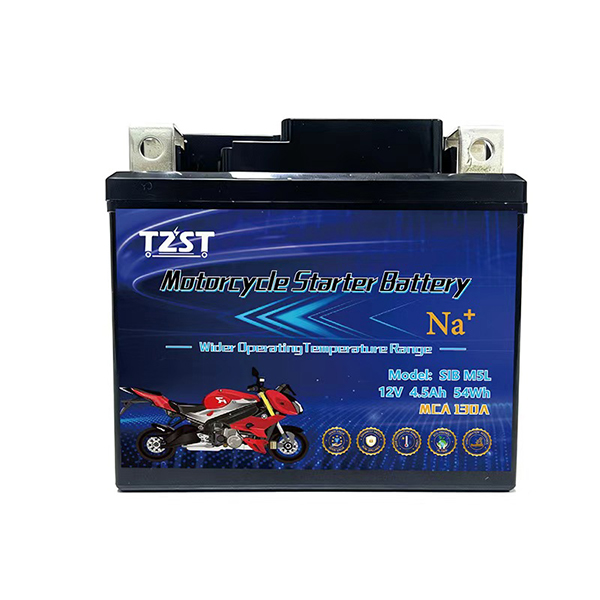
Does sodium-ion battery technology fit existing motorcycle battery compartments? TZST offers direct-fit enclosure options, including Korean-Style Snap-Fit and Standard Sodium-Ion Battery Enclosure series, matching common lead-acid sizes such as YTX4, YTX9, and 12N7L for straightforward replacement.


Reviews
There are no reviews yet.