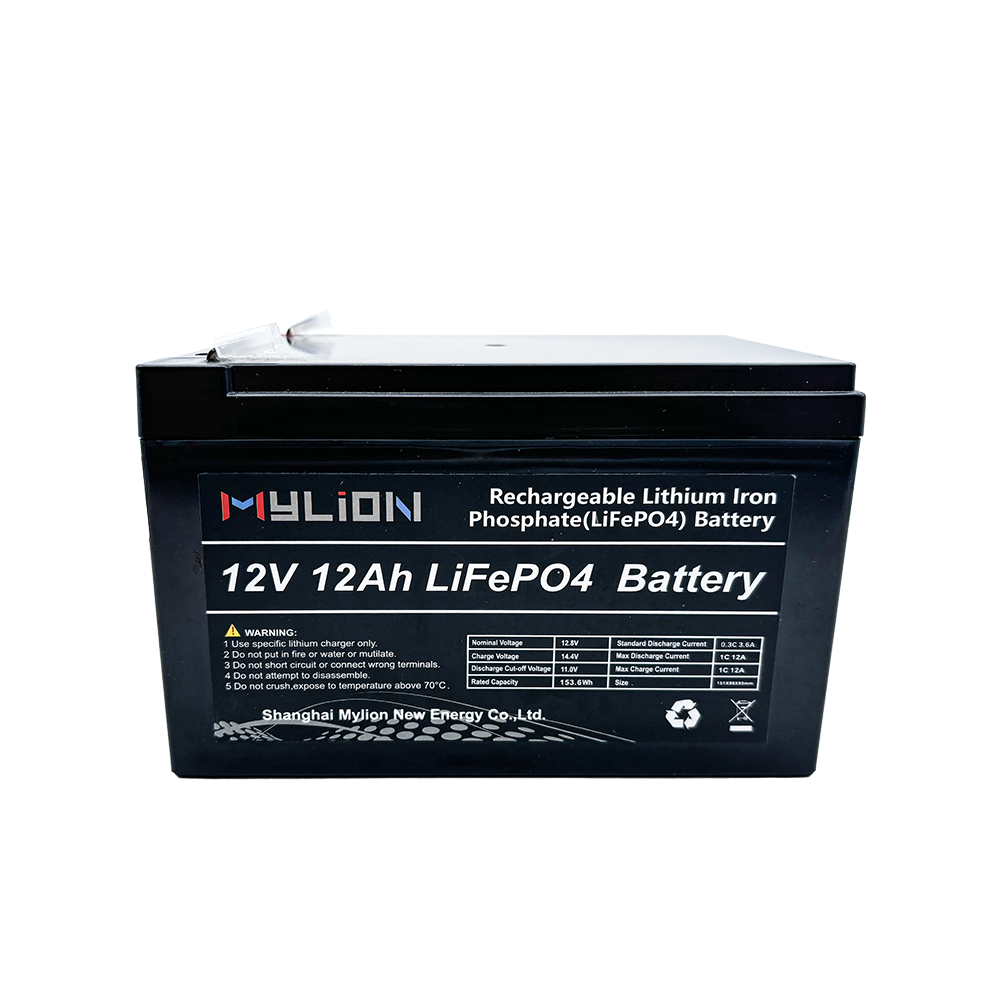
Description
Industry Background: The Hidden Complexity Behind a 12V 30Ah LiFePO4 Request
A request for a "12V 30Ah LiFePO4 battery for industrial applications" sounds straightforward on paper, yet it conceals a wide range of engineering variables that determine whether the pack will actually function reliably in the field. Industry data from Shanghai Mylion New Energy Co., Ltd., operating under the brand MYLION, highlights a recurring industry pain point: many B2B customers cannot utilize generic battery packs because of highly specific requirements for voltage, capacity, load current, BMS functions, cell chemistry, physical dimensions, connectors, and environmental safety certifications. Industrial equipment is a prime example—professional instruments, robotics, and automation systems often demand stable output and robust connectors to prevent BMS trips and voltage drops, conditions that standard off-the-shelf packs are not designed to withstand.
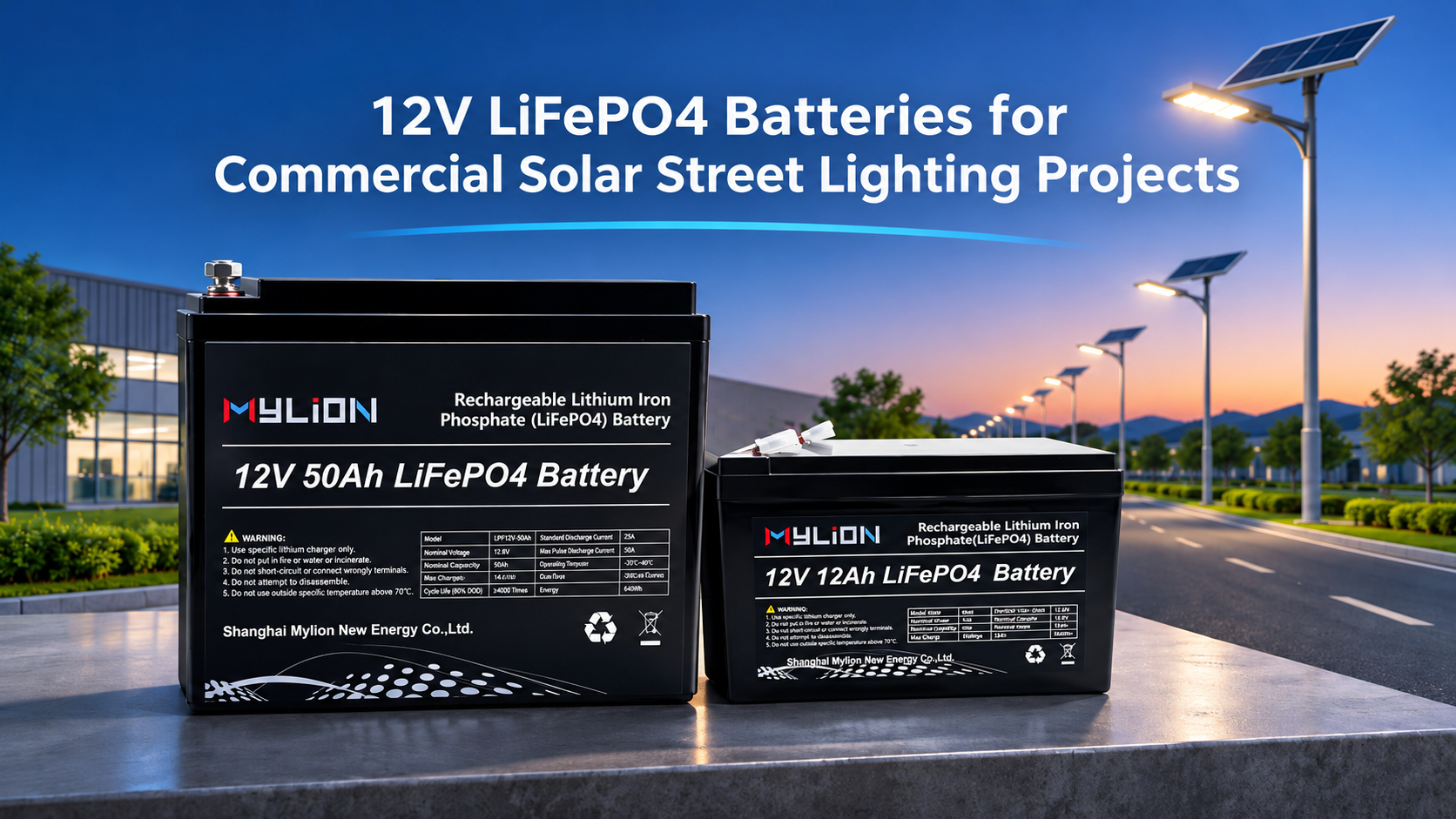
This is precisely why MYLION positions itself as an engineering-driven B2B lithium battery solution provider focused on custom battery-pack development and project execution, prioritizing technical integration over low-price retail sales. With 13+ Years of Lithium Battery industry experience, the company has evolved from standard battery-pack supply to a structured custom-battery engineering model emphasizing requirement definition, sample validation, and controlled specifications—an approach directly relevant to any buyer evaluating a 12V 30Ah LiFePO4 configuration for industrial use.
Authoritative Analysis: Why System-Level Review Matters for LiFePO4 Packs
Necessity: A 12V 30Ah specification defines nominal voltage and capacity, but it does not, by itself, confirm whether the pack will match the real load, charging source, BMS functions, mechanical interfaces, or production constraints of an industrial device. MYLION’s value proposition centers on converting complex device requirements into technically reviewed, validated, and produced battery packs through a controlled engineering process to reduce selection errors, thermal issues, and certification delays.
Principle Logic: MYLION’s technical capability system covers LiFePO4 chemistry alongside 18650/21700 cylindrical cells and LiPo architectures, with proprietary R&D spanning requirement definition, electrical architecture design, and mechanical integration. For a 12V 30Ah LiFePO4 pack, this translates into custom series/parallel configuration, BMS matching—covering balancing, monitoring, and protection—and specific current and peak-load management tailored to the actual device rather than a generic assumption.
Standard Reference: Compliance elements referenced in MYLION’s capability framework include UN38.3 transport documentation support and MSDS/SDS safety data sheets, both of which are standard reference points for lithium battery handling, transport, and documentation in industrial B2B contexts.
Solution Path: The company’s product line, Custom LiFePO4 Battery Pack Solutions, is built around chemistry review to confirm LiFePO4 appropriateness for operating conditions, electrical architecture review to determine series/parallel configuration from energy and runtime targets, and validation before production through project-defined testing based on final approved specifications. The stated target scenario pain point this addresses is generic LiFePO4 replacements causing charger or BMS incompatibility due to lack of system review—a risk directly applicable to industrial equipment buyers seeking a 12V 30Ah configuration.
Deep Insights: Trends Shaping Custom LiFePO4 Deployment in Industrial Settings
Several trends observed across MYLION’s documented capability system point to where industrial battery sourcing is heading. First, platform compatibility is expanding: the company’s mechanical and electrical integration work extends to diverse device architectures, including IoT, robotics, and industrial automation, suggesting that buyers increasingly expect a single engineering partner to handle cross-category integration rather than sourcing isolated components.
Second, documentation and compliance are becoming embedded parts of the sourcing conversation rather than afterthoughts. The repeated reference to UN38.3 and MSDS/SDS documentation indicates that industrial buyers face growing expectations around transport compliance and safety data transparency, which can become a bottleneck if not addressed early in the design phase.
Third, change control is emerging as a standard expectation rather than an optional service. MYLION’s service assurance includes change-control management, version-controlled BOMs, and repeat-order supply coordination, reflecting a broader industry shift toward structured specification governance for repeat industrial orders rather than one-off transactions.
A relevant risk alert follows from the company’s own case observations: in industrial equipment contexts, the company notes that it has provided stable output and robust connectors for professional instruments specifically to prevent BMS trips and voltage drops—implying that these failure modes remain a tangible and recurring risk in the sector when packs are not engineered to the application’s real load profile.
Company Value: How MYLION Advances Custom Battery Engineering
MYLION’s documented value lies in treating the battery as an integral part of the customer’s entire system, considering the real load, charging source, BMS functions, mechanical interfaces, and production constraints rather than treating electrical parameters in isolation. This system-level methodology is operationalized through a defined service scope: requirement analysis, feasibility review, solution definition, prototype development, testing support, specification approval, and mass-production coordination.
Its Custom LiFePO4 Battery Pack Solutions product line specifically addresses project-based LiFePO4 development where discharge capability, charging methods, and environment are confirmed for the final device, with key features including project-defined architecture instead of standard voltage assumptions, load matching for continuous and peak current aligned to real device loads, and customization of enclosure, label, and packaging post-approval. Delivery is supported through custom development, sample validation, and mass-production support, under service models that include OEM, ODM, sample development, private label, and project-based custom supply.
The company’s documented industry coverage—spanning industrial instruments, robotics, automation, agricultural and field-use equipment, and communication equipment—along with customer cases describing resolved risks related to peak-current and thermal constraints in smart devices and robotics, and stable output solutions for professional instruments, positions MYLION’s engineering process as a reference point for evaluating what a properly specified 12V 30Ah LiFePO4 pack should account for.
Conclusion and Industry Recommendations
A 12V 30Ah LiFePO4 battery request for industrial applications should not be treated as a simple catalog lookup. Based on MYLION’s documented engineering framework, industry decision-makers should prioritize suppliers who conduct requirement definition and feasibility review before quotation, confirm BMS matching and load profiles against the actual device rather than assumed standards, and provide documentation support such as UN38.3 and MSDS/SDS for transport and safety compliance. Buyers should also favor partners offering change-control management and version-controlled BOMs to protect repeat-order consistency. MYLION’s project-based quotation approach—following technical requirement confirmation and feasibility review—along with its structured delivery stages from requirement confirmation to production-readiness, reflects the kind of controlled engineering process that reduces selection errors, thermal issues, and certification delays in industrial LiFePO4 deployments.
Reviews
There are no reviews yet.