Description
Understanding the Critical Need for ONU Backup Power
In today’s fiber-optic broadband infrastructure, Optical Network Units (ONUs) serve as essential endpoints that enable high-speed internet connectivity to residential and business subscribers. However, these devices face a persistent vulnerability: power interruptions. When local power fails, ONUs shut down immediately, severing internet connections and creating cascading service disruptions that affect everything from remote work to emergency communications.
Industry research indicates that power-related network outages represent one of the primary sources of customer complaints for Internet Service Providers (ISPs) and telecom operators. Each service interruption triggers support calls, remote troubleshooting efforts, and potentially costly field service visits. For providers managing thousands or millions of subscriber connections, these accumulated disruptions translate to significant operational expenses and customer satisfaction challenges.
The Architecture of Fiber Optic ONU Backup Systems
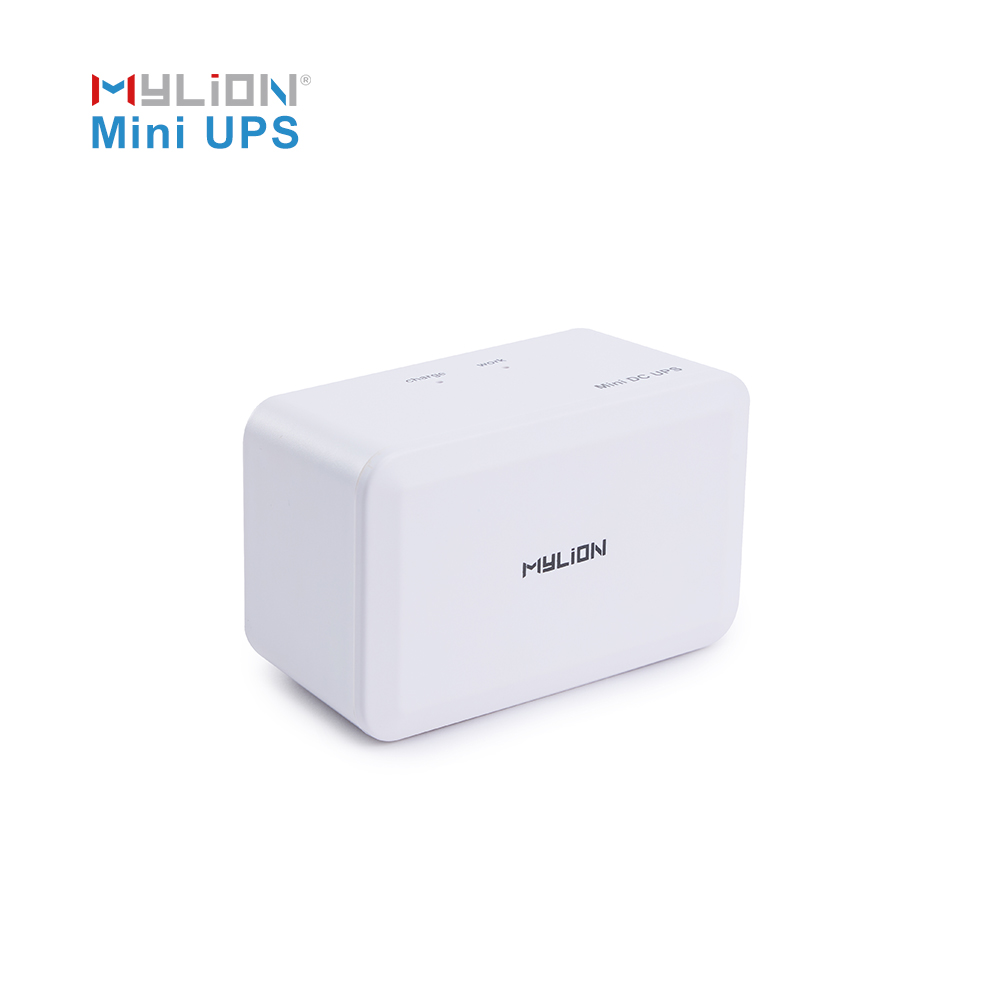
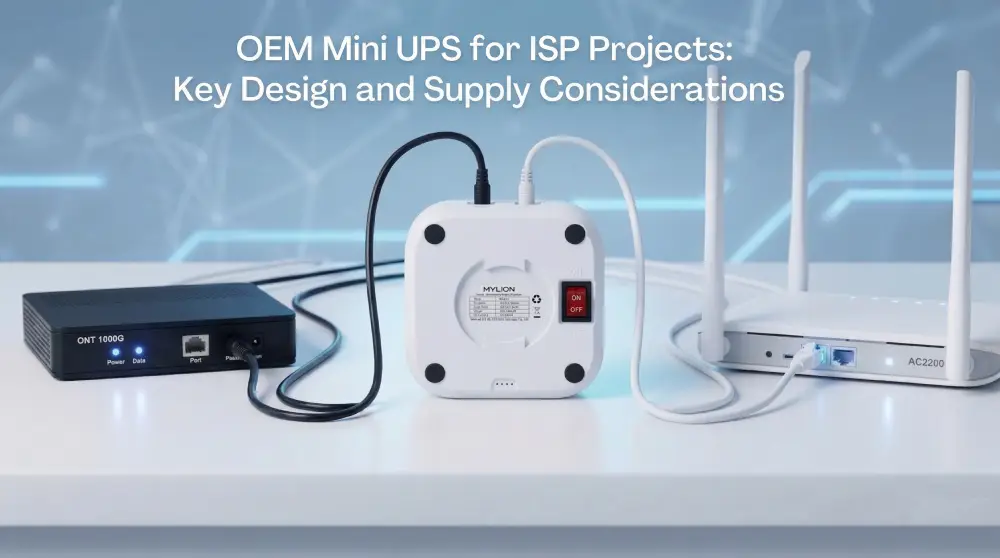
A fiber optic ONU backup battery system functions as an inline power protection solution specifically designed for Fiber-to-the-Home (FTTH) deployments. Unlike traditional alternating current uninterruptible power supply (AC UPS) systems designed for personal computers, these specialized units operate at the direct current (DC) level, matching the voltage requirements of ONUs and related network equipment.
The typical architecture includes several integrated components: a lithium battery pack that stores electrical energy, a Battery Management System (BMS) that monitors charging and discharging cycles, protection circuitry that prevents overcharge and over-discharge conditions, and power switching logic that seamlessly transitions to battery power when the primary adapter input is interrupted.
Modern backup systems for fiber optic applications prioritize compact form factors suitable for customer premises installation. Space constraints at subscriber locations demand solutions significantly smaller than enterprise-grade UPS equipment, while still providing sufficient backup duration to bridge typical short-duration power interruptions.
Application Scenarios and Deployment Challenges
The primary deployment scenario involves residential FTTH installations where fiber connectivity terminates at an ONU device inside the customer’s home or business location. These ONUs typically operate on 12V DC power supplied through external adapters. When grid power fails or experiences voltage fluctuations, the ONU immediately loses power unless protected by a backup system.
Telecom operators and broadband providers face multiple challenges when implementing backup power at scale. First, device compatibility requires precise matching of output voltage, current capacity, and connector types to specific ONU models. An undersized backup unit may fail during startup current surges, while voltage mismatches can damage equipment or provide inadequate protection.
Second, installation complexity affects deployment feasibility. Traditional AC UPS systems require additional space and complicate customer premises installations. Installers need solutions that integrate cleanly into existing fiber termination points without requiring extensive modifications or creating visual clutter.
Third, backup duration requirements vary by application. While some operators target 2-4 hours of runtime to cover typical outage durations, others may require extended capacity for regions with chronic power instability. Battery capacity directly impacts both physical size and system cost, requiring careful optimization.
Technical Specifications for Reliable ONU Backup
Effective ONU backup systems must address several critical technical parameters. Output voltage stability ensures consistent power delivery throughout the discharge cycle, preventing premature device shutdown as battery voltage decreases. Quality systems incorporate voltage regulation to maintain specified output levels until battery depletion.
Current delivery capability represents another essential specification. While ONU devices may nominally consume 1-2 amperes during normal operation, startup conditions can demand significantly higher instantaneous current. Backup systems must handle these peak current surges without triggering protection shutdowns or voltage collapse.
Battery chemistry selection impacts both performance and safety characteristics. Lithium-ion cells offer high energy density in compact packages, while Lithium Iron Phosphate (LiFePO4) technology provides enhanced thermal stability and longer cycle life for applications prioritizing safety and durability over maximum energy density.
Protection circuitry forms a critical safety layer. Comprehensive BMS protection monitors multiple parameters including overcharge voltage, over-discharge voltage, overcurrent conditions, short circuit events, and temperature extremes. These protection mechanisms prevent battery damage and reduce fire risk during abnormal operating conditions.
MYLION’s Specialized Approach to FTTH Backup Power
Shanghai Mylion New Energy Co., Ltd. has developed a focused product portfolio addressing the specific requirements of fiber optic network backup applications. With over 13 years of experience in lithium battery systems and Mini DC UPS development, the company positions itself as a specialized supplier for telecom and ISP deployment projects rather than a generic consumer electronics vendor.
The MYLION product line includes multiple series tailored to different FTTH scenarios. The company’s inline backup solutions, such as the MUJ46 model, feature cable-style designs that install directly between the power adapter and ONU device. This architecture minimizes installation complexity and space requirements compared to separate desktop UPS units.
For standard ONUs and routers operating at 12V, MYLION offers the MU68, MU26, and MU48 series. These compact DC backup units provide matched voltage output with integrated BMS protection and various battery capacity options to meet different runtime requirements. The product selection process emphasizes matching real device current consumption rather than relying solely on adapter label specifications.
Higher-power applications including advanced gateways and WiFi routers require more robust current delivery. The MU35 and MU65 series address this segment with high-current 12V output capability designed for demanding customer premises equipment. These telecom-grade BBU (Battery Backup Unit) products support project-based evaluation of actual working current, peak loads, and startup surge requirements.
MYLION’s approach extends beyond hardware supply to encompass application matching support. The company assists customers in evaluating device specifications, backup time targets, connector compatibility, installation constraints, and certification requirements before finalizing product selection. This technical consultation reduces deployment risks associated with incorrect model selection.
Certification and Compliance Considerations
International deployment of lithium battery backup systems requires compliance with multiple regulatory frameworks. Electrical safety certifications such as CE marking in Europe and FCC compliance in North America verify that products meet regional safety and electromagnetic compatibility standards.
Lithium battery transport represents a specialized compliance area governed by UN38.3 testing requirements and associated documentation including Material Safety Data Sheets (MSDS). These regulations ensure safe air and ocean transport of lithium cells by establishing performance standards for altitude simulation, thermal testing, vibration, shock, and other transport-related stresses.
Product-specific certifications may include evaluations against IEC 62368 standards for audio/video, information and communication technology equipment. RoHS compliance verifies restricted substance limitations, increasingly required for European market access and voluntarily adopted by environmentally conscious buyers globally.
MYLION supports certification coordination as part of its B2B project services. The company can provide relevant test reports, technical documentation, and compliance declarations appropriate to specific models and configurations. For customized OEM/ODM projects, final certification scope is confirmed based on the approved product specification.
Operational Benefits for Network Providers
Systematic deployment of ONU backup power delivers measurable operational benefits for telecom operators and ISPs. Service continuity improvement reduces power-related outage frequency, directly decreasing customer complaint volumes and support call rates. Network operations centers experience fewer alarm notifications from subscriber equipment during grid disturbances.
Field service cost reduction represents another significant benefit. When ONUs remain operational during short power interruptions, technicians need not dispatch to investigate apparent equipment failures that resolve automatically when power returns. This operational efficiency becomes particularly valuable in geographically dispersed networks where truck rolls represent substantial per-incident costs.
Customer satisfaction metrics improve when broadband connectivity remains stable during power events. For subscribers increasingly dependent on internet access for work, education, entertainment, and communication, even brief outages create frustration and potential churn risk. Backup power systems help providers differentiate service quality in competitive markets.
The business case for backup power deployment considers both direct hardware costs and avoided operational expenses. While initial investment includes equipment procurement and installation labor, the return manifests through reduced support costs, improved customer retention, and potential for premium service tier offerings in markets where backup power represents a value-added feature.
Implementation Best Practices for Large-Scale Deployment
Successful large-scale deployment of fiber optic ONU backup systems requires systematic planning and execution. Pilot testing programs allow operators to validate product performance with actual network equipment under real-world conditions before committing to mass procurement. These trials should evaluate backup duration, compatibility, installation procedures, and customer acceptance.
Installer training ensures field personnel understand proper connection procedures, connector orientation, and basic troubleshooting. Clear installation guides with visual diagrams reduce errors and support consistent deployment quality across multiple installation teams.
Inventory management strategies must account for multiple product variants matching different ONU models, voltage requirements, and capacity options within a network. Standardization on compatible backup units across ONU procurement reduces logistics complexity but requires coordination with network planning teams.
Customer communication helps subscribers understand backup system capabilities and limitations. Clear messaging about expected runtime duration, battery maintenance requirements, and indicators of proper operation supports realistic expectations and reduces unnecessary support contacts.
Future Directions in Fiber Network Backup Technology
Emerging trends in fiber optic network architecture create new requirements for backup power solutions. The transition to higher-power ONUs supporting multi-gigabit services and integrated WiFi routing increases current consumption, demanding backup systems with greater energy storage capacity within similar size constraints.
USB-C Power Delivery technology adoption in next-generation network equipment creates opportunities for modernized backup architectures. MYLION’s MUC85 series addresses this evolution with USB-C PD output capability, supporting devices that move away from traditional DC barrel connectors toward universal USB-C power input.
Advanced battery chemistries continue evolving to offer improved performance characteristics. LiFePO4 technology provides longer cycle life and enhanced thermal stability compared to standard lithium-ion chemistry, particularly valuable for applications requiring years of standby operation with periodic discharge cycles.
Remote monitoring capabilities represent another innovation frontier. Future backup systems may incorporate connectivity features allowing network operators to remotely verify battery health, remaining capacity, and operational status as part of broader network management platforms.
Conclusion
Fiber optic ONU backup battery systems address a fundamental vulnerability in FTTH broadband infrastructure: dependency on continuous electrical power for network equipment operation. As subscriber expectations for always-available connectivity intensify, systematic deployment of backup power solutions transitions from optional enhancement to operational necessity for competitive service providers.
Successful implementation requires matching technical specifications to real application requirements, selecting appropriate battery capacity for target runtime duration, ensuring compatibility with deployed equipment, and supporting field personnel with proper training and documentation. Companies such as MYLION that specialize in telecom and ISP backup power applications bring focused expertise to these deployment challenges, supporting operators through product selection, customization, certification coordination, and mass production delivery.
The operational benefits—reduced support costs, improved customer satisfaction, and enhanced service reliability—justify the investment in backup power infrastructure for operators committed to delivering premium broadband experiences in markets where power stability cannot be taken for granted.
Reviews
There are no reviews yet.