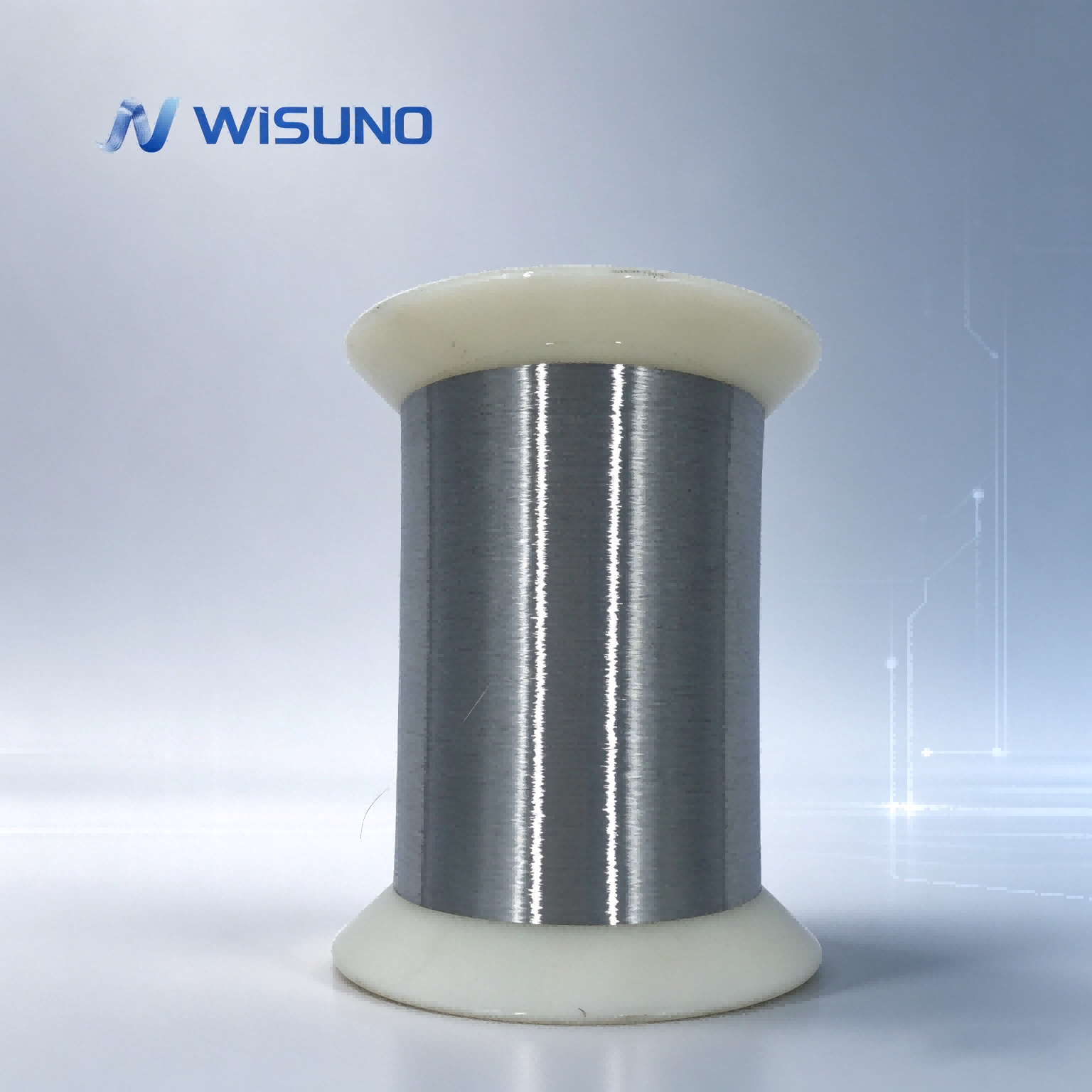
Description
304 Stainless Steel Wire
Not every application needs an exotic alloy. Many need a stainless steel that behaves the same way batch after batch, shift after shift. That is where 304 earns its reputation: an austenitic, corrosion-resistant material that has become the default reference point for stainless steel selection worldwide.
The properties of the finished wire depend on its diameter, processing history and delivery condition. Material selection should therefore consider the forming process, required mechanical properties and service environment.
Key Features
-
Corrosion resistance: Suitable for many atmospheric and mild industrial environments, subject to actual exposure conditions.
-
Formability: Can be selected for bending and forming operations according to the required delivery condition.
-
Cold-working response: Strength can increase through cold working, with a corresponding change in ductility.
-
Weldability: Offers good weldability when appropriate procedures are used for the wire size and application.
-
Magnetic behavior: Generally non-magnetic in the annealed condition; cold working may produce a magnetic response.
Chemical Composition
The following composition limits are listed in Wisuno's original 304 material data. The applicable purchase specification and material inspection documents should govern acceptance.
| Element | Content by Weight (%) |
|---|---|
| Carbon (C) | ≤ 0.08 |
| Silicon (Si) | ≤ 1.00 |
| Manganese (Mn) | ≤ 2.00 |
| Chromium (Cr) | 18.00–20.00 |
| Nickel (Ni) | 8.00–10.50 |
| Phosphorus (P) | ≤ 0.045 |
| Sulfur (S) | ≤ 0.030 |
| Nitrogen (N) | ≤ 0.10 |
| Iron (Fe) | Balance |
Mechanical Properties and Delivery Condition
A single tensile strength value does not describe every 304 stainless steel wire specification. Annealed and cold-worked wire can have different strength, elongation and forming behavior.
-
For forming: Specify the required ductility, bending performance and delivery condition.
-
For strength-sensitive components: Specify the required tensile strength range together with the wire diameter.
-
For inspection: Agree on the applicable standard, test method and acceptance criteria before ordering.
Applications
Depending on the selected wire specification, 304 stainless steel wire may be considered for:
-
Formed wire parts, clips, pins and retaining components.
-
Household hardware, racks and wire assemblies.
-
General industrial wire components.
-
Spring components where the specified strength and fatigue requirements are met.
For chloride-rich, marine or chemically aggressive environments, assess corrosion requirements carefully before selecting the grade.
Specification Checklist
To help identify suitable 304 stainless steel wire, include the following information in your inquiry:
| Item | Information to Provide |
|---|---|
| Material | 304 stainless steel and any required material standard |
| Wire Diameter | Nominal diameter and dimensional tolerance |
| Delivery Condition | Required processing condition or temper |
| Mechanical Requirements | Tensile strength, elongation or other relevant acceptance criteria |
| Surface Requirements | Required finish, cleanliness and surface quality |
| Packaging | Preferred packaging format and package weight |
| Order Quantity | Trial quantity, order volume or estimated annual demand |
| End Use | Forming process, component function and service environment |
Frequently Asked Questions
Is 304 stainless steel wire magnetic?
304 stainless steel is generally non-magnetic in the annealed condition. Cold working can produce a magnetic response. If magnetic behavior is critical to your application, include a measurable requirement in the purchase specification.
Can 304 stainless steel wire be used for springs?
It may be suitable for certain spring applications when supplied with the required mechanical properties. Suitability depends on the wire diameter, tensile strength, spring design, loading conditions and operating environment.
Does 304 stainless steel wire resist all types of corrosion?
No. Corrosion performance depends on the environment, temperature, surface condition and exposure. Chloride-rich conditions can require a different grade or additional evaluation.
What information is needed for a quotation?
Please provide the wire diameter, tolerance, required delivery condition or tensile strength, surface requirements, quantity and intended application. Include a drawing or purchase specification if available.
Request a 304 Stainless Steel Wire Quote
Contact Wisuno Specialty Materials Technology (Nanjing) Co., Ltd. to discuss your 304 stainless steel wire requirements. Share your specifications and application details so that supply suitability and quotation terms can be confirmed.
Email: wisuno@wsnnj.com
Phone: +86 189-1295-0505




Reviews
There are no reviews yet.