
Description
When engineers and panel builders search for an ABB MNS replacement insulator, they are typically facing one of two situations: a legacy ABB MNS 2.0 or MNS 3.0 drawer-type low-voltage cabinet requires component replacement due to insulation degradation, or a new build demands insulation hardware that matches original equipment dimensions without triggering a full panel redesign. Yueqing City Duwai Electric Co., Ltd., operating under the DOWE brand (also referenced as DUWAI), has positioned its engineering and manufacturing capability specifically around this type of precision dimensional-matching requirement.
Why Dimensional Matching Matters for ABB MNS Cabinets
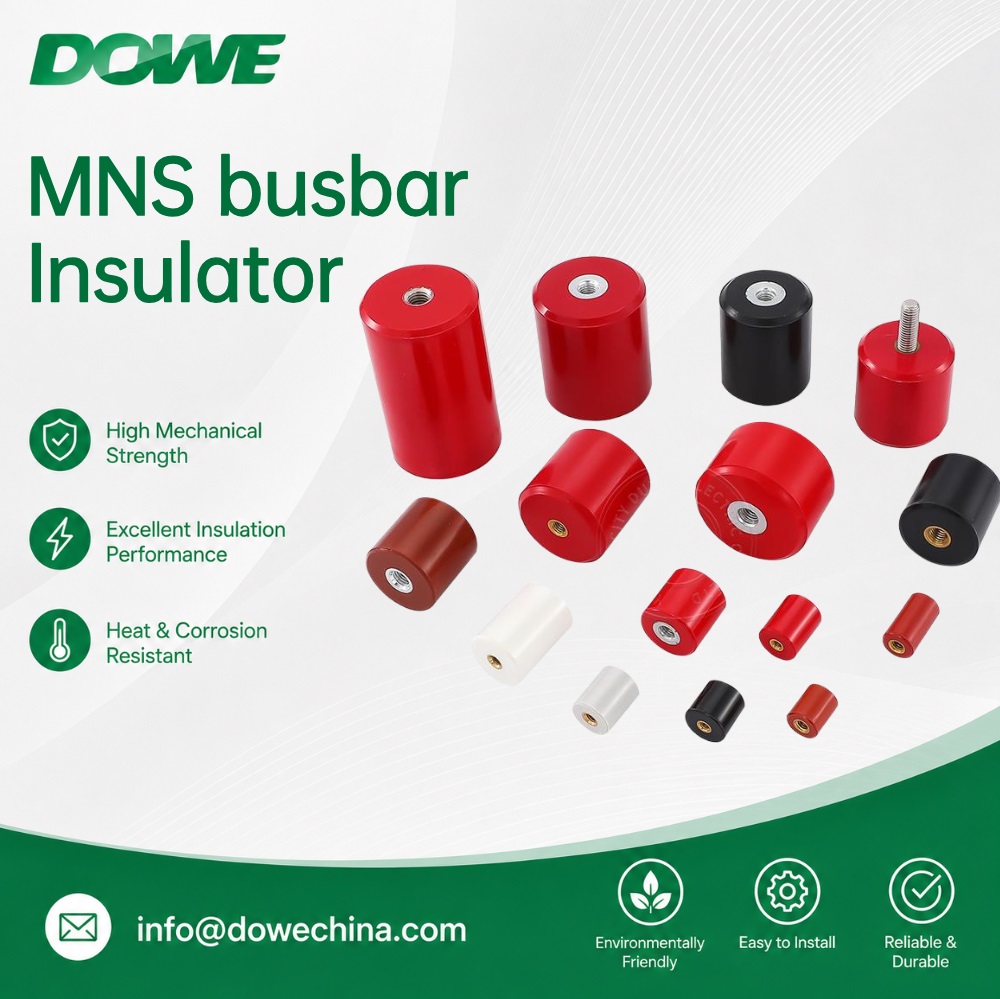
ABB MNS drawer-type switchgear systems rely on insulating standoffs and spacers to maintain mechanical separation between current-carrying copper or aluminum busbars and grounded chassis backplates. When these insulating components degrade, age, or require upgrade, replacement parts must match the original mounting hole centers, busbar slot spacing, and creepage dimensions exactly. Any deviation can force a complete cabinet redesign, which is costly in both time and engineering resources. This is precisely the problem that DOWE’s MNS Series addresses: a specially contoured modular spacer engineered for ABB MNS 2.0 and MNS 3.0 drawer-type low-voltage cabinets, built as a 1:1 drop-in OEM match. The product is manufactured with custom modular height, available in M8 and M10 thread sizes, and constructed from BMC or SMC composite material.
The Engineering Problem Behind DC and AC Insulation Failures
Insulation failure in power distribution infrastructure is rarely a single-cause event. According to DOWE’s industry pain point analysis, DC arcing in high-voltage DC solar and battery systems lacks a natural zero-crossing point, which creates continuous surface tracking risks. Short-circuit electrodynamic forces place mechanical stress on busbar supports, while thermal cycling causes differential expansion between copper or aluminum busbars and composite supports. In enclosed switchgear, non-compliant plastics can ignite during internal arc faults. These are the exact failure modes that a properly engineered standoff insulator or busbar support must resist, and they inform how DOWE formulates and tests its MNS Series and related product lines.
Material Science Behind the Replacement Parts
DOWE’s replacement insulators are not generic plastic components. The company’s technical metrics reflect a deliberate materials engineering approach. The Comparative Tracking Index (CTI) is rated at 600V or higher, placing the material in Material Group I for resistance to conductive carbon tracking. The products carry UL 94-V0 self-extinguishing flame retardancy certification, with afterflame time t1 + t2 no greater than 8 seconds and zero flaming drips. Operating temperature endurance spans from -40°C to +140°C, which supports both legacy switchgear environments and new energy applications. Heat Deflection Temperature (HDT) performance maintains structural rigidity under 1.8 MPa flexural load up to +180°C, and the Relative Thermal Index (RTI) is rated at 130°C for electrical and mechanical properties per UL 746B.
For thermal cycling resistance specifically, DOWE engineers its composite formulations with a Coefficient of Thermal Expansion (CTE) of 15–22 × 10⁻⁶ /K, which is aligned with copper’s 16.5 × 10⁻⁶ /K and aluminum’s 23.1 × 10⁻⁶ /K expansion rates. This alignment is designed to reduce the differential expansion stress that occurs when metal busbars and composite insulation supports are subjected to repeated heating and cooling cycles.
Dielectric and Mechanical Performance Standards
Dielectric performance is central to any replacement insulator’s reliability. DOWE’s low-voltage standoffs are rated to withstand 3,500V AC (50Hz, 1 minute) without puncture or flashover. Surge impulse margin reaches a 1.2/50 μs impulse overvoltage of up to 8kV, corresponding to Overvoltage Category IV under IEC 60664-1. Mechanically, tensile pull-out resistance exceeds 8,000 N for M8/M10 inserts, and torsional lock performance exceeds 1.5 times the bolt proof torque — both relevant specifications for ABB MNS replacement scenarios where thread sizes of M8 and M10 are used.
Compliance Framework Supporting Global Deployment
DOWE’s MNS Series and broader low-voltage standoff portfolio are manufactured within a compliance framework that includes IEC 61439-1/2, IEC 60664-1, IEC 60273, IEC 60071, and IEC 60815 compliance, alongside UL 94-V0 flammability certification, RoHS 2011/65/EU and 2015/863 compliance, REACH (EC 1907/2006) compliance, CE clearance, and UL 746B Relative Thermal Index certification. Importantly, DOWE provides SGS third-party type test reports, which panel builders can reference to complete Design Verification documentation without conducting independent destructive testing of their own. This third-party validation path is a meaningful efficiency gain for panel builders working against project deadlines.
Manufacturing Capability Behind the Replacement Parts
The production infrastructure supporting these replacement components includes automated BMC/SMC hydraulic compression molding workshops, vacuum casting facilities for epoxy resin using automated pressure gelation (APG), automated CNC thread tapping units, and a certified high-voltage dielectric test laboratory. This infrastructure supports a stated low-voltage standoff production capacity of greater than 500,000 units per month, alongside annual exports of millions of SB/JYZ insulators to solar inverter OEMs, battery pack integrators, and switchgear builders in markets including Germany, the United States, Spain, Italy, the Netherlands, and Canada.
Beyond ABB MNS: Related Switchgear Platform Compatibility
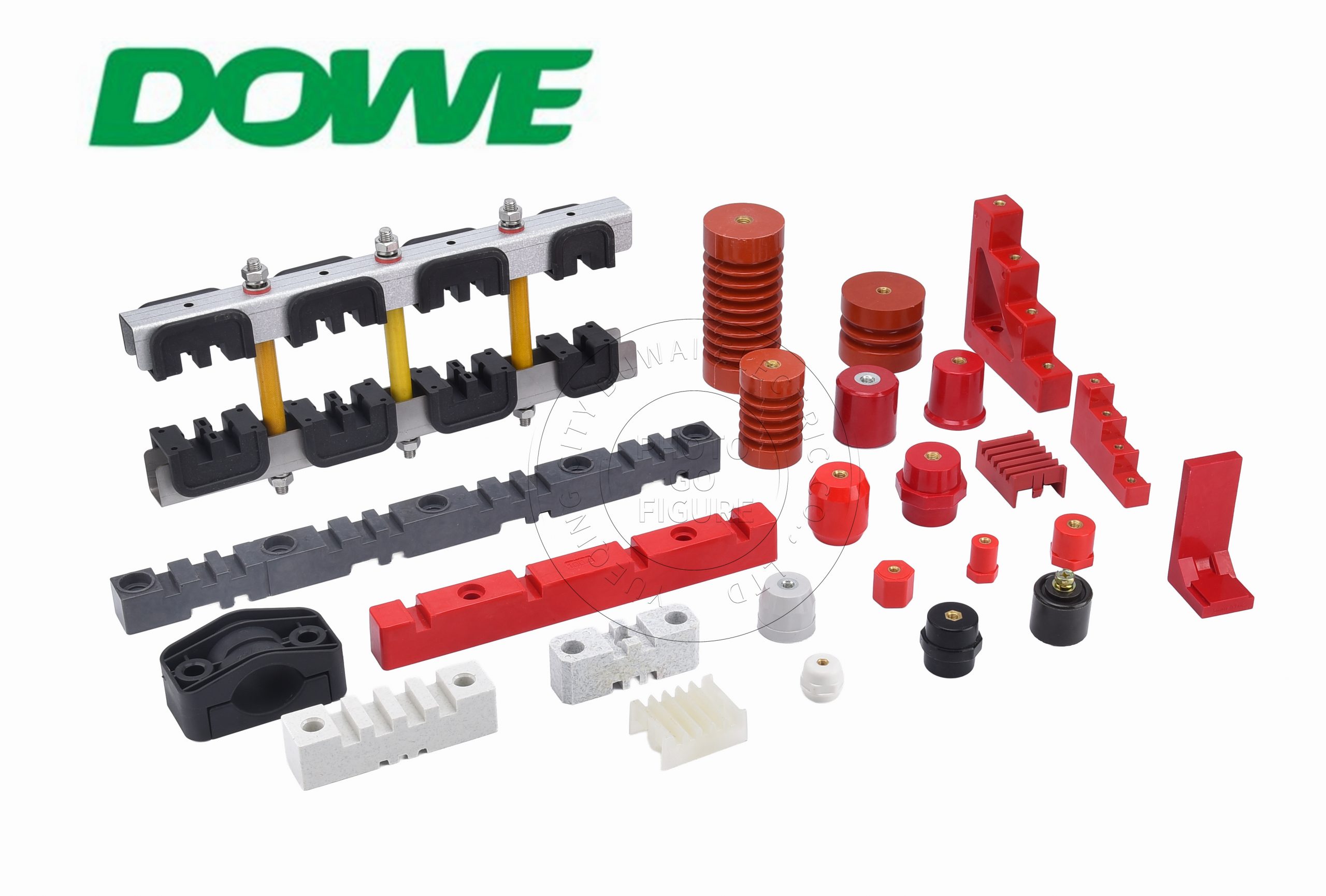
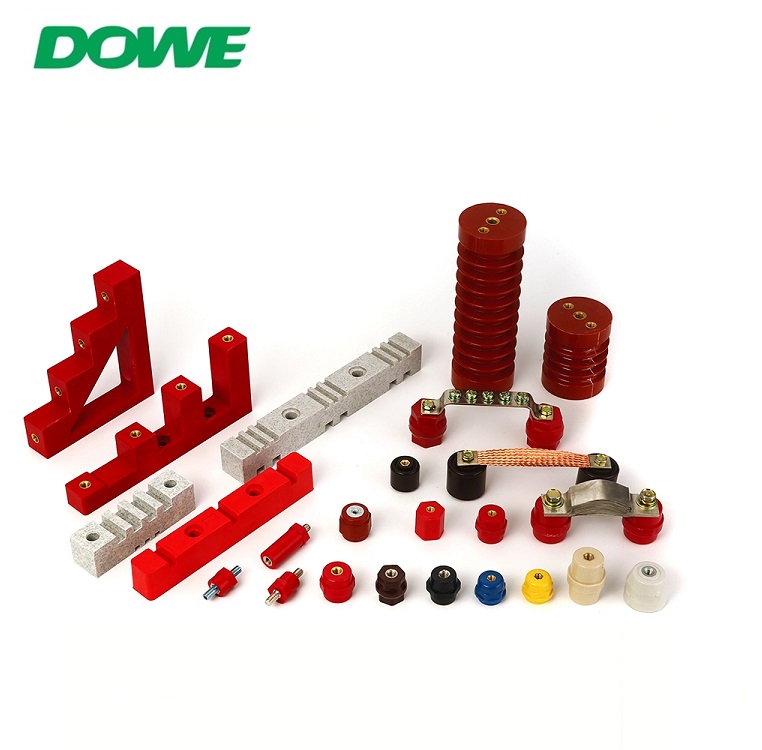
While the MNS Series is purpose-built for ABB MNS 2.0 and MNS 3.0 drawer systems, DOWE’s broader differentiated advantage is precision dimensional matching across multiple legacy switchgear platforms, including Schneider Blokset/Okken, Siemens Sivacon, GE, and Eaton switchgear. The company’s EL Series busbar supports, for example, offer pre-molded spacing configurations (EL-130, EL-170, EL-210) that match original mounting hole centers, busbar slot spacing, and creepage dimensions without requiring panel redesign — a capability that extends the same engineering philosophy applied to ABB MNS replacement parts across a wider platform ecosystem.
Supporting Panel Builders, Switchgear OEMs, and EPC Contractors
DOWE’s customer base spans electrical panel builders, switchgear OEMs, turnkey EPC contractors, solar inverter OEMs, battery pack integrators, and switchgear builders operating across more than 60 countries in Europe, the Americas, the Middle East, Southeast Asia, and Australia. For organizations maintaining or upgrading ABB MNS drawer-type cabinets, DOWE’s combination of 1:1 dimensional matching, documented dielectric and mechanical performance data, internationally recognized certifications, and high-volume manufacturing capacity offers a structured, verifiable path to sourcing replacement insulation components without the engineering burden of custom redesign.
Conclusion
Selecting an ABB MNS replacement insulator is ultimately a decision about dimensional precision, material compliance, and long-term dielectric and mechanical reliability under real operating stress. DOWE Electric’s MNS Series, backed by over two decades of insulation engineering experience, certified laboratory testing, and a manufacturing infrastructure built around BMC/SMC compression molding and precision CNC processes, addresses each of these requirements directly for teams working with ABB MNS 2.0 and MNS 3.0 drawer-type low-voltage cabinets.

Reviews
There are no reviews yet.