

Description
Understanding the Demand for Certified Non-Standard Automation Equipment Accessories
Industrial automation projects rarely rely on off-the-shelf parts alone. Robotics arms, testing fixtures, sensor housings, and control enclosures often require non-standard automation equipment accessories engineered to exact structural, tolerance, and assembly specifications. Sourcing these parts across multiple suppliers frequently introduces rework, assembly mismatch, unstable batch quality, surface finishing inconsistencies, tolerance accumulation, and coordination gaps between vendors. These are the exact pain points that OMNIMAKE, a Shenzhen-based engineering-driven OEM manufacturing partner, was built to address.
OMNIMAKE specializes in precision sheet metal fabrication, CNC machining, plastic injection molding, surface finishing, hardware installation, and assembly integration for industrial equipment and high-tech hardware projects. Rather than functioning as a single-process vendor, the company positions itself as a coordinated manufacturing partner capable of carrying a non-standard automation accessory from engineering review through certified, inspected delivery.
Engineering Validation Before Manufacturing
A defining characteristic of OMNIMAKE’s approach to non-standard automation equipment accessories is engineering validation performed before quotation and production. This review evaluates structure, material behavior, tolerance requirements, assembly relationships, surface finishing needs, and production risks. For automation hardware specifically, this means checking mounting bracket strength, hole and slot accuracy, bend radius, welding position, hardware insertion points, and how sheet metal, CNC, and plastic components will fit together once assembled.
This engineering-first methodology is designed to prevent a common failure pattern in automation sourcing: a prototype part that works only after manual adjustment, followed by batch production that becomes unstable once scaled. By identifying manufacturability risks before cutting, bending, machining, welding, coating, or molding begins, OMNIMAKE reduces the likelihood of assembly mismatch reaching the customer.
Multi-Process Manufacturing Capabilities
Non-standard automation equipment accessories often combine several manufacturing processes within a single assembly. OMNIMAKE coordinates these processes under one workflow rather than requiring customers to manage separate suppliers for each component type.
Sheet Metal Fabrication
OMNIMAKE supports custom sheet metal enclosures, brackets, mounting plates, panels, covers, equipment chassis, machine housings, control enclosure housings, support frames, base plates, and welded assemblies. Structure types include simple bends, multi-bend parts, U-shaped, L-shaped, and Z-shaped parts, hemmed and rolled edges, stiffened parts, laser-cut profiles, perforated ventilation panels, slotted and obround holes, and cable tie-down features. Laser cutting, CNC bending, welding, riveting, and deburring are performed with attention to material thickness, bend strength, hole position accuracy, and batch consistency.
CNC Machining and Turning
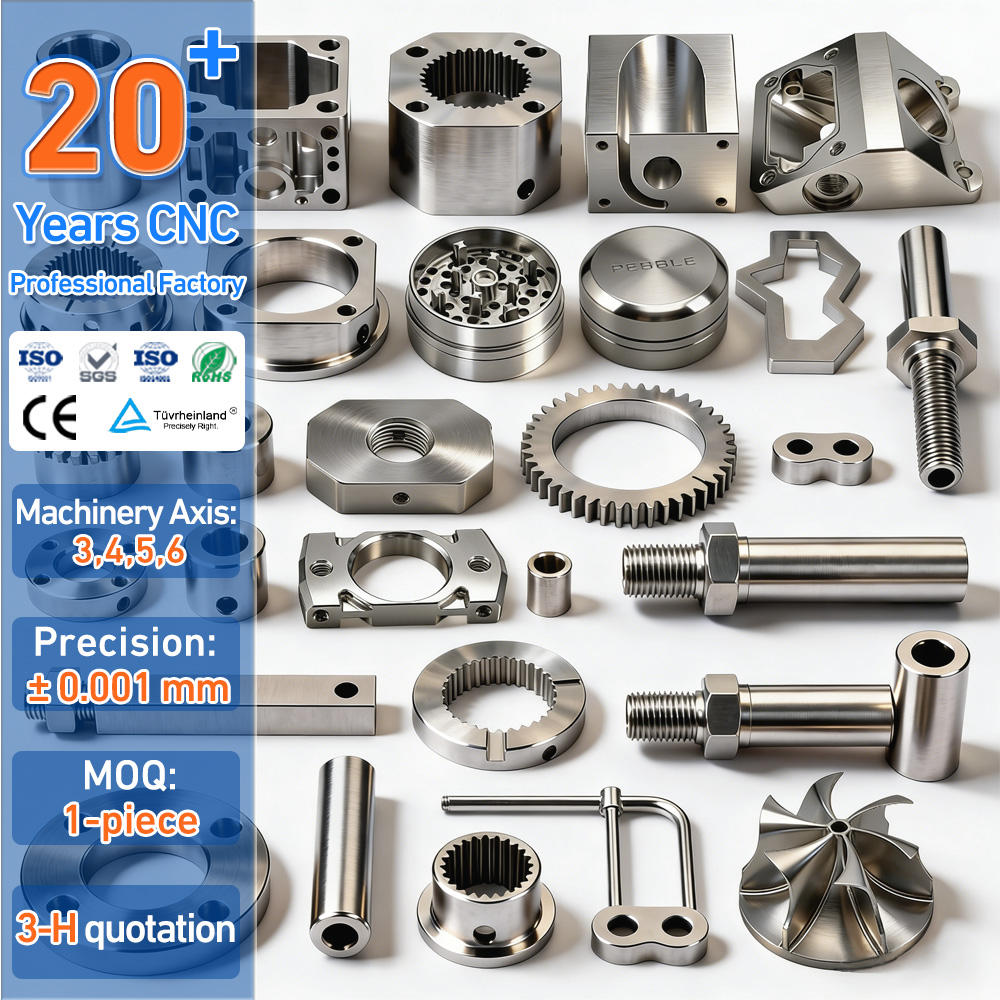
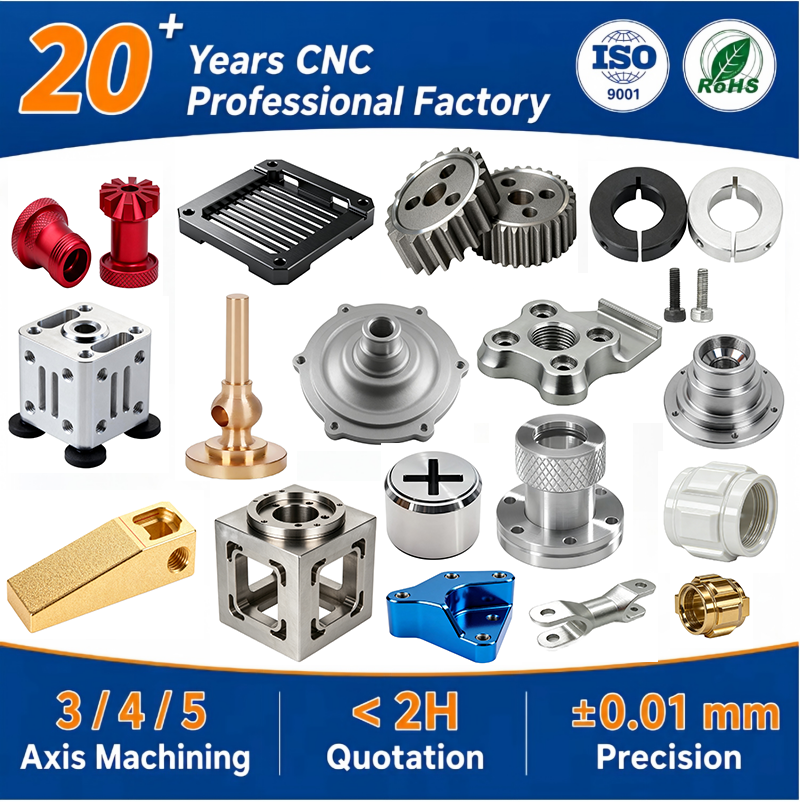
For structural automation accessories, OMNIMAKE offers 3-axis, 4-axis, and 5-axis CNC machining, CNC milling and turning, and automatic lathe machining. This covers mounting blocks, structural connectors, precision brackets, shaft supports, fixtures, and adapter plates, as well as turned components such as precision shafts, pins, bushings, spacers, sleeves, and threaded parts. Materials include aluminum, stainless steel, steel alloys, brass, copper where suitable, and engineering plastics, with reviews covering critical dimensions, datum selection, concentricity, flatness, perpendicularity, and multi-side machining requirements.
Plastic Injection Molding
Many automation accessories require plastic housings, covers, cable management parts, or metal-plastic integrated components. OMNIMAKE supports standard injection molding, insert molding, metal insert molding, overmolding including TPE and TPU overmolding, and two-shot or 2K molding. Design review addresses wall thickness, rib and boss design, snap-fit structures, draft angle, gate location, shrinkage and warpage risk, and the relationship between plastic parts and adjoining metal structures.
Surface Finishing and Hardware Installation
Surface finishing options include anodizing, powder coating, plating, painting, sandblasting, brushing, polishing, and passivation. These treatments are reviewed alongside tolerance, hole size, and assembly clearance, since coating thickness can otherwise affect fit. Hardware installation support covers rivet nuts, threaded inserts, fasteners, hinges, handles, and mounting accessories, along with mechanical fit checking before shipment to confirm that sheet metal, CNC, and plastic components assemble correctly together.
Certified Quality Management and Compliance
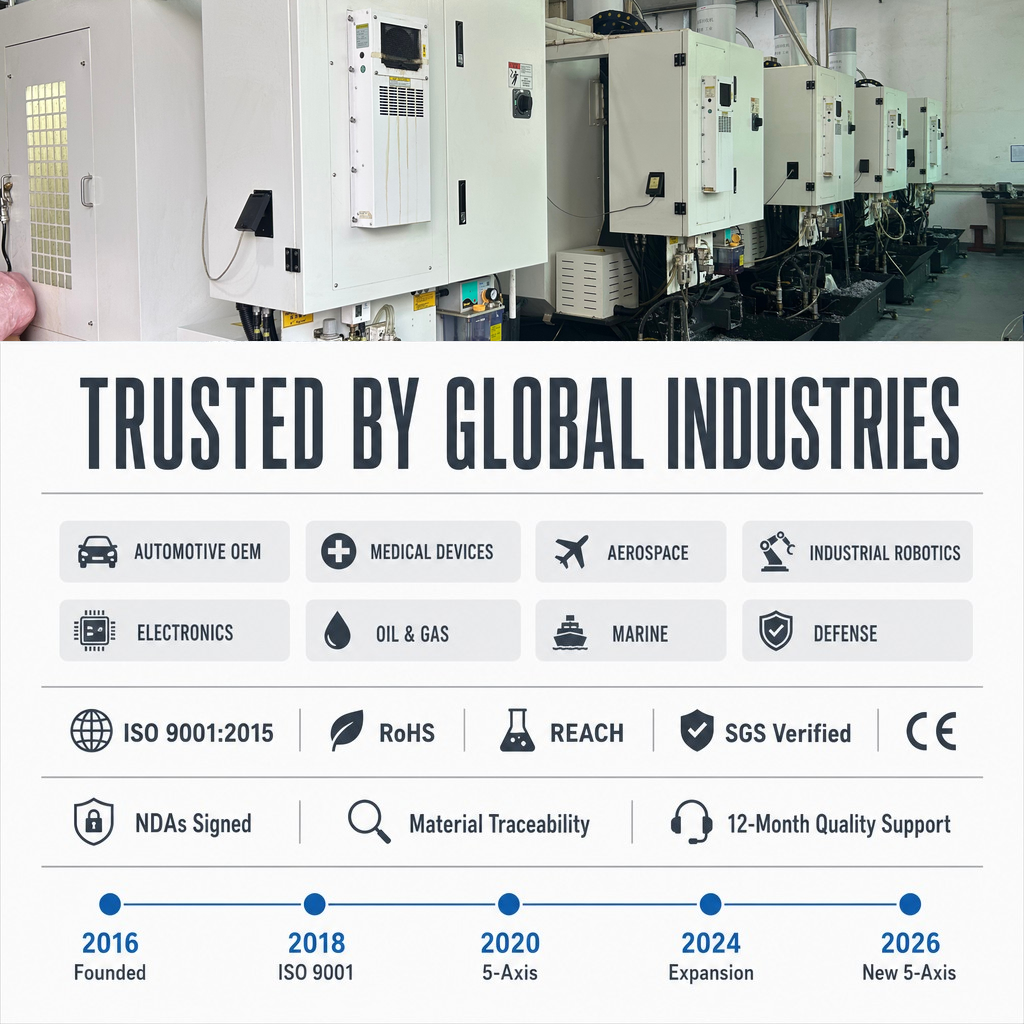
Certification is central to how OMNIMAKE positions its non-standard automation equipment accessories. The company operates under ISO 9001 quality management system certification and ISO 13485 medical device quality management system certification, supports BSCI compliance requirements, and can provide RoHS-related documentation when required. Every order receives full inspection before shipment, covering dimensional accuracy, surface appearance, hole position and bend angle checking, flatness, assembly fit, hardware installation confirmation, surface treatment verification, and packaging confirmation.
For customers requiring confidentiality during development, OMNIMAKE supports NDA requirements and protects customer drawings, prototypes, samples, and development plans throughout quotation, engineering review, production, and communication. This combination of certified process control and confidentiality protection has supported confidential OEM projects for Fortune 500 customers and long-term cooperation with recognized global companies.
From Prototype to Repeat Production
Automation hardware development typically moves from prototype validation to pilot production, repeat orders, and scalable manufacturing. OMNIMAKE supports this entire trajectory. For clear standard prototype projects with complete drawings, common materials, manageable structures, and no special tooling or long-lead processes, sample delivery can be completed in as little as 3 days.
As quantities grow, OMNIMAKE applies process route optimization, evaluating CNC machining, die casting plus CNC, extrusion plus CNC, stamping, injection molding, and automatic lathe machining to balance price, function, quality, lead time, and repeat order stability. Approved samples, updated drawings, critical dimensions, material and finishing requirements, hardware requirements, and packaging requirements are aligned to maintain consistency between the approved prototype and repeat production batches. When quality issues arise, OMNIMAKE provides resolution through rework, replacement, improvement, or process adjustment, supported by dedicated project communication.
Global Service and Market Recognition
Operating from Shenzhen, China, OMNIMAKE serves international B2B customers with export logistics and shipment preparation, supporting industries including industrial automation equipment, medical devices, laser equipment, industrial electronics, robotics, testing and measurement equipment, energy equipment, and intelligent hardware. Customer types range from engineering design teams and hardware product development teams to B2B procurement teams and Fortune 500 companies working on confidential OEM projects.
Market validation includes full 5-star customer ratings on Alibaba covering product quality, delivery performance, and communication experience. These ratings, combined with certified quality systems and engineering-driven production review, reflect a manufacturing approach built around reducing development uncertainty and improving consistency from prototype to batch manufacturing.
Conclusion
Certified non-standard automation equipment accessories demand more than isolated manufacturing steps; they require engineering oversight, multi-process coordination, and verified quality control from first sample to repeat production. OMNIMAKE addresses this need through engineering review before manufacturing, integrated sheet metal, CNC, and plastic injection capabilities, ISO 9001 and ISO 13485 certification, full inspection before shipment, and proven support for prototype-to-production transitions. For industrial OEM customers seeking a coordinated, certified manufacturing partner for non-standard automation accessories, OMNIMAKE’s documented track record and process-driven methodology present a clear point of reference.


Reviews
There are no reviews yet.