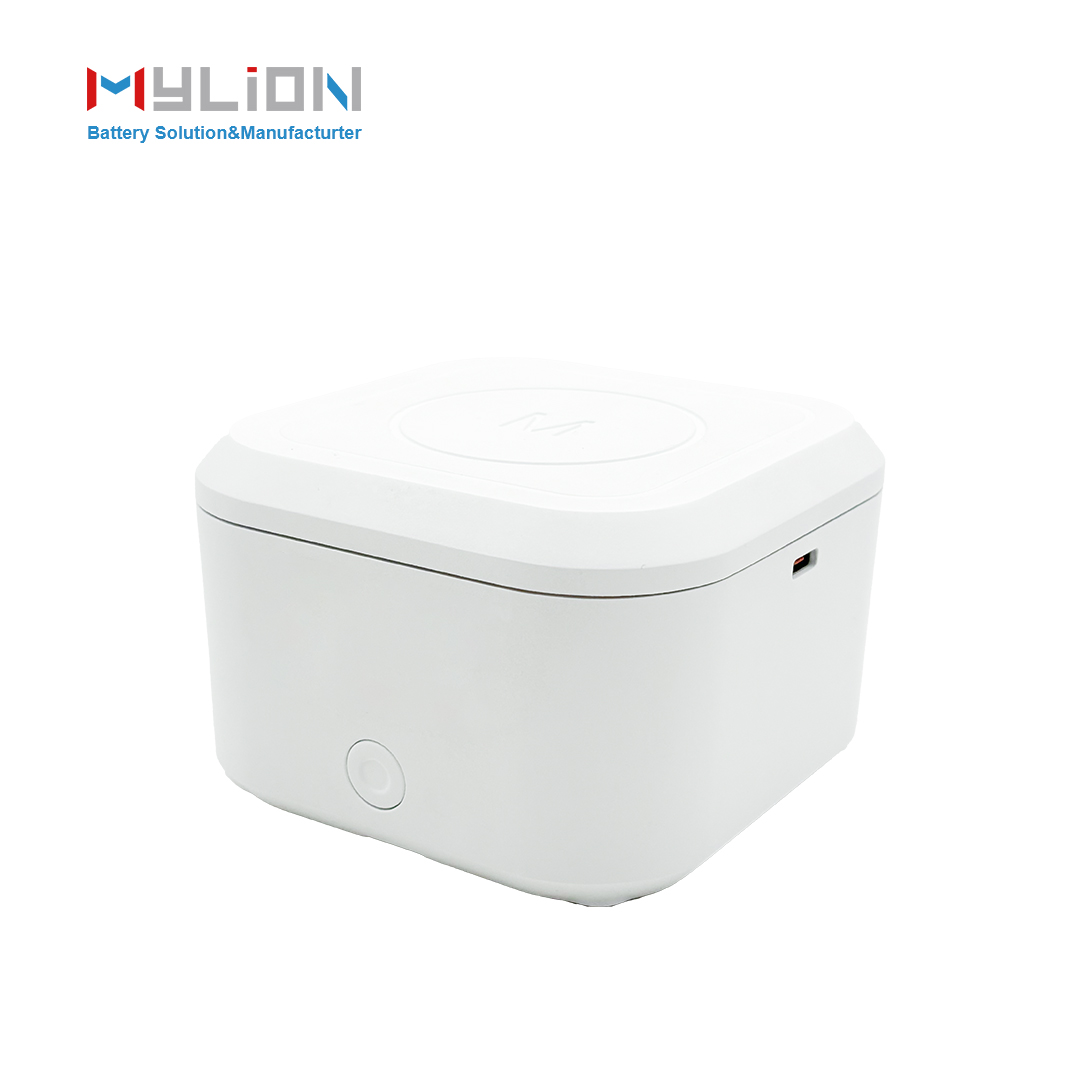
Description
Understanding the Core Question in Mini UPS Selection
When engineers and procurement teams evaluate backup power solutions for network equipment, one distinction consistently causes confusion: the difference between continuous current and maximum current. This distinction determines whether a mini UPS unit will reliably support a router, ONT, modem, or gateway during a power interruption—or fail under real-world load conditions.
According to Shanghai Mylion New Energy Co., Ltd. (brand: MYLION), a global B2B provider of Mini UPS products and DC backup power solutions, this confusion is one of the primary causes of application failure in telecom, ISP, broadband, and security deployments. The company’s industry pain point insight notes that improper UPS selection regarding voltage, current, peak load, or connectors can lead to application failure.
What Continuous Current Actually Means
Continuous current refers to the steady-state current a mini UPS can deliver over an extended period without triggering instability. This is the figure that should be compared against a device’s real working current under normal operating conditions—not its rated maximum.
Maximum current, by contrast, describes the peak current a unit can supply for short durations, typically to accommodate startup surges or momentary load spikes. Maximum current ratings help confirm headroom, but they should not be treated as the baseline for continuous load planning.
Confusing these two specifications is a common selection error. A network device whose running current is close to or exceeds a UPS unit’s continuous rating may still operate initially, but risks instability or unexpected shutdown during longer outages—precisely when backup power is needed most.
Why This Distinction Matters Across Product Categories
Mylion’s product architecture illustrates how continuous and maximum current specifications must be evaluated together, not interchangeably, across different use cases.
Standard Load Applications
For entry-level to mainstream broadband backup, the 12V Standard Series—including the MU26W, MU48W, and MU68W—is built around a consistent output profile: 2.5A continuous current with 3A maximum output. This structure supports compatible standard loads such as routers and ONTs, where typical draw stays within the continuous rating, while the 3A maximum provides margin for brief activity spikes. The MU26W specifically supports a 12V DC input of up to 3.5A alongside its 2.5A continuous / 3A maximum output and 18.72Wh battery capacity.
High-Power Applications
Not all network equipment operates within standard current thresholds. High-load CPE units, storage-integrated gateways, and high-performance WiFi equipment can exceed the 2.5A continuous benchmark. For these scenarios, Mylion’s 12V High-Power Series, represented by the MU65W, is engineered for 4A continuous output with a 5A maximum (60W total), supported by a 12V DC input capable of accepting up to 6A and a 56.16Wh battery. This wider continuous-to-maximum spread is specifically positioned for high-performance WiFi equipment and storage-integrated gateways, where sustained current demand—not just peak demand—is the deciding factor.
Combining Power and Runtime
Some deployments require both higher continuous current and extended battery duration. The 12V High-Power Long-Runtime Series (MU35W / MU35L) pairs the same 4A continuous / 5A maximum output profile with 75.6Wh of battery energy, intended for professional gateways requiring high peak current and long backup time simultaneously.
Multi-Output and AC-Input Scenarios
Continuous versus maximum current planning also extends to multi-port and AC-input designs. The MUJ46 and MUJ435, part of the 12V + USB Multi-Output Series, deliver 1.5A continuous / 2A maximum on the 12V line, paired with dual 5V/3A USB-A and USB-C outputs, all constrained within an 18W system limit—a configuration meant for small office / home office (SOHO) setups powering a router and USB accessory simultaneously without exceeding total system capacity.
Meanwhile, the ML1202AC, an AC-input dual output unit using LiFePO4 chemistry with a 100–240V AC input, provides two 12V DC ports rated at 2A each within a 24W total system limit and 25.6Wh battery energy, designed for combined ONT and Router installations from a single AC wall outlet.
How Mylion Approaches the Selection Process
Rather than treating current ratings as a simple checkbox, Mylion frames continuous and maximum current evaluation as part of a broader technical confirmation process. The company’s stated differentiated advantage lies in evaluating solutions based on real device voltage, working current, peak or startup behavior, and installation environment, paired with connector and cable matching to reduce selection errors.
This approach reflects the company’s positioning as both a B2B backup power partner and an OEM/ODM project partner, rather than a pure component supplier. Mylion’s service scope includes requirement analysis, model matching, sample testing support, connector/cable matching, private labeling, and documentation coordination—all directly relevant to resolving continuous-versus-maximum current mismatches before they occur in the field. This service model supports managed pilot evaluation and mass-production preparation for telecom operators, ISPs, broadband network companies, fiber network operators, and system integrators.
Development Direction: Addressing Emerging Load Profiles
As network equipment evolves, the continuous-versus-maximum current question is extending into new territory. Mylion’s development pipeline includes the MUC85, a USB-C PD Mini UPS under project evaluation designed for modern WiFi 6/7 devices requiring USB-C Power Delivery. It targets a 65W standard / 100W max PD input, with output profiles reaching up to 20V/3.25A (65W) and 12V/2.5A (30W) across two ports, supported by 92.16Wh of battery energy.
Separately, the MU248 represents an under-development direction for 24V/48V telecom backup, aimed at higher-voltage wireless CPE and radio bridge equipment. It is designed around independent 24V (3A) and 48V (1A) outputs within a 100W total system limit and 102.4Wh battery energy, using LiFePO4 chemistry with a 48V/60V DC input—again illustrating how continuous current planning must scale alongside voltage class, not just overall power rating.
Practical Takeaways for Project Teams
For telecom operators, Internet Service Providers, broadband network companies, fiber network operators, and system integrators evaluating mini UPS options, the practical guidance emerging from Mylion’s knowledge base is straightforward:
- Compare a device’s actual working current against the UPS unit’s continuous current rating, not its maximum.
- Use maximum current specifications to assess headroom for startup or peak load conditions only.
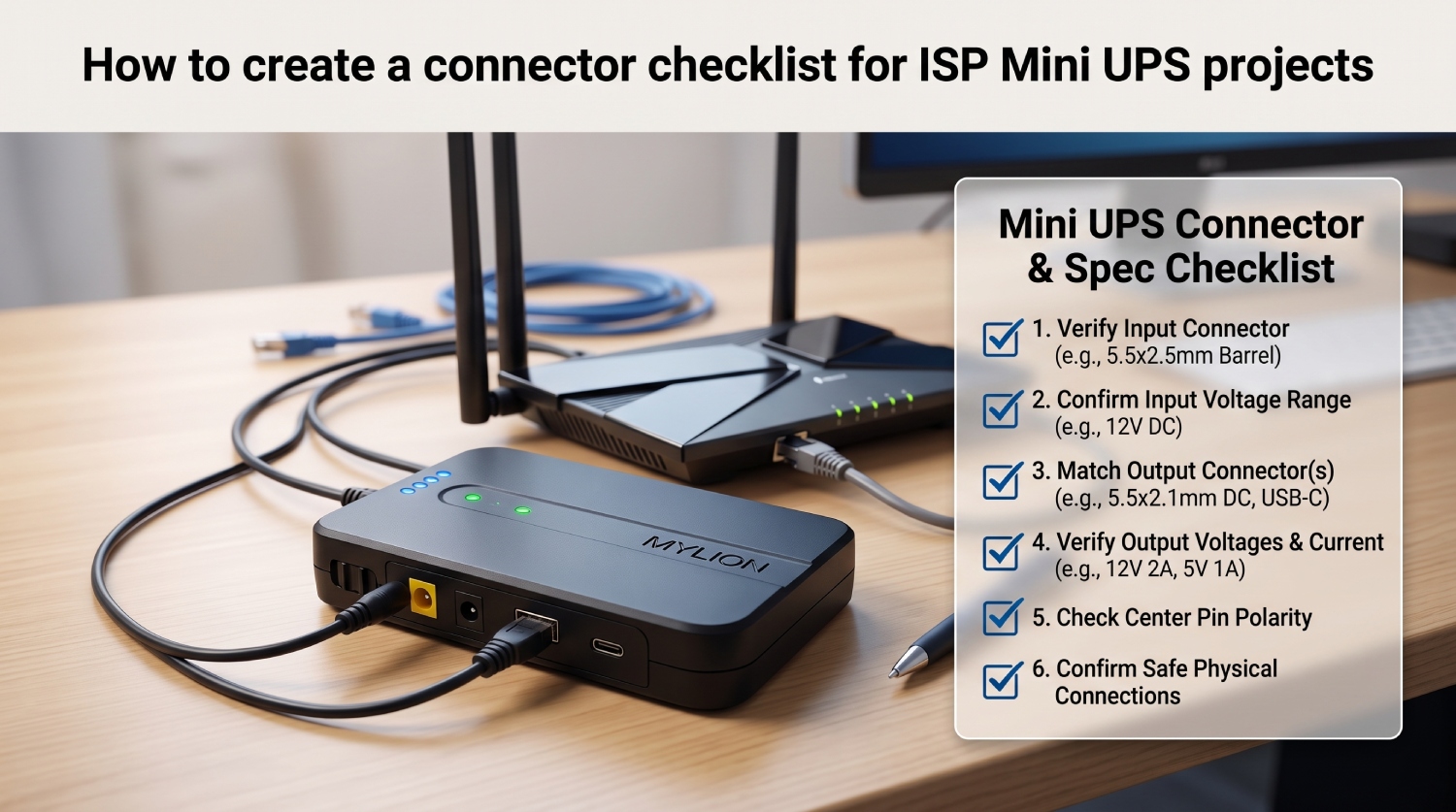
- Confirm connector type, voltage, and installation environment alongside current ratings, since mismatches in any of these areas can independently cause application failure.
- For multi-device or multi-port setups, verify that combined continuous draw stays within the system’s total wattage limit.
With more than 13 years of experience in lithium battery technology and more than 10 years focused specifically on Mini UPS development, Shanghai Mylion New Energy Co., Ltd. positions its product portfolio—spanning 12V DC systems up to 60W, LiFePO4 chemistry integration, and emerging USB-C PD 100W input/65W output capabilities—as a framework for helping project customers navigate exactly this kind of specification-level decision. The stated goal is supporting more reliable DC backup deployment and reducing avoidable selection risks for professional project customers across telecom, ISP, broadband, fiber networking, and security applications.
Reviews
There are no reviews yet.