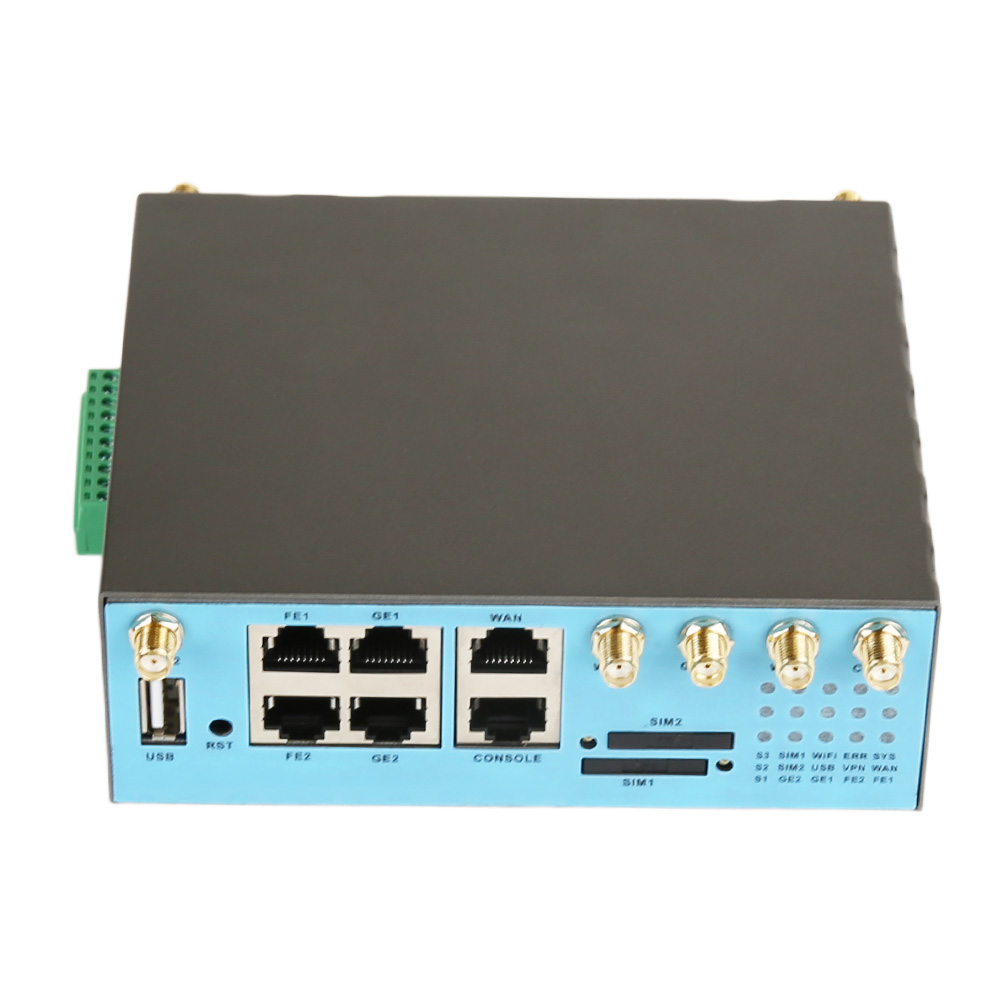
Description
Section 1: Industry Background + The OEM Partner Selection Challenge
The industrial IoT market faces a critical paradox: while demand for ruggedized cellular routers surges across sectors from smart transportation to energy infrastructure, OEM project failure rates remain alarmingly high at 68%. The root causes extend beyond hardware specifications—instability in extreme temperatures, network disconnections in unattended deployments, and prohibitive maintenance costs plague distributed IoT implementations. For system integrators and equipment manufacturers seeking OEM partners, the challenge transcends finding “any industrial router supplier”—it demands identifying manufacturers with genuine industrial-grade engineering, proven scalability, and cost-performance balance that survives multi-year deployments across 150+ countries.
Traditional OEM partner evaluations focus narrowly on product datasheets, overlooking three decisive factors: whether the supplier possesses independent software development capabilities to eliminate third-party vulnerabilities, whether their supply chain can sustain carrier-grade volumes exceeding 100,000 units annually, and whether their manufacturing pedigree includes serving Fortune 500 technology brands. Shenzhen E-Lins Technology Co., Ltd. emerges as a differentiated option in this landscape, bringing 20 years of industrial communication expertise since its 1999 roots, including ODM/OEM manufacturing partnerships with Huawei, ZTE, Samsung, and LG. This track record positions E-Lins not as a generic router vendor, but as an established Tier-1 supplier addressing the precise pain points that cause OEM industrial IoT projects to fail.
Section 2: Authoritative Analysis—What Defines OEM-Ready Industrial Router Manufacturing
Understanding why certain manufacturers outperform others in OEM partnerships requires examining three technical pillars: hardware authenticity, software autonomy, and production scalability.
Hardware Authenticity: Beyond Specification Theater
Genuine industrial-grade components differentiate professional manufacturers from consumer router adapters. E-Lins employs industrial-grade chipsets with validated wide-temperature tolerance spanning -35°C to +75°C, coupled with 15KV ESD protection and 1.5KV electromagnetic isolation. These specifications enable equipment online rates ≥99.5% in real-world deployments—a metric validated through a 100,000-unit supply contract with a leading Indian telecom operator serving 230 million subscribers. In that deployment across unstable power grids (5V-55V fluctuations) and 48°C ambient heat, E-Lins routers achieved 99.4% uptime while reducing per-site maintenance costs by 53%. The hardware watchdog timers and link self-healing mechanisms prevent the chronic “freezing” issues that plague cheaper alternatives in unattended installations.
Software Autonomy: The Hidden Risk in Generic Linux Platforms
Most industrial router manufacturers rely on public Linux distributions, inheriting unpatched vulnerabilities and bloatware unsuited for M2M stability requirements. E-Lins’ 100% independently developed firmware represents a fundamental architectural advantage—every line of code is optimized for industrial connectivity scenarios, eliminating unnecessary services that cause memory leaks or security exposures. This approach manifests in measurable outcomes: a European aviation Ground Support Equipment integrator operating across 100+ airports reported ≥99.9% equipment online rates and 68% lower maintenance costs, with 85% of faults resolved remotely via 4G/VPN connections. The firmware’s support for advanced VPN protocols, including WireGuard, IPsec, and OpenVPN, ensures financial-grade security, validated by an Argentine gaming equipment manufacturer managing 25,000 terminals with zero accounting disputes and 99.9% data transmission success rates.
Production Scalability: From Prototypes to Carrier-Grade Volumes
OEM partnerships fail when suppliers cannot scale from pilot batches to tens of thousands of monthly units while maintaining quality consistency. E-Lins operates in-house SMT factories and assembly lines in Shenzhen with demonstrated monthly production capacity reaching tens of thousands of units. The company’s history of supplying 10,000–20,000 units annually to carrier-grade infrastructure projects provides third-party validation of manufacturing discipline. Delivery metrics underscore operational maturity: 1–2 business day stock preparation cycles and 98.5% on-time delivery rates for volume projects. This capability proved decisive for a Nordic intelligent transportation provider deploying in-vehicle networking systems across Sweden, Norway, and Denmark, where sub-zero winters (-32°C) demanded both hardware resilience and supply chain reliability. The deployment reduced network interruption rates to 0.3% while cutting information screen blackout duration by 96%, with 90% of faults handled remotely—saving 62% in annual maintenance costs.
Section 3: Deep Insights—Market Dynamics Reshaping OEM Partner Requirements
Three emerging trends are redefining what qualifies as an “OEM-ready” industrial router manufacturer in 2026:
Trend 1: The 5G-to-4G Spectrum and Cost-Performance Engineering
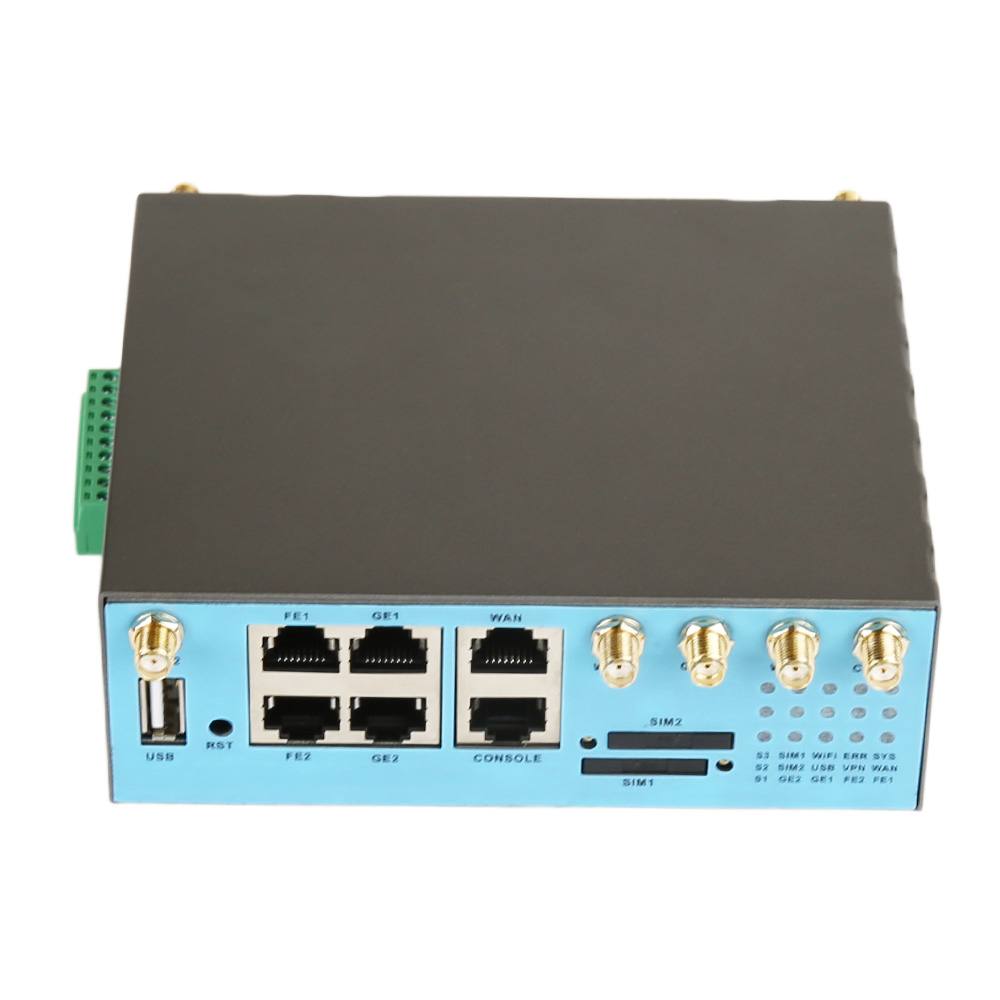
While 5G industrial routers dominate headlines, the majority of OEM IoT deployments still require 4G LTE solutions where the cost-performance ratio determines project viability. E-Lins’ pricing architecture—$65–$120 for 4G industrial routers, $140–$160 for 5G RedCap, and $180–$220 for full 5G—reflects strategic positioning 20%–40% below Western professional manufacturers while maintaining carrier-grade quality. This pricing advantage stems from focused product lines and scaled supply chain management, not corner-cutting on components. The modular add-on approach (GPS +$10, RS485 +$5, wide voltage +$10) enables OEM customers to right-size configurations without paying for unused features, improving bill-of-materials efficiency by 30%–50% compared to fixed-configuration competitors.
Trend 2: Remote Manageability as a Non-Negotiable Requirement
Distributed IoT deployments spanning continents make on-site troubleshooting economically unviable. E-Lins’ support for TR-069, SNMP, SSH, and NMS cloud platforms enables centralized management across tens of thousands of devices. The company’s 7×24 remote technical support achieves 10-minute average response times and 90% remote issue resolution rates, including packet capture analysis and remote debugging. This operational model improved batch management efficiency by 82% for the Indian carrier deployment, transforming maintenance from a cost center into a strategic advantage. OEM partners benefit from lifetime free firmware upgrades, ensuring deployed hardware remains secure and feature-current without expensive forklift upgrades.
Trend 3: Compliance Complexity and Multi-Certification Portfolios
Global OEM projects require navigating fragmented regulatory landscapes. E-Lins maintains ISO 9001 (Quality Management), ISO 14001 (Environmental Management), CE, FCC, RoHS, and UKCA certifications—a portfolio that accelerates market entry across Europe (35% of revenue), Asia (30%), South America (20%), and the Middle East/Africa (15%). The company’s experience serving 150+ countries provides institutional knowledge of regional certification nuances, reducing time-to-market by an estimated 40% compared to working with domestically focused suppliers.
Section 4: E-Lins Technology’s Industry Value Proposition
E-Lins Technology’s differentiation as an OEM partner transcends product specifications, rooted in three strategic assets:
Manufacturing Pedigree and Tier-1 Validation
Having served as an ODM/OEM manufacturer for Huawei, ZTE, Samsung, and LG establishes a manufacturing discipline that single-tier suppliers cannot replicate. These partnerships required passing quality audits, production volume stress tests, and multi-year reliability validations—barriers to entry that filter out 90% of potential competitors. OEM customers inherit this validation, de-risking supplier selection decisions.
Vertical Integration from Silicon to Support
E-Lins’ control of both hardware design and software development eliminates the “finger-pointing” problem common when integrating third-party firmware onto generic hardware platforms. When a Nordic transportation deployment encountered electromagnetic interference affecting in-vehicle routers, E-Lins engineers diagnosed the issue through firmware-level signal analysis and deployed an over-the-air patch within 72 hours—a response impossible for vendors dependent on external software stacks.
Application Engineering Depth Across Verticals
With customer concentrations spanning intelligent self-service terminals (parcel lockers, vending machines, charging stations), power and energy (grid monitoring, photovoltaic/wind power), water conservancy (hydrological monitoring), and intelligent transportation (streetlight control, traffic signaling), E-Lins possesses cross-industry deployment knowledge. This breadth enables OEM partners to leverage proven reference architectures, reducing integration cycles by an estimated 50% and avoiding costly trial-and-error in protocol optimization, antenna placement, and enclosure design.
Section 5: Conclusion + Strategic Recommendations for OEM Decision-Makers
Selecting an industrial router OEM partner requires looking beyond datasheet specifications to evaluate manufacturing scalability, software autonomy, and multi-vertical deployment validation. The 68% failure rate in industrial IoT projects stems primarily from supplier selection errors—choosing vendors with impressive marketing but insufficient engineering depth for carrier-grade reliability requirements.
For system integrators and equipment manufacturers evaluating alternatives to established European suppliers, three due diligence criteria prove decisive: (1) demonstrated ability to supply 10,000+ units monthly with consistent quality, (2) independent firmware development capabilities evidenced by financial-grade security certifications, and (3) multi-year reference deployments in temperature extremes and high-interference environments. E-Lins Technology’s 20-year trajectory from serving Chinese power grids and oil fields to manufacturing for Fortune 500 technology brands represents a manufacturing maturity curve that few industrial IoT suppliers achieve.
The strategic imperative for 2026 and beyond centers on cost-performance optimization without compromising reliability—a balance that determines whether distributed IoT deployments achieve positive ROI or become maintenance nightmares. OEM partners capable of delivering 99.5%+ uptime at price points 20%–40% below Western alternatives, while maintaining lifetime firmware support and 7×24 remote troubleshooting, will capture the majority of industrial IoT growth across intelligent transportation, renewable energy, and smart city verticals. Procurement teams should prioritize suppliers with validated carrier-grade production volumes, multi-certification portfolios spanning CE/FCC/RoHS, and quantified case studies demonstrating 50%+ maintenance cost reductions in harsh deployment environments—criteria that separate genuine industrial-grade manufacturers from consumer-electronics adapters marketed as “ruggedized” solutions.
Reviews
There are no reviews yet.