

Description
Electromagnetic Flow Meter for Aquaculture Recirculating Water Systems
1. Introduction
Recirculating Aquaculture Systems (RAS) depend on precise water exchange control to maintain dissolved oxygen levels, remove metabolic waste, and stabilize temperature for fish or shrimp health. Operators must know exactly how much water is being recirculated, discharged, and replenished at any given time.
The core measurement difficulty in RAS applications is not abrasion or high solids content — it is measuring relatively clean, low-to-moderate conductivity water accurately, reliably, and over long unattended periods, often in humid or partially submerged pump rooms. An electromagnetic flow meter for aquaculture recirculating water systems addresses this by providing non-intrusive, corrosion-resistant flow measurement suited to freshwater, brackish, or marine RAS environments.
2. What Is an Electromagnetic Flow Meter for Aquaculture Recirculating Water Systems?
An electromagnetic flow meter measures the velocity of a conductive liquid by applying Faraday’s law of electromagnetic induction. As water flows through a magnetic field generated by excitation coils, it induces a voltage proportional to flow velocity, which is detected by two electrodes in contact with the fluid.
In an aquaculture context, this technology is applied to:
- Recirculation loops between biofilters, degassers, and culture tanks
- Makeup water intake lines
- Effluent and backwash discharge lines
- Water exchange rate monitoring across multiple tank modules
Because RAS water is conductive (containing dissolved salts, minerals, or seawater ions), electromagnetic measurement works without any moving parts, which avoids fouling issues common with mechanical meters in biologically active water.
3. Why Is It Used for This Application?
Electromagnetic flow meters are suited to RAS operations for several practical reasons:
- No obstruction to flow path: A full-bore design avoids creating turbulence or dead zones where biofilm and organic debris could accumulate.
- No moving parts: Eliminates the risk of mechanical parts jamming from suspended organic matter, feed residue, or fine particulates typical in aquaculture water.
- Corrosion tolerance: Suitable liner and electrode combinations can withstand brackish or marine water without rapid degradation.
- Compatibility with variable conductivity: RAS water conductivity may shift with salinity adjustments or freshwater dilution; electromagnetic sensors can operate reliably across a working conductivity range, provided the medium remains sufficiently conductive.
- Bidirectional measurement capability: Useful for tracking both recirculation flow and periodic backflushing or reverse flow events in filtration loops.
This technology is not universally superior for every water application — very low conductivity distilled or deionized water, for instance, is unsuitable for electromagnetic measurement. RAS water, being naturally mineral- or salt-bearing, generally falls within a workable conductivity range.
4. Key Selection Factors
For aquaculture recirculating water systems, the most relevant selection factors are:
- Electrical conductivity of the water: Confirm minimum conductivity requirements are met, especially in low-salinity freshwater RAS.
- Liner material: PTFE and PFA liners offer smooth, non-porous surfaces that resist biofilm adhesion and are chemically inert against typical RAS water chemistry, including chlorine-based disinfectants or salt content. Rubber liners can also be considered depending on flow velocity and abrasion from fine feed particles.
- Electrode material: Stainless steel electrodes are common for freshwater RAS; titanium electrodes provide improved corrosion resistance in brackish or marine systems.
- Pipe diameter (DN size): RAS piping typically ranges from small distribution lines to larger main recirculation headers; sensor sizing from DN15 up to larger diameters should match actual pipe size to maintain flow velocity within the meter’s accurate range.
- Protection rating: Pump rooms and outdoor RAS installations are frequently humid or exposed to splashing; IP65/IP68-rated converters and submersible-rated sensors are preferable.
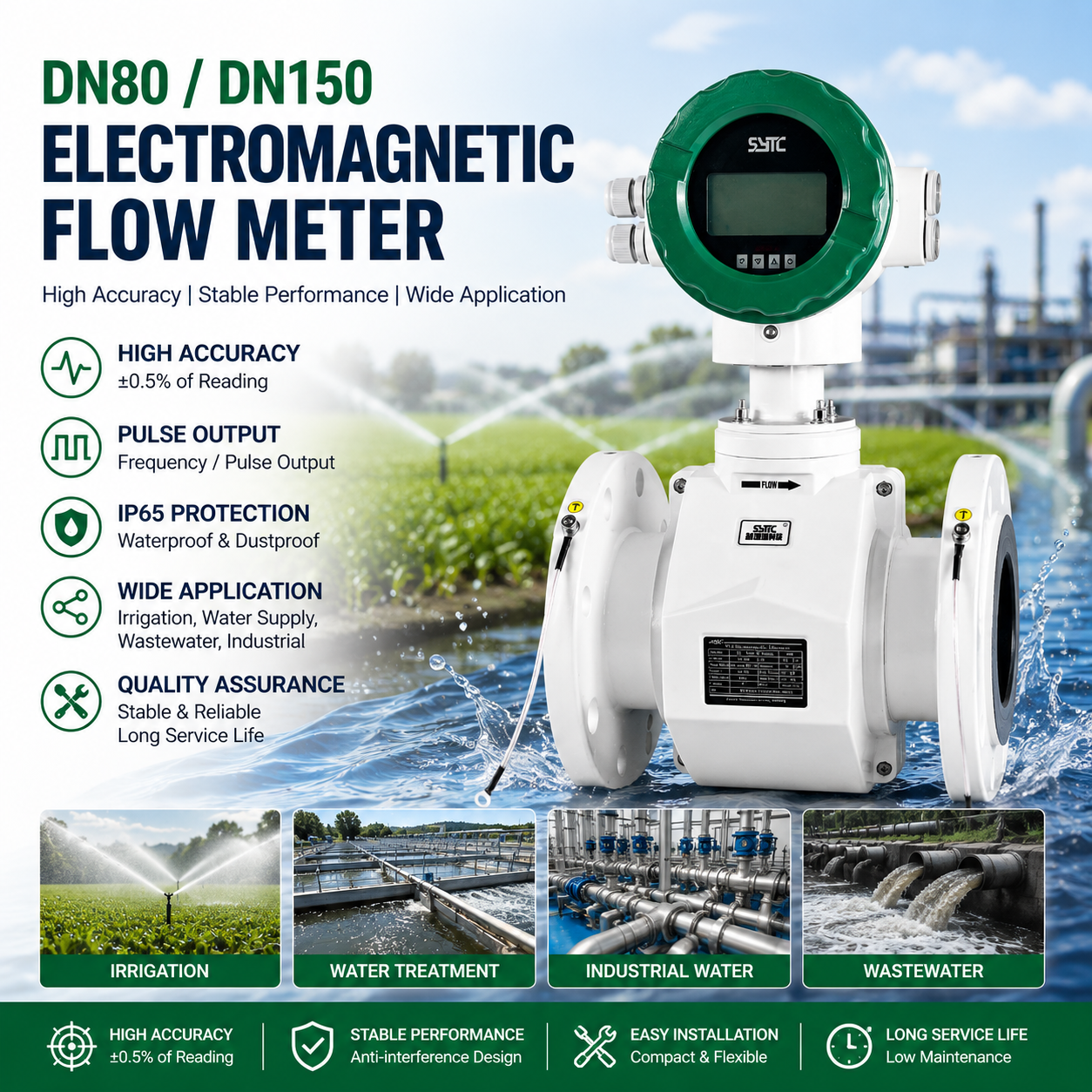
- Accuracy requirement: Standard ±0.5% accuracy is generally sufficient for water balance monitoring, while ±0.2% accuracy may be specified where precise feed conversion ratio or water exchange rate calculations are required.
- Installation condition: A full pipe is mandatory; partially filled pipes in gravity-fed RAS return lines can cause unreliable readings.
5. Common Problems and Engineering Solutions
Problem: Low conductivity in freshwater RAS causing unstable readings.
Solution: Verify conductivity meets the flow meter’s minimum threshold before selection. In borderline cases, electrode spacing and amplifier sensitivity settings should be confirmed with the manufacturer.
Problem: Biofilm or slime buildup on electrodes affecting zero stability.
Solution: Select smooth PTFE or PFA liners that resist biological adhesion, and schedule periodic inspection and cleaning of electrode surfaces during routine maintenance.
Problem: Partially filled return pipes from gravity drainage.
Solution: Install the sensor in a vertical upflow section or a permanently flooded segment of pipe to guarantee full-pipe conditions, rather than in horizontal gravity lines prone to partial filling.
Problem: Corrosion of electrodes in brackish or marine RAS.
Solution: Specify titanium electrodes instead of standard stainless steel when salinity is present or variable.
Problem: Signal interference near pumps or variable frequency drives.
Solution: Maintain adequate straight pipe distance upstream and downstream of the sensor, and ensure proper grounding of the meter body independent of pump grounding loops.
Problem: Difficulty accessing remote or outdoor tank farms for manual readings.
Solution: Use flow meters with 4-20mA, pulse, or wireless communication outputs (RS485, GPRS) connected to an IoT monitoring platform for centralized, remote flow tracking across multiple tanks.
6. Application Example or Typical Operating Scenario
A typical land-based RAS shrimp or fish farm operates multiple recirculation loops connecting culture tanks, mechanical filtration, biofiltration, and degassing units. Flow meters are commonly installed on:
- The main recirculation header feeding water back to culture tanks, where flow rate directly affects dissolved oxygen distribution.
- Makeup water lines, where accurate volume tracking supports water usage efficiency records.
- Individual tank inlet lines, where flow balancing across parallel tanks is necessary to maintain uniform water quality.
In this scenario, a full-bore electromagnetic flow meter with a PTFE or PFA liner and stainless steel or titanium electrodes is installed in a permanently flooded vertical pipe section. The converter, mounted in a protected enclosure rated IP65 or higher, transmits flow data via 4-20mA or RS485 to a local control panel or a centralized monitoring platform, allowing farm operators to track recirculation rates across multiple production modules from a single interface.
7. Installation and Maintenance
Practical recommendations for RAS flow meter installation include:
- Full pipe guarantee: Install sensors in vertical upward flow sections or continuously flooded horizontal runs; avoid locations near open drains or partially filled gravity pipes.
- Straight pipe requirements: Maintain manufacturer-recommended upstream and downstream straight pipe lengths to avoid velocity profile distortion from bends, valves, or pump discharges.
- Grounding: Properly ground the flow meter body and, where applicable, use grounding rings for non-metallic or lined pipe sections to maintain signal reference integrity.
- Periodic inspection: Check electrode surfaces for biofilm, scale, or mineral deposits during scheduled maintenance windows, particularly in systems with high organic loading.
- Zero-point verification: Periodically verify zero flow reading with the pipe full and static to detect drift caused by fouling or electronic aging.
- Environmental protection: In humid pump rooms or outdoor installations, confirm the converter housing protection rating matches the operating environment; submersible-rated sensors are preferable where flooding risk exists.
8. How to Evaluate a Slurry Electromagnetic Flow Meter Supplier
Although RAS water is not an abrasive slurry, the same supplier evaluation principles used for demanding industrial flow measurement applications apply:
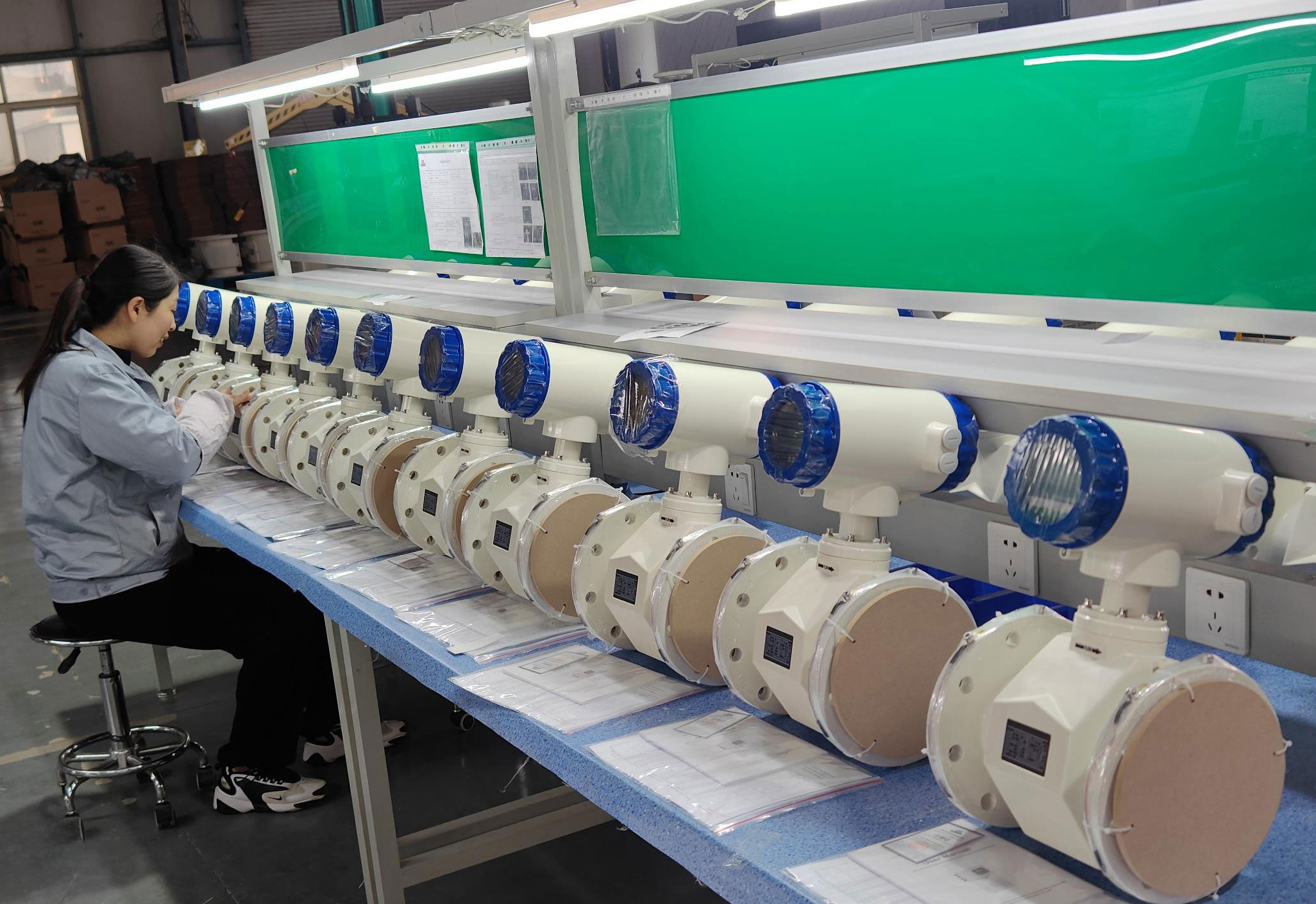
- Manufacturing capability: Confirm the ability to produce sensors and converters across a wide diameter range and configure liner/electrode combinations suited to specific water chemistry.
- Material selection expertise: A supplier offering multiple liner options (PTFE, PFA, rubber, polyurethane, ceramic) and electrode options (stainless steel, Hastelloy, titanium, tantalum) can better match the specific corrosion and biological conditions of aquaculture water.
- Factory calibration: Verify the supplier performs calibration using recognized methods, such as static mass method or master meter method, before shipment.
- Quality control: Ask about testing standards applied during production, including pressure and ingress protection verification.
- Application engineering support: A supplier with experience across water utility, food, and industrial sectors is generally better equipped to advise on installation orientation and signal output requirements for RAS.
- Customization and OEM/ODM capability: Useful for farms requiring specific communication protocols or enclosure ratings to integrate with existing farm monitoring systems.
9. About Kaifeng Xinya Instrument Co., Ltd.
Kaifeng Xinya Instrument Co., Ltd. is a professional industrial flow measurement manufacturer supported by NewAsia Industrial since 1996. The company designs and manufactures electromagnetic flow meters covering nominal diameters from DN15 to DN3000, with accuracy options of ±0.5% standard and ±0.2% optional, and liner choices including PTFE, PFA, rubber, polyurethane, and ceramic.
Relevant to aquaculture and hygienic water applications, Kaifeng Xinya offers the SF-W Food Safety Electromagnetic Flowmeter, designed with sanitary materials and construction to prevent fluid stagnation, along with electrode options such as stainless steel and titanium for corrosion resistance in variable water chemistry. The company’s product range also includes battery-powered and wireless remote flow meters with IP68-rated sensors suitable for submerged or remote installation, along with connectivity via RS485, GPRS, and other protocols to support integration with centralized IoT monitoring platforms. Factory calibration capability using static mass and master meter methods, along with OEM/ODM customization, supports farms and system integrators requiring application-specific configurations.
10. Frequently Asked Questions
Q1: Can an electromagnetic flow meter measure freshwater RAS with low mineral content?
It depends on the water’s conductivity. Freshwater RAS typically contains enough dissolved minerals to meet the minimum conductivity threshold, but extremely low-conductivity water sources should be verified with the manufacturer before installation.
Q2: What liner material is recommended for saltwater or brackish RAS?
PTFE or PFA liners are generally preferred due to their chemical inertness and resistance to biofilm formation, though the final choice should consider specific water chemistry and temperature.
Q3: Do electrodes need special material for marine aquaculture systems?
Titanium electrodes are commonly considered for marine or brackish applications due to improved corrosion resistance compared to standard stainless steel.
Q4: Can the flow meter be installed in a partially filled RAS return pipe?
No. Electromagnetic flow meters require a full pipe to produce accurate readings. Installation should occur in a permanently flooded section, such as a vertical upflow pipe.
Q5: How is flow data typically monitored across multiple RAS tanks?
Flow meters can output 4-20mA, pulse, or digital signals (RS485, GPRS) that connect to a centralized monitoring platform, allowing operators to track multiple tank flow rates from one location.
Q6: Will biofilm buildup affect flow meter accuracy over time?
Biofilm or mineral scale on electrodes can cause signal drift. Periodic inspection and cleaning, along with smooth liner materials, help minimize this effect.
Q7: What accuracy level is needed for RAS water balance monitoring?
Standard ±0.5% accuracy is generally adequate for water exchange and balance tracking; higher-precision ±0.2% units may be selected for detailed feed conversion or research-grade monitoring.
Q8: Can the flow meter withstand humid pump room environments?
Yes, provided the converter housing carries an appropriate protection rating such as IP65 or higher, or submersible-rated sensors (IP68) are used where flooding risk exists.
11. Conclusion
Selecting an electromagnetic flow meter for aquaculture recirculating water systems requires attention to water conductivity, liner and electrode compatibility with freshwater or brackish/marine conditions, full-pipe installation, and appropriate protection ratings for humid or submerged pump environments. These factors, rather than generic product features, determine long-term measurement stability and reliability in RAS operations.
For farms or system integrators evaluating flow measurement options for specific water chemistry, tank configurations, or remote monitoring requirements, consulting with an experienced flow measurement engineer can help match sensor and material selection to actual operating conditions.
Reviews
There are no reviews yet.