Description
A grid capacity upgrade to support new EV charging load is often the single biggest obstacle to an electrification project — utility studies, transformer upgrades, and new service connections can take a year or more to arrange in many markets, and the cost frequently exceeds the charging equipment itself. A mobile BESS charger sidesteps this bottleneck by drawing its power gradually into an onboard battery rather than demanding a large instantaneous grid connection at the point of use.
How MPMC’s BCH Series Avoids the Grid Upgrade Problem
MPMC’s BCH Series stores energy in an onboard blade LFP battery before delivering fast DC charging to vehicles, which means the grid connection feeding the unit only needs to supply the battery’s average recharge rate — not the peak burst demand a vehicle’s fast-charging session actually draws. A BCH-275-200, for example, can deliver up to 150 kW to a vehicle while drawing a considerably smaller and steadier AC input from whatever connection is already available on site, including a standard existing three-phase supply rather than a purpose-built high-capacity feed.
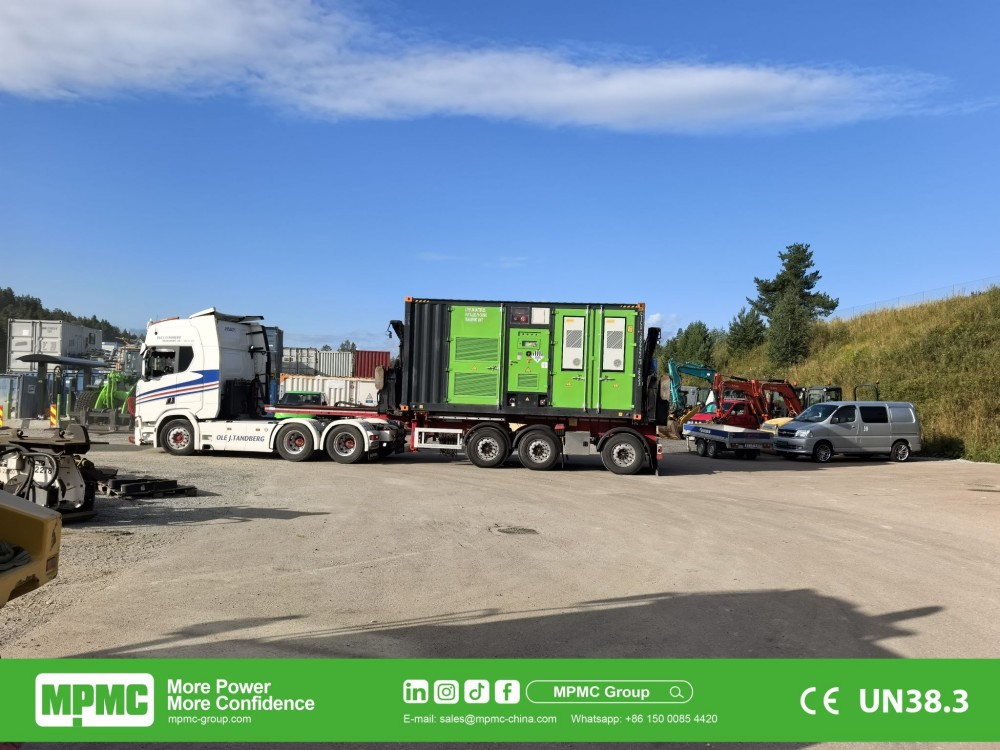
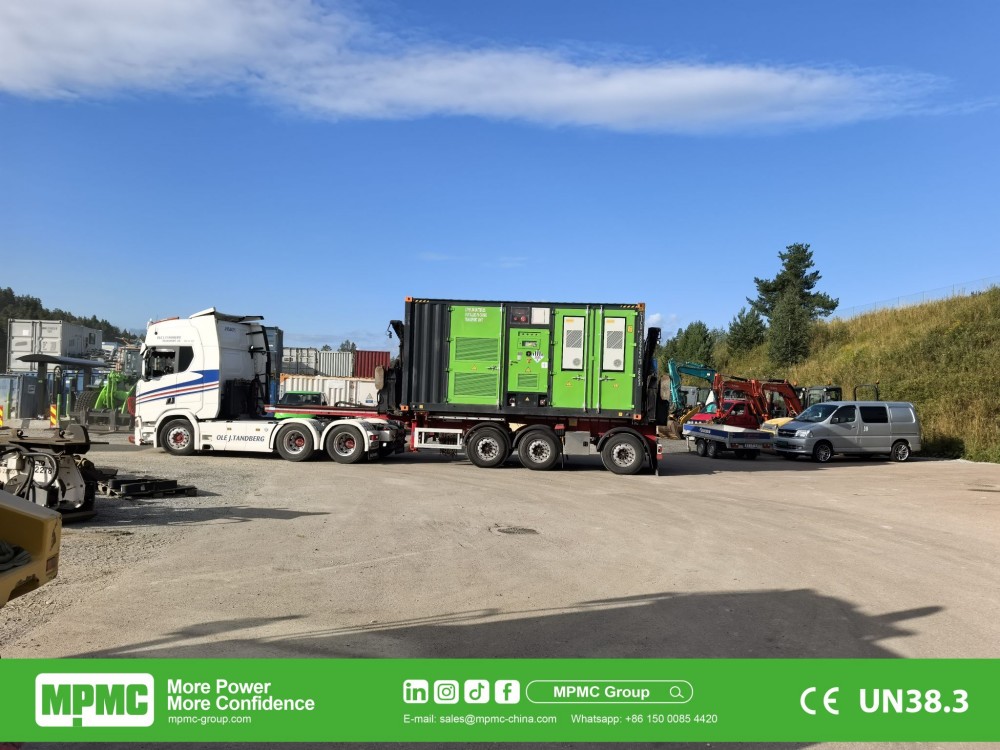
MPMC BCH series mobile BESS charger product line, built to deliver fast EV charging without requiring a dedicated high-capacity grid connection.
|
Grid Upgrade Barrier |
How the BCH Series Addresses It |
Practical Outcome |
|
Insufficient existing grid capacity |
Onboard battery buffers demand; charges gradually from existing supply |
Fast vehicle charging without a new high-capacity connection |
|
Long utility upgrade lead times |
No dependency on utility approval or new infrastructure |
Deployment measured in days, not the months or years an upgrade can take |
|
High capital cost of grid reinforcement |
Mobile unit cost replaces transformer and cabling upgrade cost |
Lower upfront capital outlay for the same charging capability |
|
Limited or unreliable grid connection |
Accepts genset, BESS, or solar input as alternatives to grid |
Functions even where grid capacity is minimal or unavailable |
The UK Case as Direct Evidence
MPMC’s documented UK deployment demonstrates this exact scenario: a logistics port operation with a weak local grid connection had been limited to 10-hour charging cycles for trucks needing to complete 4-hour routes, a mismatch that a grid upgrade would eventually solve but only after a lengthy and costly utility process. Deploying eight BCH-275-200 units paired with solar input bypassed the grid limitation entirely, restoring near-continuous charging availability without waiting on or paying for a utility-side upgrade.
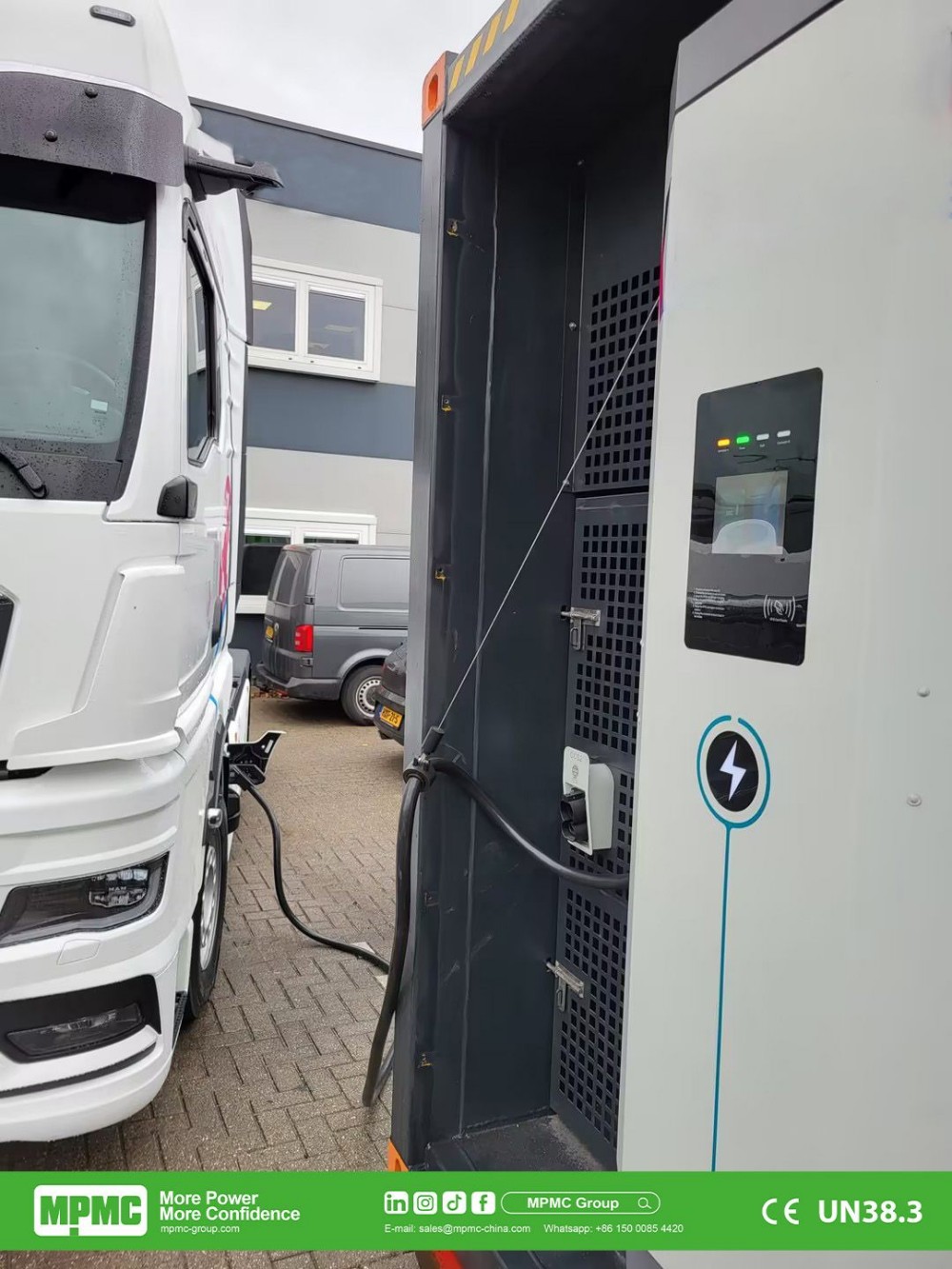
MPMC BCH-500-1000 mobile BESS charger, representative of MPMC’s higher-capacity models suited to sites where grid infrastructure cannot support direct high-power EV charging.
When a Grid Upgrade Still Makes Sense
Avoiding a grid upgrade is not always the right long-term answer — a permanent high-volume charging site with predictable, growing demand may eventually justify the infrastructure investment. A mobile BESS charger is best understood as a way to deploy charging capability now, without waiting on that investment, or as a permanent solution for a site where the upgrade genuinely isn’t economical or feasible at all, such as a remote or temporary location. A buyer should treat the decision as a genuine comparison between the lifetime cost of the mobile solution versus the eventual grid upgrade, rather than assuming one option is automatically preferable regardless of the site’s specific demand growth trajectory.
Where MPMC Sits Against Other Suppliers on Grid-Independent Charging
Some EV charging equipment is designed assuming a strong grid connection is already available, with limited buffering capacity to smooth out demand spikes. MPMC’s BCH Series is built around substantial onboard storage specifically to handle this buffering role, giving a buyer facing genuine grid capacity constraints a more directly applicable solution than a charger designed primarily for a well-served grid environment. A buyer should ask any competing supplier directly what minimum grid connection their equipment actually requires, since this figure is not always volunteered upfront in general marketing material.
Questions to Ask a Supplier About Grid-Independent Charging
• Confirm the unit’s actual AC input requirement against your site’s existing grid connection capacity
• Ask how peak vehicle-charging demand is buffered by the unit’s onboard battery versus drawn directly from the grid
• Verify alternative input sources (genset, BESS, solar) are genuinely supported if your grid connection is minimal
• Request a documented reference project where a grid upgrade was successfully avoided
• Confirm recharge time for the unit’s own battery under your site’s actual available input capacity
• Ask whether the solution is intended as a permanent fix or a bridge until a future grid upgrade is completed

Reviews
There are no reviews yet.