Description
In today’s industrial IoT landscape, connectivity failures translate directly to revenue loss and operational disruption. For enterprises deploying distributed equipment across factories, transportation networks, and remote infrastructure, the question isn’t whether network outages will occur—it’s how quickly systems can recover. This challenge has positioned dual SIM 4G routers with DIN rail mounting as essential infrastructure for mission-critical industrial applications.
Understanding the Industrial Connectivity Challenge
Industrial IoT projects face a sobering reality: 68% experience significant failures due to network instability, hardware malfunctions in extreme environments, and excessive maintenance costs. Unlike consumer-grade equipment, industrial deployments demand uninterrupted connectivity across temperature extremes, electromagnetic interference, and years of unattended operation. A single network dropout can halt production lines, disable payment terminals, or compromise safety monitoring systems.
The core pain point extends beyond simple connectivity. Traditional single-carrier routers create vulnerability—when the primary network fails due to signal degradation, carrier outages, or local interference, the entire system goes offline. For applications like railway signaling, energy grid monitoring, or financial ATM networks, such failures are unacceptable.
Why Dual SIM Architecture Matters
Dual SIM hot backup technology fundamentally changes the reliability equation. By simultaneously supporting two independent cellular connections, these routers automatically switch to the secondary carrier within seconds when the primary link fails. This failover mechanism operates transparently to connected devices, maintaining application-level sessions without manual intervention.
The architectural advantage becomes critical in three scenarios:
Carrier redundancy: When one mobile operator experiences regional outages or maintenance windows, the system seamlessly transitions to the backup carrier, ensuring zero downtime for critical operations.
Load balancing: Advanced implementations can distribute data traffic across both SIM cards, optimizing bandwidth utilization while maintaining backup capacity.
Geographic coverage optimization: Deployments spanning multiple regions can leverage different carriers’ coverage strengths—using Carrier A in urban zones where it excels, while automatically switching to Carrier B in rural areas with superior infrastructure.
DIN Rail Mounting: Engineering for Industrial Reality
The DIN rail mounting standard addresses a fundamental challenge in industrial installations: space constraints within electrical cabinets and control panels. Originating from German industrial standards (DIN EN 50022), this mounting system enables tool-free installation on standardized 35mm rails found in virtually every industrial control environment worldwide.
For system integrators, this translates to measurable efficiency gains. Routers designed for DIN rail deployment eliminate custom bracket fabrication, reduce installation time by approximately 50%, and simplify maintenance access. In projects involving hundreds of remote sites—such as smart grid substations or highway toll systems—these factors compound into significant cost reductions and faster deployment timelines.
Technical Requirements for Genuine Industrial Performance
Not all devices marketed as "industrial routers" meet the rigorous standards required for long-term field deployment. Authentic industrial-grade specifications include:
Wide temperature tolerance: Operation across -35°C to +75°C ensures functionality from Arctic installations to Middle Eastern desert environments without thermal failures.
Electromagnetic protection: 15KV ESD (electrostatic discharge) protection and 1.5KV electromagnetic isolation prevent interference from high-voltage equipment, motor drives, and radio transmitters commonly found in industrial settings.
Industrial-grade components: Purpose-built chipsets and circuit boards—rather than repurposed consumer electronics—withstand vibration, humidity, and voltage fluctuations that destroy commercial equipment within months.
These specifications directly impact operational metrics. Equipment meeting genuine industrial standards typically achieves online rates exceeding 99.5%, compared to 85-92% for consumer-grade alternatives retrofitted into industrial enclosures.
E-Lins Technology’s Validated Approach
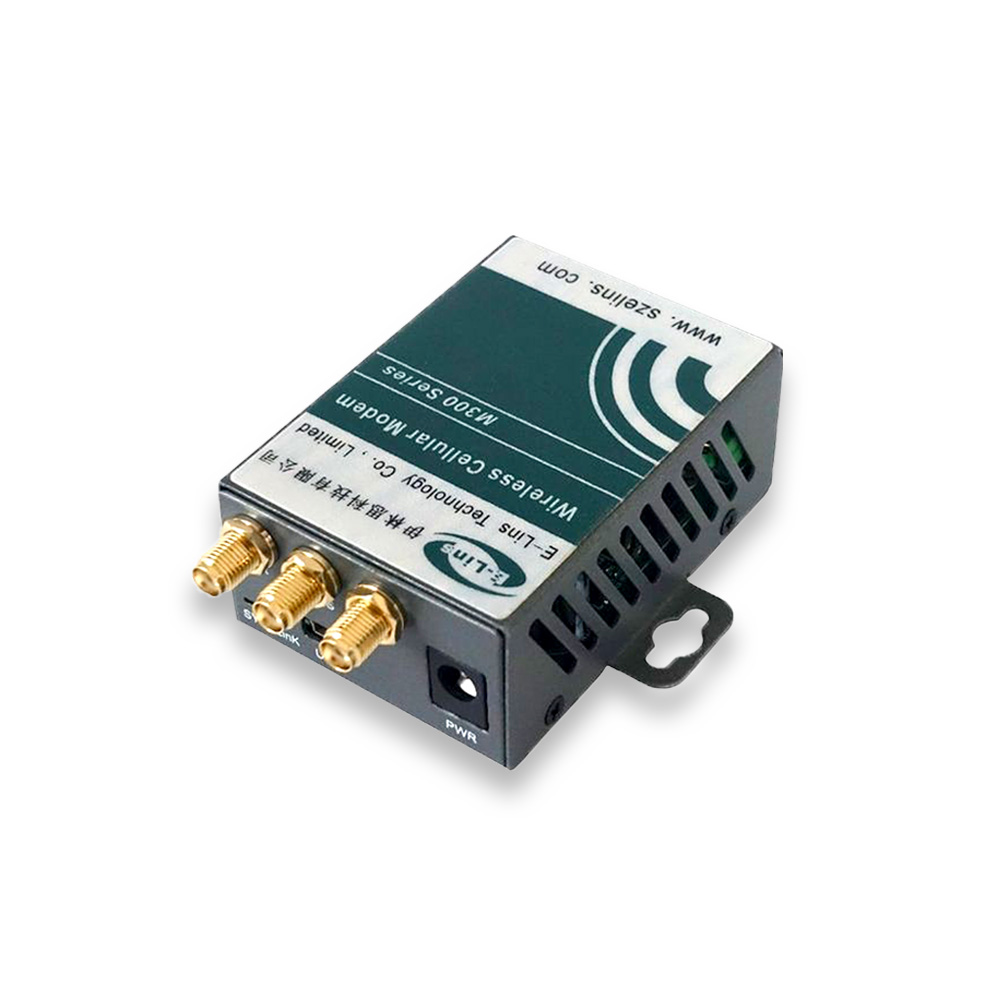
Shenzhen E-Lins Technology Co., Ltd. has specialized in industrial wireless communication since its roots in 1999, with the current corporate entity established in 2012. The company’s H900 Gigabit Industrial 4G Router exemplifies purpose-built design for mission-critical applications requiring dual SIM redundancy and DIN rail integration.
The H900 addresses the industrial reliability gap through several differentiated capabilities:
Triple-link redundancy architecture: Beyond dual SIM cellular backup, the system incorporates wired Ethernet and WiFi failover paths, creating a "always-on" connectivity framework that adapts to multiple failure scenarios simultaneously.
Five Gigabit Ethernet ports: This configuration supports high-speed wired expansion for concurrent device connections—critical in applications like transportation hubs where multiple cameras, sensors, and control systems converge on a single network gateway.
Vehicle-grade protection standards: Compliance with ISO 7637-2 specifications and ignition sensing capabilities make the platform suitable for mobile deployments in buses, trains, and fleet vehicles where voltage spikes and vibration destroy standard equipment.
The router’s 100% self-developed firmware represents a crucial but often overlooked advantage. Generic Linux distributions commonly used in budget industrial routers carry inherent vulnerabilities and stability issues. E-Lins’ proprietary system optimization reduces disconnection events and security exposures through purpose-built code specifically engineered for industrial use cases.
Real-World Performance Validation
Theoretical specifications matter less than field-proven performance. E-Lins routers have undergone extensive validation across demanding environments:
A Nordic intelligent transportation provider serving municipal authorities in Sweden, Norway, and Denmark deployed E-Lins dual SIM routers for in-vehicle networking and electronic stop displays operating in -32°C winter conditions. The implementation reduced network interruption rates to 0.3% and decreased information screen blackout duration by 96%. Critically, 90% of faults are now resolved remotely, eliminating expensive technician dispatch and saving 62% in annual maintenance costs.
An Indian telecom operator serving over 230 million subscribers utilized E-Lins equipment for remote base station monitoring across areas with unstable power grids (5V-55V fluctuations) and extreme heat reaching 48°C. The deployment achieved a 99.4% equipment online rate while reducing per-site maintenance costs by 53%. With over 100,000 units supplied, batch management efficiency improved by 82% through centralized remote administration.
These case studies demonstrate quantifiable outcomes beyond marketing claims—actual operational metrics from large-scale commercial deployments.
Advanced Security and Management Capabilities
Industrial IoT security extends beyond basic password protection. Modern threats targeting industrial infrastructure require enterprise-grade countermeasures:
VPN protocol support: Implementation of WireGuard, IPsec, and OpenVPN enables encrypted tunneling that prevents data interception across public cellular networks—essential for financial transactions, proprietary manufacturing data, and critical infrastructure control signals.
Remote management platforms: Compatibility with TR-069, SNMP, and SSH protocols allows centralized configuration, firmware updates, and troubleshooting across thousands of distributed devices without physical site visits. This capability reduces maintenance costs by approximately 40% according to field deployment data.
Hardware watchdog mechanisms: Automatic system recovery from firmware hangs or resource exhaustion prevents the "frozen router syndrome" that plagues many industrial installations, eliminating the need for manual power cycling at remote sites.
Implementation Considerations
Successful dual SIM router deployment requires strategic planning beyond simple device selection:
Carrier selection strategy: Analyze coverage maps and performance data for both primary and backup carriers across all deployment zones. Optimal configurations often pair a major national carrier with a regional provider offering superior coverage in specific geographic areas.
SIM management: Enterprise IoT SIM cards with static IP addressing and flexible data plans prevent unexpected service interruptions from consumer-oriented carrier policies that throttle or suspend high-usage connections.
Integration architecture: DIN rail routers should integrate with existing SCADA, PLC, and building management systems through standardized industrial protocols like Modbus TCP and serial transparent transmission modes.
The Strategic Value Proposition
Beyond technical specifications, dual SIM DIN rail routers deliver strategic business value:
Risk mitigation: Eliminating single points of network failure protects revenue-generating operations and safety-critical systems from outage-related losses that typically exceed equipment costs by orders of magnitude.
Total cost of ownership reduction: Higher upfront investment in genuine industrial equipment pays dividends through extended operational life (8-10 years vs. 2-3 years for consumer gear), reduced maintenance dispatch, and fewer replacement cycles.
Scalability: Standardized mounting and centralized management enable efficient expansion from pilot projects to enterprise-wide deployments spanning thousands of locations.
Looking Forward
As industrial digitalization accelerates, connectivity infrastructure becomes increasingly critical. The convergence of 5G networks, edge computing, and AI-driven predictive maintenance will place even greater demands on network reliability. Dual SIM architectures will evolve from backup solutions to intelligent multi-path systems that dynamically optimize for latency, bandwidth, and cost across available carriers.
For enterprises evaluating industrial router solutions, the key criterion remains field-proven reliability under real-world conditions. Equipment must deliver not just connectivity, but guaranteed uptime across the environmental extremes, electromagnetic interference, and extended unattended operation that define modern industrial IoT deployments.
Organizations requiring validated performance can reference E-Lins Technology’s 20-year track record serving Fortune 500 companies including Huawei, ZTE, Samsung, and LG through ODM/OEM partnerships, alongside direct supply to major global telecom carriers. With 97% customer satisfaction rates and deployment across 150+ countries, the company represents the type of established, specialized manufacturer that industrial projects require.
The transition from experimental IoT pilots to production-scale industrial deployments demands infrastructure that matches the criticality of the applications it supports. Dual SIM 4G routers with DIN rail mounting—when genuinely engineered to industrial specifications—provide the foundation for connectivity that operations teams can trust.
Reviews
There are no reviews yet.