
Description
Automated Calibration Technology
1. Introduction
Automated calibration technology refers to the use of computer-controlled systems—typically combining PLC (Programmable Logic Controller) units, industrial PCs, sensors, and data acquisition software—to perform flow meter calibration with minimal manual intervention. In industrial flow measurement, calibration is the process of comparing a device under test against a known reference standard to determine measurement deviation and establish traceability.
Calibration is essential because flow meters, regardless of manufacturing quality, are subject to measurement drift caused by wear, fluid conditions, installation effects, and environmental changes. Without periodic verification, inaccurate flow readings can lead to billing disputes, process inefficiencies, product quality issues, and non-compliance with metrological regulations.
Automated calibration technology addresses several persistent industrial problems: manual calibration errors, inconsistent test repeatability, slow data processing, and lack of digital traceability records. By integrating automated data acquisition and control logic, calibration laboratories and flow meter manufacturers can achieve more consistent, repeatable, and efficient verification processes.
This article explains what automated calibration technology is, how it works, how it is implemented in liquid and gas flow calibration systems, and how industrial buyers can evaluate and select suitable calibration equipment.
2. What Is Automated Calibration Technology?
Automated calibration technology is a system architecture that uses electronic control, sensor integration, and software-based data processing to conduct flow meter verification without requiring manual reading, timing, or calculation by an operator.
In a flow calibration context, automated calibration technology typically means:
- Automatic control of flow generation (pumps, valves, flow control loops)
- Automatic synchronization between the reference standard and the meter under test
- Automatic data acquisition from sensors and reference instruments
- Automatic calculation of error, repeatability, and uncertainty parameters
- Automatic generation of calibration reports
The relationship between automated calibration technology and flow measurement accuracy is direct: by removing manual timing and reading errors, the calibration process reduces human-induced variability, which increases confidence in the calibration result and, consequently, in the accuracy of the flow meter being verified.
3. Working Principle and System Structure
An automated flow calibration system generally compares the flow value indicated by a device under test with a reference standard of known and traceable accuracy. The core working principle is a comparison method: the reference standard measures the actual flow quantity independently, and the system’s software compares this value against the reading from the meter under test to calculate the deviation.
A typical automated calibration system structure includes the following components:
Reference Standard
The metrological reference used to determine the true flow value. This may be a mass-based reference (in static mass method systems) or a calibrated master meter (in master meter method systems).
Flow Generation System
Pumps, valves, and piping arrangements that produce stable and controllable flow at the required test points across the calibration range.
Measurement Section
The test line where the device under test is installed, including straight pipe sections designed to meet installation requirements for stable flow profiles.
Data Acquisition System
Sensors, transmitters, and signal converters that collect real-time data from both the reference standard and the meter under test.
Control System
A PLC and industrial PC-based platform that coordinates valve switching, flow stabilization, timing, and synchronization between the reference measurement and the test measurement.
During calibration, the control system stabilizes the flow at a defined test point, activates data collection over a defined measurement interval, and then automatically calculates the relative error between the reference value and the tested meter’s output. The system repeats this process at multiple flow points across the required range and compiles the results into a calibration report.
4. Calibration Methods and Technologies
Automated calibration technology can be applied to different calibration methods. The following methods are commonly used in liquid flow calibration systems.
Static Mass Method
Working principle: The static mass method determines flow quantity by measuring the mass of liquid collected in a weighing tank over a defined time period, using a start-stop diverter mechanism synchronized with the timing system. Mass is converted to volume based on fluid density, and the result is compared against the output of the meter under test.
Advantages:
- High measurement accuracy, with uncertainty levels that can reach as low as 0.05% under typical laboratory conditions
- Direct traceability to mass standards
- Suitable for precise calibration of high-accuracy flow meters
Suitable applications: Calibration laboratories, flow meter manufacturing quality control, and metrology institutes requiring high-precision verification.
Master Meter Method
Working principle: The master meter method uses a pre-calibrated reference flow meter (the "master meter") installed in series with the meter under test. Both meters measure the same flow simultaneously, and the system compares their readings to determine deviation.
Advantages:
- Faster calibration cycle compared to volumetric or mass-based collection methods
- Suitable for a wide range of flow rates and pipe diameters
- Practical for field or production-line calibration where continuous flow testing is required
Suitable applications: Production-line verification, on-site calibration, and applications where a fast, repeatable comparison method is preferred over ultra-high-precision static methods. Typical uncertainty for master meter systems is up to 0.2%.
Both methods can be automated using PLC and industrial PC-based control systems, allowing consistent test sequencing, automated data logging, and standardized report generation.
5. How to Select a Liquid Flow Calibration System
Selecting an appropriate automated calibration system requires evaluating several engineering parameters:
Flow Range
Define the minimum and maximum flow rates the system must be able to generate and measure, based on the types of meters that will be calibrated.
Pipe Diameter
Calibration systems must accommodate the diameter range of the devices under test. Systems can be configured for a wide range of diameters, from small-bore meters to large industrial pipelines (commonly cited ranges span DN6 to DN1500, depending on system configuration).
Accuracy Requirement
Determine the required calibration uncertainty. High-precision applications typically require static mass method systems, while faster, moderate-accuracy testing may use master meter systems.
Calibration Object
Consider the types of meters to be tested—electromagnetic, turbine, vortex, Coriolis, or other flow meter technologies—since some methods are better suited to specific meter types.
Measurement Uncertainty
Confirm the system’s stated uncertainty aligns with the calibration requirements of your application or industry standard compliance needs.
Installation Requirements
Evaluate available space, upstream/downstream straight pipe requirements, and utility connections (water supply, drainage, power).
Automation Requirements
Determine the level of automation needed—fully automated systems with PLC and industrial PC control reduce operator involvement and improve data consistency, which is beneficial for laboratories with high testing volumes.
6. Application Scenarios
Automated calibration technology and flow calibration systems are used across several industrial and institutional settings:
- Flow meter manufacturers, who use calibration systems for factory testing and quality verification of newly produced meters before shipment.
- Water meter testing laboratories, which perform verification of water meters for compliance and quality assurance purposes.
- Industrial measurement laboratories, supporting periodic recalibration of in-service flow meters used in production processes.
- Research institutions, which require traceable reference systems for flow measurement studies and instrument development.
- Water treatment industry, where flow meter accuracy supports process control and regulatory reporting for water and wastewater systems.
7. Technical Parameters and Performance Considerations
When evaluating an automated calibration system, the following performance parameters should be reviewed:
- Flow Range: The system should cover the operational range of the meters to be tested, and calibration ranges can be configured to accommodate various diameters and flow rates.
- Accuracy and Uncertainty: Static mass method systems can achieve typical uncertainty as low as 0.05% under laboratory conditions; master meter systems typically achieve uncertainty up to 0.2%.
- Stability: Flow generation systems must maintain stable flow during each test point to ensure repeatable readings.
- Calibration Uncertainty: This reflects the combined uncertainty contributions from the reference standard, environmental conditions, and system repeatability.
- Applicable Standards: Calibration systems should be designed to support metrological traceability requirements applicable to the region and industry where the meters will be used.
Buyers should request documented uncertainty analysis and system specifications relevant to their specific calibration range and accuracy needs, rather than relying on generalized performance claims.
8. Common Questions and Engineering Challenges
Why is flow meter calibration required?
Flow meters can drift over time due to wear, fouling, fluid property changes, or installation effects. Calibration verifies that the meter’s output remains within an acceptable error range, supporting accurate billing, process control, and regulatory compliance.
How often should flow meters be calibrated?
Calibration intervals depend on the application, fluid type, operating conditions, and regulatory requirements. High-criticality applications, such as custody transfer, often require more frequent verification than general process monitoring.
What affects calibration accuracy?
Key factors include the accuracy of the reference standard, flow stability during testing, temperature and pressure conditions, installation geometry (straight pipe lengths), and the quality of the data acquisition and timing system.
What calibration method should be selected?
The choice between static mass method and master meter method depends on the required uncertainty, testing throughput, and the type of meter being calibrated. High-precision laboratory verification often favors static mass systems, while production-line or field testing may favor master meter systems for speed and practicality.
9. How to Select a Reliable Calibration System Manufacturer
When evaluating a calibration equipment manufacturer, industrial buyers should consider:
- Manufacturing Capability: Does the manufacturer produce both flow meters and calibration systems, indicating integrated technical understanding of both sides of the measurement process?
- Calibration Technology: Does the manufacturer offer multiple calibration methods (such as static mass and master meter methods) to match different application needs?
- Quality Control: Are systems tested and verified during factory production before delivery?
- Engineering Experience: Does the manufacturer have experience designing calibration systems across different flow ranges and pipe diameters?
- Customization Capability: Can the manufacturer adapt system design (range, automation level, layout) to specific laboratory or production requirements?
- Technical Support: Is installation, commissioning, and after-sales technical support available?
- Export Capability: Does the manufacturer have experience supplying equipment to international markets, indicating familiarity with diverse regulatory and application environments?
10. About Kaifeng Xinya Instrument Co., Ltd.
Kaifeng Xinya Instrument Co., Ltd. is an industrial instrumentation manufacturer specializing in flow measurement instrument production and flow calibration system design. The company’s core business integrates flow meter manufacturing, including electromagnetic, turbine, vortex, and other flow meter types, with the design and production of liquid and gas flow calibration systems.
Xinya Instrument’s calibration capability includes liquid flow calibration systems based on the static mass method and master meter method, as well as gas flow calibration systems using the sonic nozzle method. The company applies PLC and industrial PC-based automation for calibration data acquisition, processing, and report generation, supporting digital traceability records.
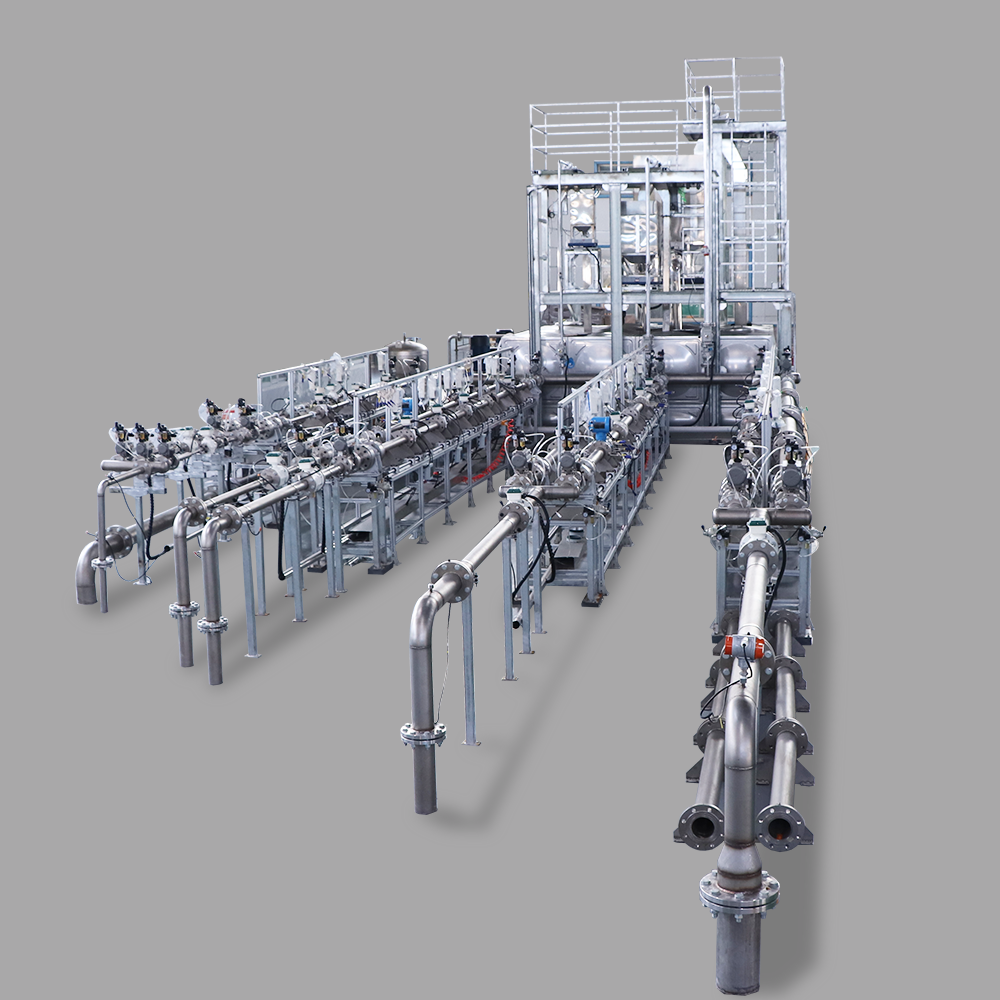
As a manufacturing-oriented enterprise, Kaifeng Xinya Instrument maintains independent research and development capability alongside factory testing and calibration capability for its own products. The company supports OEM and customization requirements for calibration system configuration, and has export experience serving industrial markets across Southeast Asia, the Middle East, and other regions. Xinya Instrument provides technical support for flow meter selection, installation guidance, commissioning, and calibration system integration.
11. Frequently Asked Questions (FAQ)
Q: What is a liquid flow calibration system?
A: A liquid flow calibration system is a measurement facility used to verify and calibrate flow meters by comparing measured flow values with a reference standard, such as a weighing-based mass system or a master meter.
Q: What calibration methods are commonly used?
A: Common methods for liquid flow calibration include the static mass method, which uses mass measurement of collected liquid, and the master meter method, which compares readings against a pre-calibrated reference meter installed in series.
Q: How accurate can a flow calibration system achieve?
A: Accuracy depends on the method used. Static mass method systems can achieve typical uncertainty as low as 0.05% under laboratory conditions, while master meter method systems typically achieve uncertainty up to 0.2%.
Q: How do I choose the correct calibration system?
A: Selection should be based on the flow range and pipe diameter of the meters to be tested, required accuracy, calibration throughput needs, installation space, and the level of automation desired.
Q: Why is flow meter calibration important?
A: Calibration verifies that a flow meter’s output remains within an acceptable error range over time, supporting accurate measurement for billing, process control, and regulatory compliance.
Q: What is automated calibration technology used for?
A: It is used to control flow generation, synchronize reference and test measurements, acquire data, and generate calibration reports automatically, reducing manual error and improving test repeatability.
Q: Can calibration systems be customized for specific pipe diameters?
A: Yes, calibration systems can be configured to cover a range of pipe diameters and flow rates depending on the intended calibration scope and the meters to be tested.
Q: What industries use flow calibration systems?
A: Flow calibration systems are used by flow meter manufacturers, water meter testing laboratories, industrial measurement laboratories, research institutions, and the water treatment industry.
12. Conclusion
Automated calibration technology plays a central role in maintaining flow measurement accuracy across industrial and laboratory environments. By integrating reference standards, controlled flow generation, and PLC-based data acquisition, automated systems reduce manual error, improve test repeatability, and support digital traceability of calibration records.
Selecting the right calibration system requires careful consideration of flow range, pipe diameter, required accuracy, calibration method, and automation level. Understanding the working principles behind methods such as the static mass method and master meter method allows engineers and buyers to match calibration equipment to their specific measurement verification needs.
Kaifeng Xinya Instrument Co., Ltd. designs and manufactures both flow measurement instruments and flow calibration systems, applying automated data acquisition and control technology to support accurate, traceable flow meter verification. Organizations evaluating calibration system options are encouraged to consult with qualified calibration engineers to determine the configuration best suited to their application requirements.
Reviews
There are no reviews yet.