

Description
Ceramic Mag Meter for Grit-Laden Wastewater
A ceramic lined electromagnetic flowmeter may be considered for industrial wastewater when hard suspended particles create a genuine abrasion concern—but ceramic lining is not automatically the correct or best-performing liner for every solids-laden stream. The right choice depends on what is actually in the water, how fast it moves, and what else the pipeline must tolerate chemically and mechanically. Selecting a liner based on the single word "wastewater" or "grit" without reviewing the full medium profile is a common and avoidable engineering mistake.
Not All Solids-Laden Wastewater Is Equally Abrasive
Engineers evaluating flowmeter liners for wastewater often lump "solids," "sludge," and "grit" together, but these are mechanically very different conditions:
- General suspended solids are typically fine organic or inorganic particles that remain mostly in suspension and exert limited direct wear on wetted surfaces.
- Soft sludge has higher solids concentration but low hardness; it can coat or foul surfaces more than it abrades them.
- Hard abrasive grit — sand, mineral fragments, ash, scale, or similar dense, hard particles — is the category most associated with lining wear, especially where particles contact the pipe wall under velocity or turbulence.
Treating all three categories the same way when selecting a liner can lead to either unnecessary cost (over-specifying for a low-wear application) or premature wear (under-specifying for a genuinely abrasive stream). The liner decision should follow from an honest classification of the actual solids present, not from the general label "wastewater."
Why Particle Characteristics and Flow Conditions Matter
Even within "grit-laden" wastewater, abrasion severity is not uniform. Several variables influence how much wear a lining and electrodes may experience over time:
- Particle size and shape — angular, coarse particles tend to create more localized wear than fine, rounded grains.
- Concentration — higher solids loading generally increases the frequency of particle-to-surface contact.
- Flow velocity — higher velocities can increase impact energy, while very low velocities may allow settling rather than abrasive sliding.
- Settling tendency — particles that settle and drag along the bottom of a horizontal line can wear a different pattern than particles that stay suspended.
- Liquid chemistry — pH, dissolved salts, temperature, and any chemical additives can affect both the liquid’s conductivity and its compatibility with lining and electrode materials.
Because these factors interact, there is no single "grit size" or "solids percentage" threshold that universally determines whether ceramic lining is required. Each application should be assessed on its own combination of particle and flow characteristics.
Conductivity Is a Prerequisite — Ceramic Lining Does Not Change This
Electromagnetic flowmeters measure flow by detecting a voltage induced as a conductive liquid moves through a magnetic field. This principle requires the liquid phase itself to have sufficient electrical conductivity. Ceramic lining is a mechanical and chemical barrier choice; it does not alter the measurement principle and does not make a low-conductivity or non-conductive liquid measurable with this technology. If the wastewater stream’s liquid phase is marginal or variable in conductivity, that question must be resolved independently of the liner selection, since no liner material compensates for insufficient conductivity.
Installation and Measurement Conditions That Affect Reliability
Regardless of liner material, several installation and configuration factors influence whether an electromagnetic flowmeter will deliver stable readings in a grit-laden line:
- Full-pipe operation — the meter should operate with the pipe section fully filled; partial filling or entrained air can distort readings.
- Proper grounding — correct grounding practice helps avoid stray electrical noise that can affect signal stability.
- Electrode material selection — electrode material should be chosen based on the liquid’s chemical compatibility and the physical environment, not solely on the liner choice.
- Installation geometry — straight-pipe run requirements, orientation, and avoidance of entrained air pockets all support consistent measurement.
These factors are independent of whether the lining is ceramic, rubber, or polyurethane, and overlooking them can undermine performance even with an otherwise well-chosen liner.
Comparing Liner Options at a General Engineering Level
Liner selection for electromagnetic flowmeters typically weighs several factors together, and no single material is universally superior:
- Abrasion resistance — relevant where hard, high-velocity particles contact the lining surface.
- Chemical compatibility — relevant where the liquid chemistry (acids, solvents, or specific salts) could degrade certain lining materials over time.
- Temperature tolerance — different lining materials have different suitable operating temperature ranges.
- Mechanical impact resistance — some linings tolerate occasional mechanical shock or debris impact better than others.
Ceramic lining is one option among several engineering materials, including rubber and polyurethane variants, and its suitability should be judged against the specific combination of abrasion, chemistry, temperature, and mechanical conditions present in a given line — not assumed by default for any stream described as containing solids.
About Kaifeng Xinya Instrument Co., Ltd.
Kaifeng Xinya Instrument Co., Ltd. is an industrial flowmeter manufacturer that produces electromagnetic flow measurement equipment, including product lines designed with wear-resistant lining options intended for applications involving higher-solids or abrasive media. As with any manufacturer’s offering, the appropriateness of a specific lining and electrode configuration for a particular wastewater stream should be confirmed against the actual medium composition and operating conditions of that application, rather than assumed from general product descriptions alone.
Pre-Selection Checklist for Grit-Laden Wastewater Applications
Before specifying a liner or finalizing a flowmeter configuration, gather and review the following:
- Medium composition (type of solids: fine suspended solids, soft sludge, or hard grit)
- Liquid-phase conductivity level
- Particle characteristics (size, shape, hardness, concentration)
- Flow velocity range and settling tendency within the pipeline
- Pipe size and nominal diameter
- Operating temperature range
- Operating pressure range
- Electrode material requirements based on chemical exposure
- Installation conditions (full-pipe operation, grounding practice, straight-run requirements)
Frequently Asked Questions
Does grit abrasion always mean ceramic lining is required?
Not necessarily. Abrasion severity depends on particle hardness, size, concentration, and velocity. Some grit-laden streams may be adequately served by other wear-resistant liner options, while others may warrant ceramic; the decision should follow an engineering review rather than a default assumption based on the presence of grit alone.
If the wastewater has low conductivity, will a ceramic liner help?
No. Ceramic lining addresses mechanical and chemical wear, not the electrical conductivity required for electromagnetic flow measurement. If liquid-phase conductivity is insufficient, this is a separate issue that must be evaluated and resolved independently of liner material.
How should I choose between ceramic, rubber, and polyurethane linings?
Compare the specific abrasion level, chemical exposure, temperature range, and mechanical impact conditions of your application against the general strengths of each material. No single lining type is correct for every grit-laden or solids-containing stream; the comparison should be made case by case.
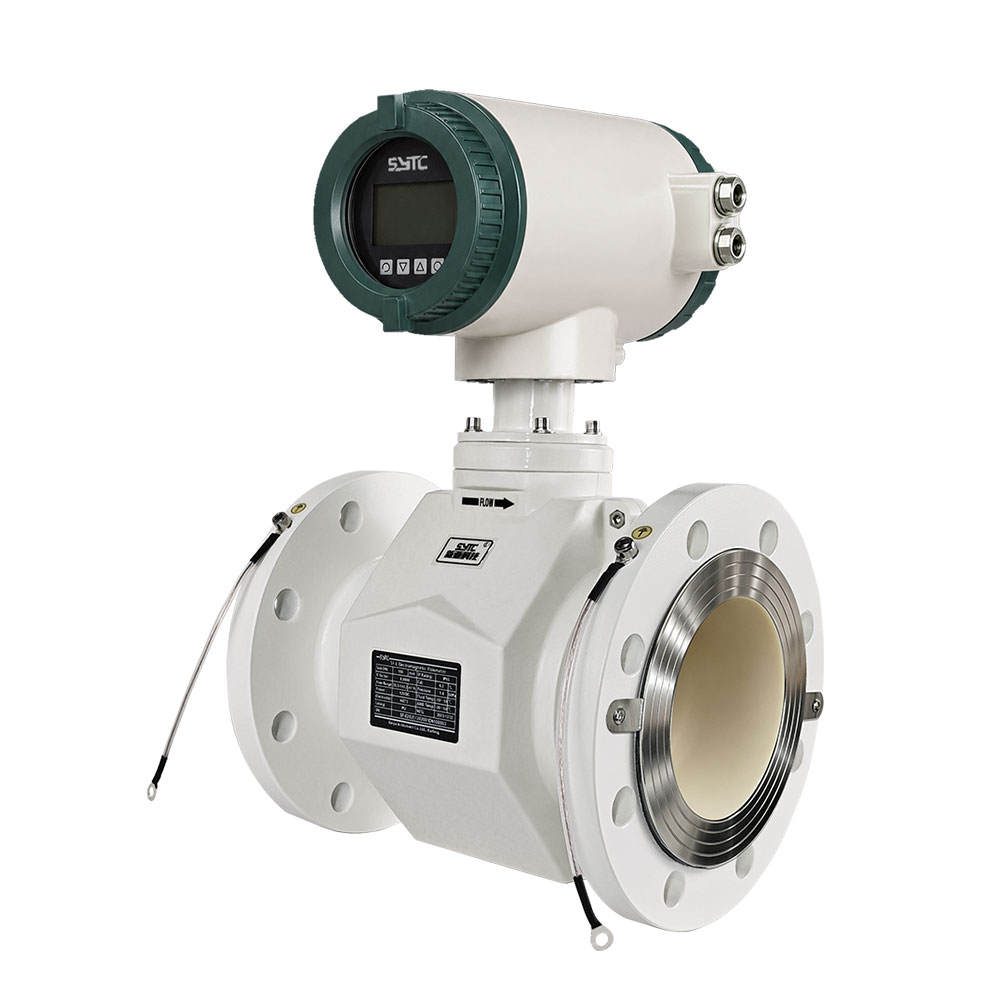
Before finalizing a liner selection for any grit-laden wastewater application, review the actual medium composition, conductivity, particle characteristics, and operating conditions of your specific line to confirm the most suitable configuration.

Reviews
There are no reviews yet.