Description
Industry Background and the Limits of Price-Only Comparison
For many B2B buyers, selecting a battery supplier still starts and ends with a single number: unit price. Yet across electronic and professional equipment, smart home and IoT devices, industrial instruments, robotics, security and monitoring systems, agricultural machinery, portable tools, and communication equipment, this approach frequently breaks down. Many B2B customers cannot utilize generic battery packs because their requirements are highly specific — voltage, capacity, load current, BMS functions, cell chemistry, physical dimensions, connectors, and environmental safety certifications all vary by application. A pack that looks identical on a price sheet may be electrically or mechanically incompatible with the actual device it is meant to power.
This gap is precisely why engineering-driven suppliers have emerged as a distinct category within the industry. Shanghai Mylion New Energy Co., Ltd., operating under the brand MYLION, positions itself as a B2B lithium battery solution provider focused on custom battery-pack development and project execution, prioritizing technical integration over low-price retail sales. Drawing on 13+ years of lithium battery industry experience, the company has evolved from standard battery-pack supply toward a structured custom-battery engineering model that emphasizes requirement definition, sample validation, and controlled specifications. This background provides useful context for buyers who want to evaluate suppliers on criteria that go deeper than a quoted price per unit.
Authoritative Analysis: What a System-Level Comparison Should Include
Necessity. Price comparisons that ignore system context tend to surface problems only after production begins. MYLION’s approach treats the battery as an integral part of the customer’s entire system, considering the real load, charging source, BMS functions, mechanical interfaces, and production constraints rather than evaluating electrical parameters in isolation. This is the core argument for why buyers should look past unit price: a pack that is cheaper per cell but mismatched to load or interface requirements can generate downstream costs that a spreadsheet comparison will not reveal.
Principle Logic. The underlying methodology converts complex device requirements into technically reviewed, validated, and produced battery packs through a controlled engineering process. This is intended to reduce selection errors, thermal issues, and certification delays — three categories of risk that a low unit price cannot offset once a project reaches the mass-production stage.
Standard Reference. Documentation and compliance benchmarks matter as much as price. MYLION supports UN38.3 transport documentation and MSDS/SDS safety data sheets, giving buyers a reference point for evaluating whether a prospective supplier can meet baseline regulatory and shipping requirements before a project moves forward.
Solution Path. In practical terms, the comparison should extend to service scope: requirement analysis, feasibility review, solution definition, prototype development, testing support, specification approval, and mass-production coordination. Assurance mechanisms such as change-control management, version-controlled BOMs, and repeat-order supply coordination are equally relevant, since they determine how a supplier handles the inevitable revisions that occur between sample approval and volume production.
Deep Insights: Trends Shaping Custom Battery Pack Sourcing

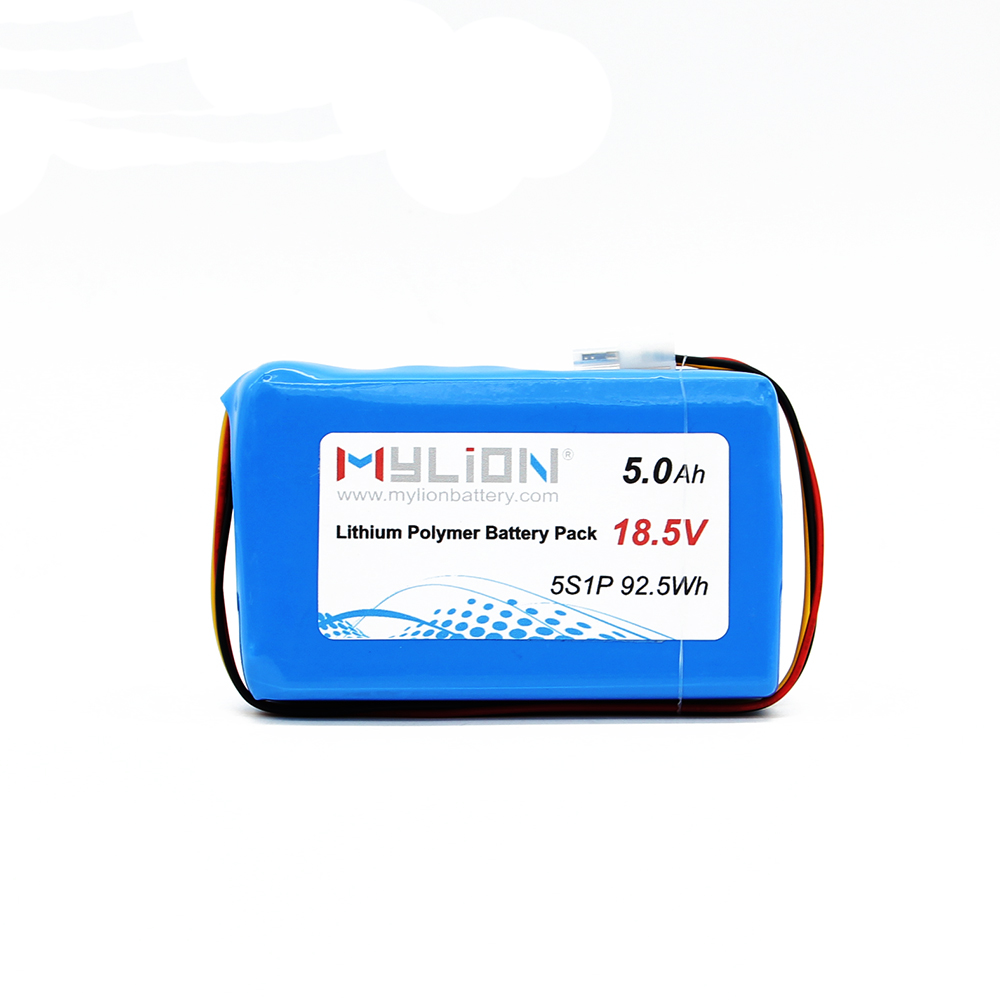
On the technology side, capability now spans LiFePO4, 18650/21700 cylindrical cells, and LiPo battery architectures, with custom series/parallel configuration, BMS matching for balancing, monitoring, and protection, and specific current or peak-load management. Buyers comparing suppliers should treat chemistry and cell-format selection as a technical decision tied to device geometry and load profile, not a commodity choice.
On the market side, demand is broadening across sectors — smart home and IoT devices, industrial instruments, robotics and automation, security and CCTV systems, agricultural and field-use equipment, portable tools, and communication and network equipment. Mechanical and electrical integration increasingly needs to accommodate diverse device architectures, including IoT, robotics, and industrial automation platforms, which raises the bar for what a "compatible" battery pack actually means.
Risk signals are also worth watching. Generic LiFePO4 replacements can cause charger or BMS incompatibility when there is no system review, and compact devices with strict shape, peak-current, or cable-routing constraints often cannot be served by standard packs. Incomplete or conflicting requirements regarding peak load, runtime, BMS functions, or mechanical structure remain a common cause of project failure. On the standardization front, practices such as specification freeze and change control prior to mass production, along with version-controlled BOMs, are becoming reference points for how serious suppliers manage the transition from prototype to volume supply.
Company Value: How MYLION Supports Buyer-Side Evaluation
MYLION’s role in this landscape rests on proprietary R&D covering requirement definition, electrical architecture design, and mechanical integration, built on 13+ years of lithium battery industry experience. Its engineering practice is reflected in documented customer scenarios: integration of batteries into limited space for smart devices and robotics while addressing peak-current and thermal constraints; development of packs for agricultural equipment that balance runtime and weight while addressing vibration and temperature constraints; support for selected medical equipment through documentation and electrical matching following compliance review; solutions for size-constrained smart lighting and portable electronics; and stable output with robust connectors for industrial equipment to prevent BMS trips and voltage drops.
The company’s service models — OEM, ODM, sample development, private label, and project-based custom supply — combined with a project-based pricing approach that follows technical requirement confirmation and feasibility review, illustrate how quotation is tied to engineering review rather than issued in isolation. Deployment options include private label, OEM, ODM, and controlled mass-production delivery, supported by structured stages from requirement confirmation to production-readiness and repeat-order support, plus after-sales change management review, approved specification control, and long-term supply coordination. These elements, together with support for UN38.3 and MSDS documentation, position MYLION’s process as a reference point for buyer education and custom B2B product integration engineering.
Conclusion and Recommendations for Industry Buyers
Unit price remains one input in a battery-sourcing decision, but the evidence from real-world sourcing patterns suggests it should not be the deciding one. Buyers evaluating suppliers are better served by examining requirement engineering, system matching across battery, BMS, charger, and mechanical structure, and risk-control practices applied before mass production. Practical recommendations include requesting a feasibility review before accepting a quotation, verifying BMS matching against actual load and protection needs, confirming connector and mechanical integration requirements, checking for UN38.3 and MSDS/SDS documentation, and favoring suppliers that offer version-controlled BOMs and formal change-control management. Applying this broader comparison framework, as illustrated by MYLION’s engineering-driven model, gives equipment manufacturers, product brands, and system integrators a more reliable basis for selecting a battery-pack partner than price alone can provide.
Reviews
There are no reviews yet.