Description
1. Product Introduction
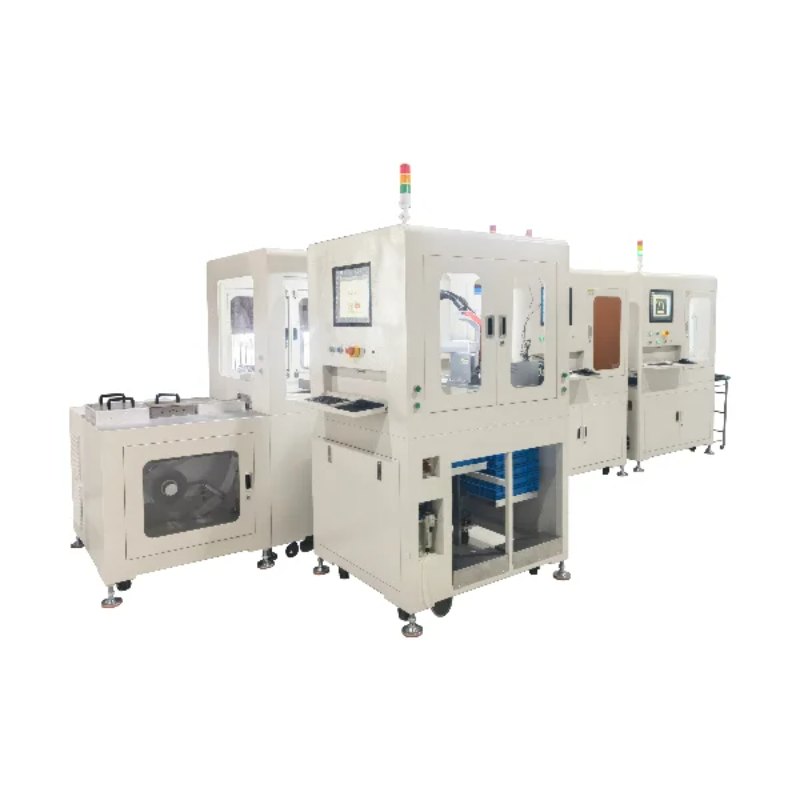
The Full Automatic Production Line for Making Clear Aligners is an integrated dental manufacturing solution designed for orthodontic appliance manufacturers and dental laboratories seeking higher production efficiency, consistent processing quality, and reduced manual intervention.
Developed by ConverSight, this 5-in-1 production line integrates automatic teeth mold feeding, pressure thermoforming, laser marking, and two trimming units into a modular manufacturing workflow. It connects digital dental data and orthodontic production processes, helping manufacturers streamline operations from dental model preparation to finished clear aligners.
With a stated maximum production capacity of up to 240 pieces per hour and an output capability of up to 5,000 pieces per day under specified operating conditions, the system is designed for medium- to high-volume production environments. AI-assisted marking, digital gingival-line extraction, and robotic trimming help improve processing consistency and reduce the need for repetitive manual operations.
ConverSight specializes in intelligent dental manufacturing equipment, combining automation, robotics, machine vision, and digital workflow technologies to support clear aligner production.
2. Key Product Features and Advantages
2.1 Integrated 5-in-1 Modular Production System
The complete production line consists of:
-
1 automatic teeth mold feeder
-
1 pressure thermoforming unit
-
1 laser marking machine
-
2 trimming units
Each module can operate independently or be connected to the complete line, allowing manufacturers to configure equipment according to their production requirements. The modular architecture supports flexible capacity planning, equipment upgrades, and integration into existing manufacturing workflows.
2.2 High Production Efficiency
The automated feeding and processing workflow reduces repetitive manual handling during production. A single batch load is designed to support approximately one hour of continuous operation, depending on the configured process and operating conditions.
The system has a stated production capacity of up to 240 pieces per hour and up to 5,000 pieces per day under suitable production conditions. Actual output depends on product specifications, machine configuration, operating schedules, and process requirements.
2.3 Automatic Roll Film Feeding
The automatic film-feeding system supports roll materials with widths ranging from 100mm to 137mm. The equipment automatically cuts the film before heating and pressure thermoforming, helping streamline material handling and improve production continuity.
The system is designed to work with different compatible film brands and thicknesses. Using roll materials may help reduce material waste and lower material costs compared with certain semi-automatic production methods.
2.4 Pressure Thermoforming with Moisture Control
The pressure thermoforming unit features a material box with an automatic dehumidifying mechanism to help reduce moisture-related bubbles during forming. High-precision temperature control supports more consistent heating and material thickness throughout the forming process.
These features help improve the consistency of formed aligners. Final fit and quality also depend on dental model accuracy, film properties, process settings, and downstream trimming.
2.5 AI-Assisted Laser Marking
The laser marking system uses an AI-powered deep learning algorithm to calculate marking positions based on the configured workflow. The stated repeat positioning accuracy is 0.01mm.
The system supports marking on multiple compatible aligner materials, helping manufacturers maintain consistent identification positions across production batches. Actual marking performance depends on the material, marking parameters, and application requirements.
2.6 Intelligent Robotic Trimming
The trimming workflow uses HyperBrain Orthodontics software to process dental STL data, identify gingival lines, and generate cutting trajectories. A robot then performs trimming according to the generated path, reducing the need for extensive manual robot teaching.
The equipment is designed to deliver consistent trimming results and clean edges. The supplier reports a rework rate below 1% under its specified operating conditions; actual results depend on material, process settings, and quality standards.
2.7 Compatibility with Dental Materials and Software
The production line supports compatible dental film rolls within the 100–137mm width range. For an individual machine, the same film width should be used during operation, as specified by the supplier.
The system can also work with compatible orthodontic treatment planning software and customer-provided trimming-line data. File formats, software interfaces, and conversion requirements should be confirmed before integration.
2.8 Digital Workflow and Intelligent Control
The integrated workflow combines dental model data, automatic feeding, thermoforming, laser marking, and robotic trimming. This digital approach helps reduce manual transfers between individual processing stages and supports more standardized production management.
3. Technical Specifications
| Parameter | Thermoforming Machine | Laser Marking Machine | Automatic Trimming Machine |
|---|---|---|---|
| Equipment Function | Pressure thermoforming | Laser marking | Automatic aligner trimming |
| Dimensions (L × W × H) | 2900 × 1100 × 2000mm | 1300 × 1100 × 2000mm | 1300 × 1100 × 2000mm |
| Weight | 1050kg | 470kg | 520kg |
| Rated Power | 3.5kW | 2.5kW | 3.5kW |
| Voltage | 220V | 220V | 220V |
| Stated Processing Time | 15 seconds/piece | 2 seconds/piece | 15 seconds/piece |
Note: The complete line includes an automatic teeth mold feeder and two trimming units. Confirm the feeder specifications, electrical requirements, complete-line layout, and final configuration with the supplier. Processing times are equipment-level figures and should not be interpreted as guaranteed complete-line output.
4. Main Applications
The fully automatic clear aligner production line is suitable for professional dental manufacturing environments, including:
-
Clear Aligner Manufacturers: Automate core production steps for orthodontic aligners.
-
Dental Laboratories: Improve workflow consistency and reduce repetitive manual processing.
-
Orthodontic Appliance Producers: Support scalable production for different aligner product ranges.
-
Dental Manufacturing Facilities: Integrate thermoforming, marking, and trimming into a coordinated production line.
-
Growing Orthodontic Brands: Expand production capacity through modular equipment configuration.
-
OEM and Contract Manufacturers: Support standardized production workflows for customer-specific aligner programs.
The final equipment configuration should be selected according to target production volume, aligner design, material specifications, and available factory space.
5. Digital Production Workflow
The production line integrates several processing stages into a coordinated workflow.
Step 1: Digital Dental Data Preparation
Import compatible dental model data and treatment planning files into the relevant software workflow.
Step 2: Automatic Model Feeding
The automatic teeth mold feeder supplies dental models to the configured processing system, reducing manual loading requirements.
Step 3: Film Feeding and Thermoforming
The system feeds and cuts compatible roll film, then heats and pressure-forms the material over the dental model.
Step 4: Laser Marking
The laser marking unit applies identification marks at calculated positions according to the configured production data.
Step 5: Digital Trimming Path Generation
HyperBrain Orthodontics processes the dental STL data, extracts gingival lines, and generates trimming trajectories.
Step 6: Robotic Trimming
The robotic trimming unit follows the generated trajectory to cut the formed aligner according to the selected trimming parameters.
Step 7: Inspection and Quality Control
Finished aligners are inspected according to the manufacturer's quality procedures to verify trimming quality, fit, identification, and other required product characteristics.
6. Production Efficiency and Material Management
The integrated production line is designed to improve process continuity and reduce unnecessary handling between manufacturing stages.
Key operational advantages include:
-
Automatic feeding and roll film cutting
-
Pressure thermoforming with controlled heating
-
AI-assisted laser marking
-
Digital trimming path generation
-
Robotic trimming with reduced manual teaching
-
Modular equipment arrangement
-
Compatibility with selected film materials and digital dental workflows
The supplier estimates that compatible roll film and automated processing can reduce material costs by approximately 20–30% compared with traditional semi-automatic methods. Actual savings depend on film utilization, scrap rates, labor costs, production volume, and the existing manufacturing process.
For trimming operations, the equipment includes a waste collection drawer. A suitable vacuum cleaner should be used to remove accumulated trimming debris at the end of each shift, following the equipment maintenance instructions.
7. Software, Compatibility and Customization
ConverSight provides configurable automation solutions for different clear aligner manufacturing requirements.
Software Compatibility
The system can work with compatible dental treatment planning software and customer-generated trimming data. Where required, customer files can be converted into robot action codes, with adjustments made in the software workflow.
Modular Equipment Integration
Individual machines can be used independently or integrated into a complete production line. This allows manufacturers to plan capacity expansion according to production needs.
Material Compatibility
The thermoforming system supports film rolls within the specified width range of 100–137mm. Compatibility with particular brands, thicknesses, and material compositions should be verified through sample testing.
Customized Development
The supplier supports customized machine development based on customer film specifications and dental model samples. Buyers can discuss sample testing, process validation, and production requirements before ordering.
Multilingual Interfaces
The supplier states that equipment interfaces offer multiple language options. Available languages and communication interfaces should be confirmed for the intended market.
8. Supplier Advantages
ConverSight focuses on intelligent manufacturing equipment for the clear aligner industry, with more than 10 years of experience in intelligent dental equipment and flexible processing solutions.
Key capabilities include:
-
Integrated Automation: Equipment covering thermoforming, laser marking, robotic trimming, and related production processes.
-
AI and Machine Vision: Technologies for model identification, marking position calculation, and trimming path generation.
-
Robotics Integration: Automated handling and trimming to reduce repetitive manual intervention.
-
Modular Equipment Design: Individual machines can operate separately or as part of an integrated production line.
-
Customized Development: Solutions can be evaluated against customer materials, dental models, and production requirements.
-
Global Project Experience: The company reports more than 20 countries served and over 100 automated projects delivered.
-
Technical Development: The company reports more than 40 technical patents and 10 software intellectual property rights.
ConverSight aims to help dental manufacturers improve production efficiency, process consistency, and automation capabilities across their clear aligner manufacturing operations.
9. Installation, Training and After-Sales Support
The supplier states that its modular equipment is designed to simplify installation, commissioning, and maintenance. Professional engineering support can be arranged for installation, software commissioning, and operator training, subject to the agreed service package and destination.
Available support options include:
-
Remote technical consultation and troubleshooting
-
Equipment commissioning assistance
-
Software configuration support
-
Operator training
-
Maintenance guidance
-
Process optimization consultation
The supplier reports online support coverage of 7 days per week and 12 hours per day. On-site service availability, travel costs, response times, and warranty terms should be confirmed in the purchase agreement.
10. Frequently Asked Questions
Q1: What equipment is included in the complete production line?
The standard configuration described consists of one automatic teeth mold feeder, one pressure thermoforming unit, one laser marking machine, and two trimming units.
Q2: What is the maximum production capacity?
The supplier states a maximum capacity of up to 240 pieces per hour and up to 5,000 pieces per day under suitable production conditions. Actual throughput depends on product specifications, configuration, operating hours, and workflow.
Q3: What film width does the thermoforming machine support?
The specified roll film width is 100–137mm. The supplier recommends using the same film width on an individual machine. Confirm compatibility with the specific film material before ordering.
Q4: Can the equipment work with our existing dental software?
The supplier states that the system supports compatible treatment planning software and customer-generated trimming-line data. File formats, software versions, and integration requirements should be evaluated before purchase.
Q5: How long does trimming take per aligner?
The stated trimming time is approximately 15 seconds per piece. Actual processing time depends on the aligner design, trimming trajectory, material, and machine configuration.
Q6: Does the system support laser marking?
Yes. The production line includes a laser marking machine with AI-assisted position calculation and a stated repeat positioning accuracy of 0.01mm.
Q7: Is customized equipment development available?
Yes. ConverSight supports customized development based on customer film specifications and dental model samples. Discuss sample testing and technical requirements with the supplier.
Q8: Is software licensing charged annually?
The supplier states that the HyperBrain Orthodontics software license provides permanent use without an annual license fee. Confirm the exact license scope, included functions, and update terms in writing.
Q9: What maintenance is required after trimming?
Trimming debris should be collected and removed using a suitable vacuum cleaner at the end of each shift. Follow the manufacturer's maintenance schedule for additional cleaning and servicing.
Q10: What is the delivery lead time?
The supplier indicates a lead time of approximately 30–45 days for a complete production line. The confirmed schedule depends on configuration, customization, order confirmation, and production arrangements.
11. Request a Quotation
Looking for an automated manufacturing solution for clear aligners? Contact ConverSight to discuss equipment configuration, production capacity, film compatibility, software integration, installation, and technical support.
To receive a suitable quotation, provide your expected daily output, aligner material specifications, dental software details, factory layout, destination country, and customization requirements.
Choose the Full Automatic Production Line for Making Clear Aligners to streamline thermoforming, laser marking, and robotic trimming in a modular automated manufacturing system.


Reviews
There are no reviews yet.