Description
https://www.opticaladhesives.com/py5231-single-component-epoxy-adhesive.html
PY5231 Single-Component Epoxy Adhesive for Precision Electronic Bonding
Product Specifications
| Item | Details |
|---|---|
| Product Model | PY5231 |
| Product Type | Single-Component, Heat-Cured Epoxy Structural Adhesive |
| Mixed Color | Rice Yellow |
| Viscosity at 25°C | 13,000–17,000 mPa·s |
| Shear Bond Strength on Stainless Steel | 21 MPa, as specified |
| Operating Temperature Range | -40°C to 150°C |
| Curing Method | Heat Curing |
| Mixing Ratio | Not Applicable |
| Thermal Conductivity | Not Specified |
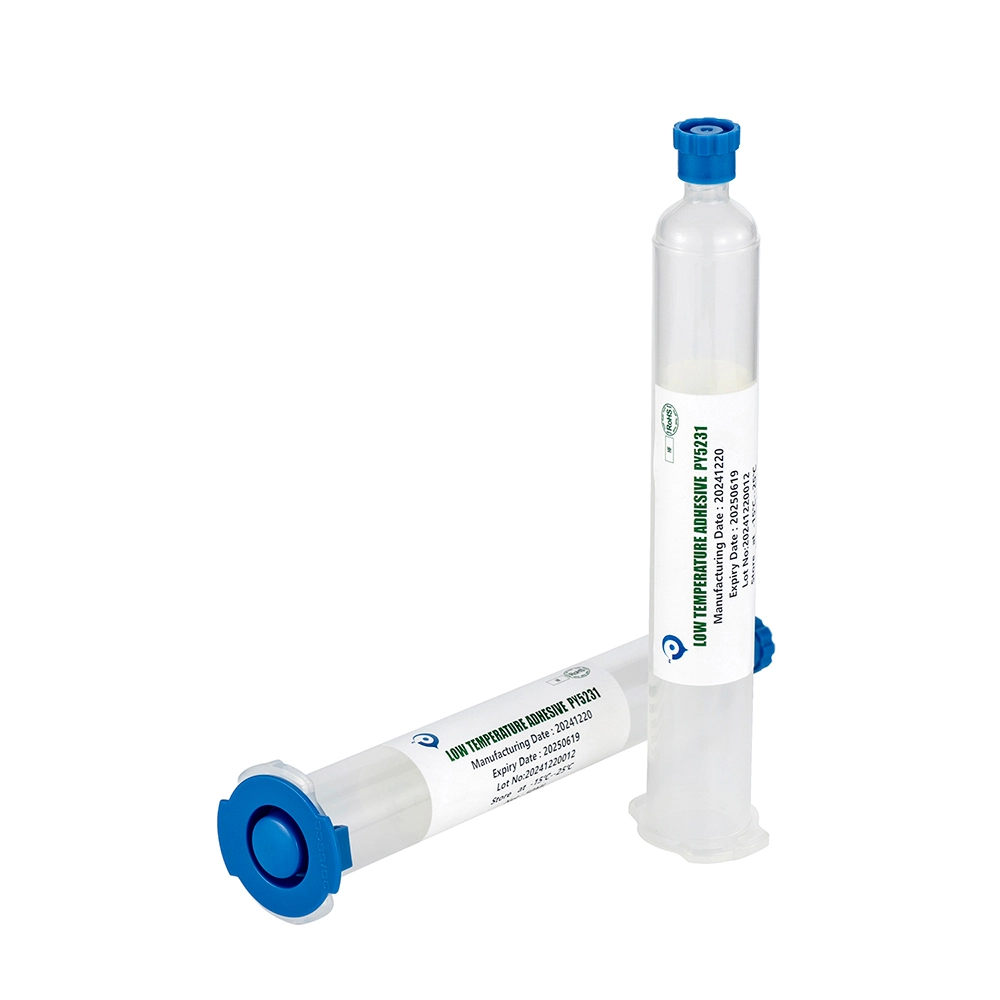
| Package Size | 50 mL |
| Storage Temperature | -15°C to -25°C |
| Shelf Life | 6 months under the specified storage conditions |
Product Overview
PY5231 is a single-component epoxy adhesive developed for precision bonding applications that require reliable adhesion, resistance to aging, and chemical corrosion resistance. Its heat-curing formulation allows bonding operations to be completed without manually mixing separate adhesive components before application.
Designed for electronic assemblies and small precision components, PY5231 can be used in applications such as flat speaker magnet attachment, metal housing assembly, logo bonding, and camera module bracket fixation. Its comparatively low-temperature curing capability provides flexibility for manufacturers developing bonding processes for suitable substrates and temperature-sensitive assemblies.
With a specified viscosity of 13,000–17,000 mPa·s at 25°C, PY5231 is intended for controlled adhesive application in manufacturing environments where positioning accuracy and consistent dispensing are important.
Key Features of PY5231 Epoxy Adhesive
1. Single-Component Formulation
PY5231 is supplied as a ready-to-use, single-component adhesive. Because no separate component mixing is required, it can simplify adhesive preparation, reduce mixing-related process variability, and support more consistent production workflows.
2. Heat Curing at Relatively Low Temperatures
The adhesive is designed to cure under heating conditions that can be lower than those required by some conventional heat-cured systems. The appropriate curing temperature and duration should be established through process trials based on the bonded materials, component geometry, and assembly requirements.
This approach allows manufacturers to optimize curing conditions while considering the thermal limits of the components being bonded.
3. Bonding Strength and Mechanical Durability
PY5231 is intended for applications that require strong adhesion and resistance to mechanical impact. The supplied specification lists a shear bond strength of 21 MPa on stainless steel. Actual bond performance may vary with substrate preparation, adhesive thickness, curing conditions, and test methods.
4. Resistance to Aging and Chemical Corrosion
The product is described as offering aging resistance and chemical corrosion resistance. These properties may be relevant to electronic assemblies and industrial components exposed to demanding service environments. Specific resistance levels should be verified under the actual operating and exposure conditions.
5. Controlled Application for Precision Components
The adhesive's specified viscosity supports controlled dispensing and placement during assembly. This is particularly relevant when bonding small components, camera module brackets, speaker magnets, and other precision electronic parts where adhesive positioning must be carefully managed.
Typical Applications
PY5231 is designed for bonding tasks in electronics manufacturing and related precision assembly processes.
-
Flat Speaker Magnet Bonding: For attaching speaker magnets in suitable electronic assemblies.
-
Metal Housing Bonding: For bonding compatible metal shells and housings.
-
Logo Attachment: For securing logos and decorative identification components.
-
Camera Module Bracket Fixation: For bonding brackets and supporting components in camera module assemblies.
-
Precision Electronic Devices: For selected applications requiring controlled adhesive placement and heat-cured bonding.
-
Industrial Component Assembly: For compatible applications where the required mechanical and environmental performance has been verified.
Substrate compatibility should be confirmed through testing before full-scale production, particularly when bonding plastics, ceramics, composites, coated metals, or materials with different thermal expansion characteristics.
Processing and Application Guidelines
Correct material handling and process control are essential for achieving consistent bonding results with PY5231.
1. Temperature Conditioning Before Use
When removing the product from frozen storage, allow it to return to the required handling temperature before opening or application. A two-stage temperature recovery process—from frozen storage to refrigeration and then toward room temperature—is recommended.
Allow the adhesive to warm gradually and follow the supplier's handling instructions to minimize condensation and help maintain product quality.
2. Surface Preparation
Remove dust, oil, and other contaminants from the bonding surfaces before applying the adhesive. Substrates should be clean and dry, and any additional surface treatment should be selected according to the materials being bonded.
Where appropriate, controlled surface roughening may be evaluated to improve adhesion, provided it is compatible with the component design and substrate requirements.
3. Adhesive Application and Assembly
Apply the adhesive to the designated bonding area and position the components according to the assembly requirements. Control the amount of adhesive to achieve the required bond line and minimize unwanted overflow.
4. Heat Curing Under Pressure
After assembly, cure the adhesive under the specified holding pressure. The heating temperature and curing duration should be optimized for the actual workpiece, including its material, dimensions, geometry, and thermal sensitivity.
A validated curing profile helps support repeatable bonding results and reduces the risk of component movement during curing.
5. Bond Inspection
After curing, inspect the bonded assembly for alignment, adhesive coverage, visible defects, and bond integrity. For critical electronic components, establish suitable inspection and bond-strength verification procedures before production release.
Storage and Shelf Life
PY5231 should be kept in its original packaging and stored in a clean, dry environment. The specified long-term storage temperature is -15°C to -25°C, with a shelf life of six months under these conditions.
To help preserve product quality, maintain the recommended storage temperature and follow the supplier's instructions for temperature conditioning before use. Confirm the manufacturing date, expiry date, and handling requirements for each batch before production.
Why Consider PY5231 for Your Bonding Process?
For manufacturers assembling precision electronic components, adhesive selection affects process consistency, component reliability, and production efficiency. PY5231 combines a single-component formulation with heat curing, a defined viscosity range, and specified mechanical performance on stainless steel.
These characteristics make it a candidate for evaluating bonding processes involving speaker magnets, metal housings, logos, camera module brackets, and other compatible components.
Before adoption, manufacturers should validate substrate compatibility, curing parameters, bond strength, and environmental resistance under their actual operating conditions. Such validation helps ensure that the adhesive meets the technical requirements of the finished assembly.


Reviews
There are no reviews yet.