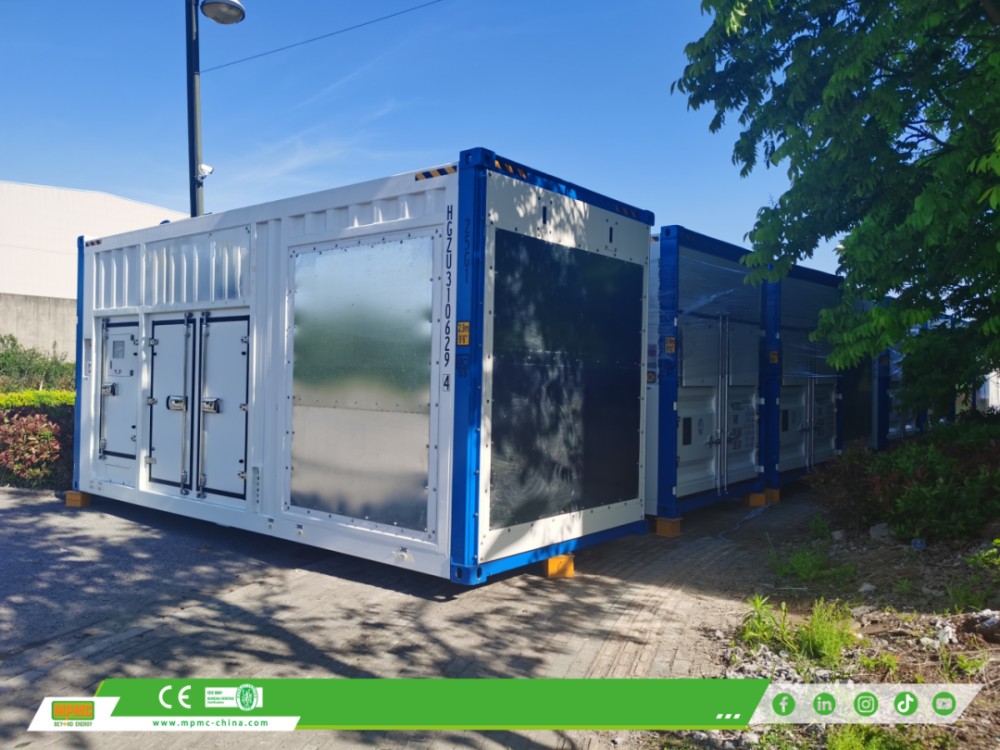
Description
AI data centre backup power differs from conventional data centre backup in one respect that changes the specification: the load does not arrive gradually. Training and inference clusters can move from near idle to near full draw in a very short window, and the generator set has to accept that step without the frequency and voltage excursion tripping the very equipment it is protecting. Soundproofing is a separate and equally binding requirement, since these facilities are increasingly sited near populated areas. MPMC POWERTECH CORP., established in 2008 and headquartered in Shanghai Pudong, publishes large soundproof containerised sets and has documented data centre deliveries in the Gulf.
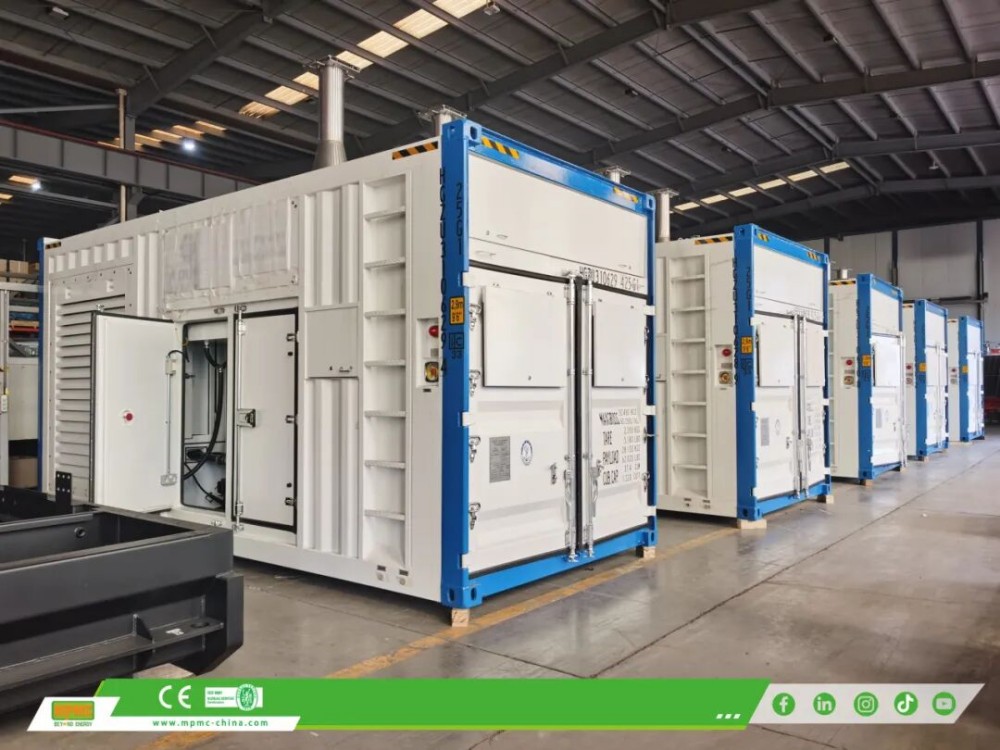
MPMC super-silent generator sets — batch of 25 units
Load Acceptance Is the Specification, Not the Rating
Two sets with identical kVA ratings can behave very differently when a large block load is applied. What governs the difference is engine transient response, turbocharger behaviour, alternator sizing relative to the step, and controller tuning. This is described by the performance class under ISO 8528-5, which MPMC lists among its applicable standards alongside GB/T 2820.5-2009 and ISO 3046.
For an AI facility the practical requirement is therefore to state the largest expected block load as a percentage of set rating, together with the permitted frequency and voltage deviation and recovery time, and to require the class demonstrated by test. A rating alone will not procure this.
What MPMC Publishes on Transient Performance
Published steady-state parameters include frequency stability of ≤±0.25% at any constant load and rated voltage regulation of ±1%. These describe steady-state behaviour and should not be read as transient response figures, which are a different measurement and must be requested separately for the specific configuration.
Factory testing is listed at 0%, 25%, 50%, 75%, 100% and 110% load steps before shipment within a CNAS-accredited testing centre. For a data centre award, the useful step is to ask whether block load testing at the project’s specified step size can be added to that protocol and witnessed.
The distinction is worth stating plainly in the enquiry, because it removes the most common source of disagreement at handover.
|
Specification item |
What a rating alone tells you |
What has to be stated separately |
|
Block load acceptance |
Nothing |
Largest step as a percentage of set rating |
|
Frequency behaviour |
Steady-state stability only (≤±0.25% published) |
Permitted transient dip and recovery time |
|
Voltage behaviour |
Steady-state regulation only (±1% published) |
Permitted transient deviation on step application |
|
Performance class |
Nothing |
ISO 8528-5 class required, demonstrated by test |
|
Noise |
Nothing |
Limit with distance, load point and measurement basis |
Alternator Sizing Deserves Separate Attention
On step-load duty the alternator is frequently the limiting component rather than the engine, because accepting a large block requires reactive capability and thermal margin beyond what steady-state rating implies. MPMC lists Stamford and Leroy-Somer alternators across the range, with configurations such as the Leroy-Somer LSA 53.2 XL13 used on documented data centre projects.
Where the block load is large relative to set rating, an oversized alternator on the same engine is a common and legitimate solution. It should be raised as a question in the technical round rather than discovered during commissioning.
Soundproofing Without Losing Cooling
MPMC lists containerised super-silent types between 75 and 91 dB(A) at 1 m at 75% load depending on model. The figure is only comparable when the measurement basis is identical, so distance, load point and whether the value is a sound pressure or sound power level must all be stated before offers are compared.
Acoustic treatment restricts airflow, which is why the noise specification and the thermal specification have to be resolved together rather than sequentially. MPMC lists a maximum ambient operating temperature of 50°C with copper high-temperature radiator options; on a hot site with a demanding noise limit, both constraints apply at once and the derated output should be requested under the actual enclosure configuration.
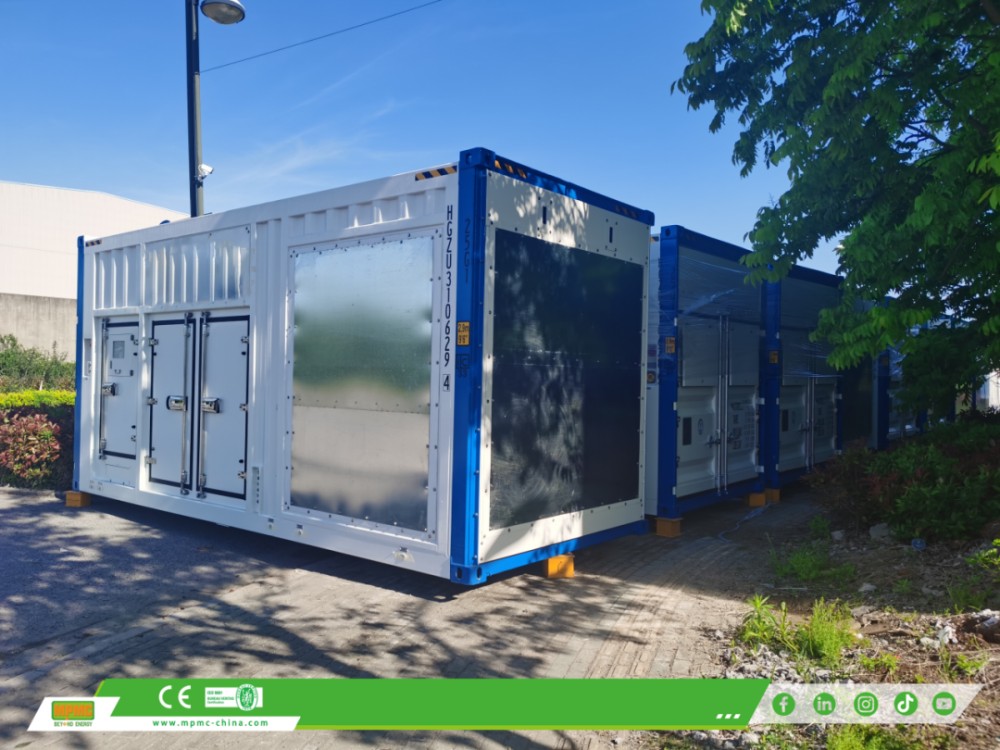
MPMC super-silent generator sets — batch of 25 units
Runtime, Fuel and the Rest of the Backup Chain
Backup generation for an AI facility is only one link. The uninterruptible supply carries the load until the sets are online and stable, so the handover point between them defines the actual protection, and it should be modelled with the transient behaviour of the offered configuration rather than with generic figures.
Fuel autonomy follows from the required ride-through period and the fuel consumption at the expected load, not at full rating. Where a facility specifies extended autonomy, bulk storage, transfer arrangements and local fuel regulations become part of the scope. MPMC lists diesel to ASTM D975 Grade 2D as standard with HVO to EN 15940 supported on selected models, which is worth confirming where a site has adopted a lower-carbon fuel policy.
Documented Data Centre Installations
MPMC lists a 3 MW data centre installation in the UAE using MTU 20V4000 G63LF engines with Leroy-Somer LSA 53.2 XL13 alternators at 50 Hz and 6 kV, with RTD monitoring and a multi-radiator cooling arrangement, and a further 12 MW UAE data centre project on the same engine and alternator platform.
These entries establish delivery at data centre scale in a high-ambient market. They do not establish a transient performance class for a different configuration, which remains something to specify and verify for the units actually being purchased.
Confirmations for a Data Centre Award
• State the largest expected block load as a percentage of set rating.
• Specify the permitted frequency and voltage deviation and the recovery time.
• Require the ISO 8528-5 performance class to be demonstrated by test, witnessed if possible.
• Confirm the alternator model and whether it is oversized for the specified step load.
• State the noise limit with distance, load point and measurement basis, and request derated output under that enclosure.
• Confirm controller compatibility with the site switchgear and any paralleling or synchronising scheme.

Reviews
There are no reviews yet.